
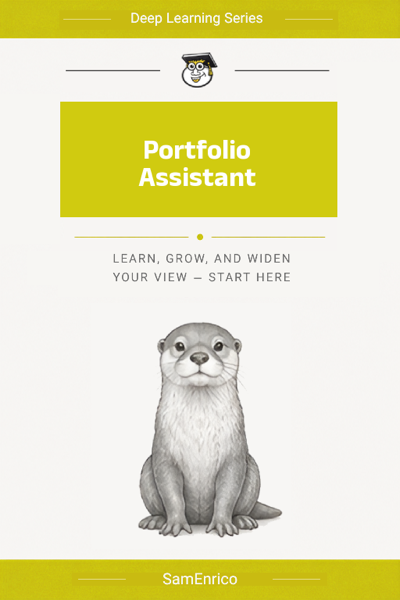
Portfolio Assistant eBook
A Coursebook on Portfolio Assistant
A Coursebook on Portfolio Assistant
Formats
Free sample
Chapter 1: The $3 Million Typo--–- Sarah had been a portfolio assistant for exactly eleven months when she learned the most expensive lesson of her career. The trade looked ordinary enough—a 15millionpositioninemergingmarketcorporatebondsthather PM,David,hadbeenwatchingforweeks.Thecompliancesystemflaggeditwithayellowalert:potentialconflictofinterest,insufficientdisclosuredocumentation.Sarahsawtheflag.Shereadthewarning.Shehesitatedforthreeseconds.Thensheapprovedthetradeanyway,assuming Davidhadalreadyclearedtheissue.Hehadn′t.Threedayslater,theregulatorfinedthefund15 million position in emerging market corporate bonds that her PM, David, had been watching for weeks. The compliance system flagged it with a yellow alert: potential conflict of interest, insufficient disclosure documentation. Sarah saw the flag. She read the warning.
She hesitated for three seconds. Then she approved the trade anyway, assuming David had already cleared the issue. He hadn't. Three days later, the regulator fined the fund 15millionpositioninemergingmarketcorporatebondsthather PM,David,hadbeenwatchingforweeks.Thecompliancesystemflaggeditwithayellowalert:potentialconflictofinterest,insufficientdisclosuredocumentation.Sarahsawtheflag.Shereadthewarning.Shehesitatedforthreeseconds.Thensheapprovedthetradeanyway,assuming Davidhadalreadyclearedtheissue.Hehadn′t.Threedayslater,theregulatorfinedthefund3 million for a compliance violation that should never have left the building. Sarah was not fired—David was.
But she never forgot the weight of that moment: the three seconds of silence that cost a man his career and a fund its quarterly returns. This book exists because of those three seconds.The Myth of the Superstar Assistant Every portfolio manager believes they want a "superstar" assistant. Someone who anticipates every need. Someone who works 24/7. Someone who holds the entire operational system in their head—the compliance rules, the settlement schedules, the PM's coffee order, the client's birthday, the regulatory filing deadlines.
Someone who makes the magic happen without being asked.This is a lie. And it is a dangerous one.The superhero model of portfolio assistance creates what professionals call the "bus problem." If your superstar assistant gets hit by a bus, your portfolio stops working. If they get sick, your trades fail to settle. If they burn out and quit, you spend six months rebuilding institutional memory that walked out the door in a cardboard box. Sarah was a superstar.
She worked twelve-hour days, never took a full vacation, and knew every quirk of David's trading style. She was also a single point of failure. And when she froze—when her human brain hesitated for three seconds—the entire system failed.The truth is uncomfortable but undeniable: the best portfolio assistant is not the one who makes themselves indispensable. The best portfolio assistant is the one who builds systems so robust, so documented, so automated, that the portfolio runs smoothly whether they are in the room or not. The measure of greatness is not how much you do.
It is how little breaks when you are gone.The Architecture of a Bus-Proof Role Consider two funds. Fund A has a "superstar" assistant named Marcus. Marcus does everything: trade confirmations, compliance checks, calendar management, investor relations, expense reporting. He never writes anything down because he "just knows" how everything works. His PM loves him because things get done without friction.
But Marcus has not taken a vacation in three years. His wife is considering divorce. And no one else in the fund understands the settlement workflow well enough to cover for him.Fund B has an assistant named Priya. Priya is competent but not flashy. She has documented every process in a shared drive: the compliance checklist, the trade settlement protocol, the morning deck template, the calendar defense rules.
She has automated the weekly liquidity report using a simple script. She has trained a junior colleague to cover her tasks. Priya took a two-week vacation to Bali last year. Nothing broke. Her PM barely noticed she was gone.Which assistant is more valuable?
The instinct is to say Marcus. The correct answer is Priya. Marcus has created a hostage situation. Priya has built an institution. The $3 million typo happened at a fund that operated like Fund A.
It could never have happened at Fund B because the system would have required a second signature before any flagged trade could clear.The Key Person Dependency Audit Every portfolio assistant should start their career transformation with a single exercise. It is uncomfortable. It forces you to confront your own ego and your PM's dependency on you. But it is the only way to build a role that scales.The Key Person Dependency Audit is a two-column list. In Column A, write every task that only you—or your PM—can actually perform.
These are tasks that legally, strategically, or technically require a specific person's judgment. Examples include final trade sign-off, client relationship decisions, regulatory filings that require a principal's signature, and risk limit overrides. Keep this column short. Ideally, no more than five items.In Column B, write every task that you think only you can do but that could actually be systemized, documented, or delegated. This column will be long.
It will include things like formatting the morning report, chasing settlement fails, scheduling investor calls, reconciling brokerage statements, preparing compliance checklists, and updating the portfolio tracker. Be brutally honest with yourself. If a task does not require your specific judgment or your PM's legal authority, it belongs in Column B.Then, for each item in Column B, design a rule, template, or automated trigger that removes dependency on any single person. The goal is to make the task executable by any competent assistant—or, better yet, by software.The Documentation Threshold Here is a rule of thumb that has saved more portfolio assistants from burnout than any other single principle: if you have done a task three times, you must document it. The first time, you are learning.
The second time, you are confirming. The third time, you are repeating. Repetition without documentation is not efficiency. It is a trap.Documentation does not need to be elaborate. A simple checklist in a shared notes app is sufficient.
A commented script in a spreadsheet is sufficient. A five-bullet-point email to yourself that you can forward to a replacement is sufficient. What matters is not the format but the existence of the artifact. If the only place the process lives is in your head, then you are not an assistant. You are a bottleneck.Sarah, the assistant from our opening story, had no documentation.
When the compliance flag appeared, she had no written protocol to guide her decision. She relied on memory, intuition, and hope. Memory fails. Intuition hesitates. Hope is not a strategy.
A documented escalation protocol would have told her: "Yellow flags require PM sign-off before trade execution. Do not proceed without written confirmation." That one sentence would have saved $3 million.The Five Tasks That Only You Can Do After conducting hundreds of Key Person Dependency Audits across hedge funds, asset managers, and family offices, a pattern emerges. No matter the firm size or strategy, there are only about five tasks that genuinely require a specific person's attention. Everything else can be systemized.These five tasks are:One: Final judgment calls on trades. Someone has to say "yes" or "no" to a position.
That someone is the PM, not the assistant. The assistant's job is to prepare the information so the PM can decide quickly and confidently. But the decision itself cannot be delegated.Two: Client relationship decisions. The PM owns the client relationship. The assistant can schedule calls, prepare materials, and follow up on action items.
But the PM must decide what to say, when to say it, and how much to reveal.Three: Regulatory filings that…
This is the end of the free sample. Get the eBook to keep going. Buy now
About this book
Details
- Author
- Overby Khalilah
- Publisher
- SamEnrico
- Language
- English
- Genre
- Non-Fiction, Informative, Educational
- Released
- 2026-05-04
- Pages (approx.)
- 132
- Available as
- eBook, Audiobook

Read better in the ZLOADR app
Your eBooks on your phone or tablet. Sign in with your SamEnrico account and start reading.
More by Overby Khalilah
 Depression And Chronic PainOverby Khalilah$11.99
 Zombie Spaceship WastelandOverby Khalilah$11.99
 Aging Out On The StreetsOverby Khalilah$11.99
 Teen Acne Confidence GuideOverby Khalilah$11.99
 The Bipolar Psychotherapy GuideOverby Khalilah$11.99
 The Timbuktu Calculators: How Black Mathematicians Shaped the WorldOverby Khalilah$11.99
 How to Become a OvercoilerOverby Khalilah$11.99
 The Breeder's Guide to Sebright ChickensOverby Khalilah$11.99
 Domain Name Appraisal GuideOverby Khalilah$12.99
 CTO for Healthtech StartupsOverby Khalilah$12.99