
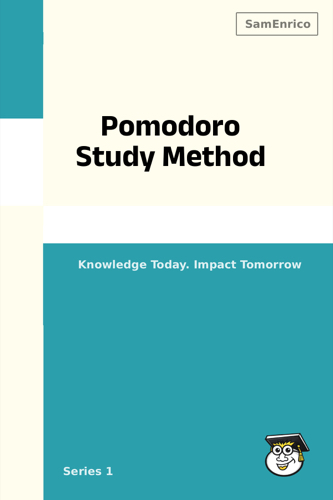
Free sample
Chapter 1: The Broken Student--Maya sat in the library until 2:00 AM. Her textbook was open to the same page she had been staring at for three hours. Her highlighter had run out of ink. Her coffee was cold. And when she finally closed her book and tried to recall what she had just read, she remembered almost nothing.
The Krebs cycle? A blur. The stages of cellular respiration? Gone. She had spent eight hours studying.
She had done everything she was supposed to do. And she was going to fail her biology final.Maya is not lazy. She is not unintelligent. And she is not alone.Every semester, millions of students like Maya sit down to study with genuine intention. They clear their desks.
They open their laptops. They tell themselves, "Today, I will get it done." And then something strange happens. They read the same paragraph three times without understanding it. They check their phone "just for a second" and lose twenty minutes. They feel a creeping sense of anxiety about all the other assignments they are not doing.
They push through, grinding hour after hour, until their brain feels like wet cement. And at the end of the day, they have retained almost nothing. They feel exhausted, guilty, and secretly afraid that something is wrong with them.Nothing is wrong with them. The system is wrong.For decades, students have been taught a fundamentally flawed model of studying: the marathon model. The idea is simple and seductive.
If you want to learn a lot, you should study for a long time. You should "put in the hours." You should grind. This model assumes that human attention is like a furnace—once you light it, it stays hot as long as you keep feeding it fuel. But that is not how the brain works. Your brain is not a furnace.
It is a muscle. And like any muscle, it can only sustain maximum effort in short bursts before it needs to rest. Attempting to study for hours without interruption is not a sign of discipline. It is a guarantee of diminishing returns, mental fatigue, and eventually, burnout.This chapter will show you why the marathon model fails, what the science of attention actually tells us, and how a simple kitchen timer can transform your relationship with studying forever.The Myth of the Marathon The marathon model of studying has deep cultural roots. We celebrate the student who pulls an all-nighter.
We admire the pre-med who studies for twelve hours straight. We tell ourselves stories about geniuses who worked obsessively for days on end. But these stories are misleading for two reasons.First, they confuse correlation with causation. The small number of students who can sustain very long study sessions are not successful because they study for long periods. They are successful for other reasons—high baseline focus, low environmental distractions, or a naturally high tolerance for cognitive load—and they happen to study for long periods as a side effect.
For the vast majority of students, long study sessions produce steeply diminishing returns after the first ninety minutes.Second, these stories ignore the hidden cost of marathon studying: the recovery time. A student who studies for eight hours straight may feel productive in the moment, but they will pay for it the next day with brain fog, reduced motivation, and a lingering aversion to the material they were studying. The brain builds negative associations with activities that cause sustained discomfort. If studying feels like torture, your brain will learn to avoid it. That is not a character flaw.
That is basic neuroscience.The marathon model also creates a perverse incentive structure. When students believe that longer is better, they naturally try to study for as long as possible. But because their brains cannot sustain focus for that long, they end up spending most of their "study time" in a state of low-grade distraction—skimming, rereading the same sentences, checking their phones, daydreaming. This is not studying. It is performing the appearance of studying.
And it is incredibly dangerous, because it feels productive while producing almost no learning.Research from cognitive psychology bears this out. In a landmark study published in the journal Memory & Cognition, researchers found that students who studied in short, spaced sessions (twenty to thirty minutes) retained significantly more information than students who studied for the same total amount of time in a single marathon session. The marathon studiers felt more confident immediately after studying—they had just spent hours with the material, after all—but their actual recall was worse. They had confused familiarity with learning. Recognizing a sentence you have just read three times feels like understanding, but it is not.The Neuroscience of Attention To understand why the Pomodoro Technique works, you need to understand how your brain actually processes information.
Let us start with a concept that will become your new best friend: Ultradian Rhythms.Most people have heard of circadian rhythms—the roughly twenty-four-hour cycles that regulate sleep and wakefulness. Ultradian rhythms are shorter cycles, typically lasting ninety to one hundred twenty minutes, that regulate alertness, energy, and cognitive performance throughout the day. Your brain does not operate at a constant level of focus. It moves through peaks and valleys. During the peak of an ultradian cycle, your brain is capable of intense, sustained concentration.
During the valley, your attention naturally wanders, and trying to force focus is like trying to sprint uphill in sand.Here is the crucial insight: the peak of an ultradian cycle typically lasts about twenty to thirty minutes. That is not a coincidence. The twenty-five-minute Pomodoro is not an arbitrary number. It is a direct match to the natural attention span of the human brain. When you work in twenty-five-minute sprints, you are aligning your work schedule with your brain's biology.
When you try to work for hours without a break, you are fighting your brain's design. And you will lose.The second key concept is Cognitive Load Theory. Your working memory—the part of your brain that holds information while you process it—has a very limited capacity. The classic research suggests that working memory can hold about four discrete items at once. That is it.
Four. When you try to hold more than four pieces of information in your working memory, the system becomes overloaded. Information starts to leak out. You forget what you just read. You lose your place in an argument.
You feel that familiar sensation of "brain fog."Long study sessions are a cognitive load disaster. Over the course of an hour, you might encounter dozens of new facts, concepts, and relationships. Your working memory cannot hold them all. So your brain starts to dump older information to make room for newer information. This is why you can read a chapter, turn the page, and realize you have already forgotten what was on the previous page.
Your working memory was overwhelmed. The information never made it into long-term storage.Short sprints solve this problem. When you work in twenty-five-minute chunks, you limit the amount of new information your working memory has to process at once. You give your brain a fighting chance to move…
This is the end of the free sample. Get the eBook to keep going. Buy now
About this book
Details
- Author
- Doherty Raye
- Publisher
- SamEnrico
- Language
- English
- Genre
- Non-Fiction, Self-Help
- Released
- 2026-06-07
- Pages (approx.)
- 138
- Available as
- eBook, Audiobook

Read better in the ZLOADR app
Your eBooks on your phone or tablet. Sign in with your SamEnrico account and start reading.
More by Doherty Raye
 Zumba with DisabilitiesDoherty Raye$11.99
 Overdose Death Of ChildDoherty Raye$11.99
 The Nap Ergonomics GuideDoherty Raye$11.99
 Small Talk for Expat CommunitiesDoherty Raye$11.99
 Assertiveness For The Hearing ImpairedDoherty Raye$11.99
 Bipolar And PregnancyDoherty Raye$11.99
 Bipolar Ketogenic Diet GuideDoherty Raye$11.99
 Amazon Alexa RemindersDoherty Raye$11.99
 The Great Unraveling: How the 'Free Britney' Movement Changed the Music IndustryDoherty Raye$11.99
 The Battle of the Aegean: Salamis' Shadow Over the Mediterranean (480 BC)Doherty Raye$11.99
 The American AFL Dream: How Aussie Rules Football Took Root in the U.S.Doherty Raye$11.99
 The Mineral Guide to JacobsiteDoherty Raye$11.99
You may also like
 Hong Kong Handover 1997Dunn Johnnie$11.99
 Zumba For Postnatal Recovery CourseNeal Christian$11.99
 Zumba for BeginnersLadner Nikia$11.99
 YouTube Comment Mining GuideHumes Pandora$12.99
 Worry Box MeditationCarlin Rudy$11.99
 Workplace Stress MeditationNguyen Lynn$11.99
 Workplace Stress and Sleep RepairHawley Ivory$11.99
 Workplace Perfectionism CureDelaney Jeffry$11.99
 Workplace Injustice Anger GuideWallen Isabelle$11.99
 Work Addiction and Burnout LinkGreenwood Ester$11.99
 Women in Yoga and WellnessBeattie Galina$11.99
 Women in Stand Up ComedyChun Evangeline$11.99