
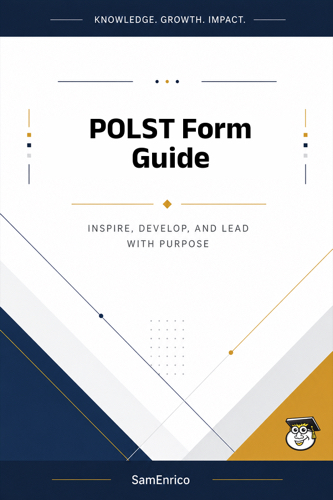
POLST Form Guide eBook
Physician orders for life sustaining treatment.
Physician orders for life sustaining treatment.
Formats
Free sample
Chapter 1: The Pink Sheet...--The paramedic’s voice was calm, almost bored, as if she had delivered this news a thousand times before. “Ma’am, I understand you have a living will. But that’s not a medical order. We can’t stop CPR to read it. Your father’s heart isn’t beating.
We have to work now. Where is his POLST form?”Martha Henderson stood in the doorway of her father’s bedroom, clutching a blue folder with gold lettering: “Last Will and Testament & Living Will – Notarized 2019.” Her hands were shaking. She had spent two hundred dollars at a lawyer’s office five years ago to make sure her father’s end-of-life wishes were documented. She had checked every box. She had signed every line.
She had told the lawyer, “I want everything spelled out so there’s no confusion.”Now, paramedics were kneeling over her 82-year-old father, Harold, who had advanced COPD and had been in hospice care for three months. He was not breathing. His face was gray. One paramedic was compressing his chest with such force that Martha could hear ribs cracking—a sound she would later describe to a therapist as “stepping on a bag of dry twigs.” Another paramedic was shoving a plastic tube down Harold’s throat while a third was cutting off his pajama shirt to attach defibrillator pads.“Stop!” Martha screamed. “He didn’t want this!
It’s right here in his living will! He said no breathing tube! No CPR!”The lead paramedic looked up, her face unreadable behind an N95 mask. “Ma’am, that living will is not a standing order. We are required to resuscitate unless there is a valid POLST form signed by a physician.
Do you have a POLST?”Martha had never heard the word before. “A what?”“A POLST. Physician Orders for Life-Sustaining Treatment. It’s a pink sheet of paper. Usually on the refrigerator.”Martha ran to the kitchen.
The refrigerator was covered with magnets, grocery lists, and photos of grandchildren. No pink sheet. She opened the freezer. No pink sheet. She ran back to the bedroom.
“I don’t have one! I didn’t know!”The paramedic nodded grimly. “Then we continue.”They loaded Harold onto a stretcher, still doing compressions, still pumping air into lungs that had already stopped working on their own. The ambulance pulled away, lights flashing. Martha followed in her Honda, sobbing so hard she nearly ran a red light.Three days later, Harold died in the intensive care unit.
He never regained consciousness. His chest was a mosaic of purple bruises. His lips were cracked from the breathing tube. A ventilator had breathed for him for seventy-two hours while his brain, starved of oxygen during the cardiac arrest, swelled beyond recovery. The neurologist told Martha that even if Harold had survived, he would have been in a permanent vegetative state, unable to speak, eat, or recognize her.The social worker pulled Martha aside in the hospital hallway.
“Your father’s living will was beautifully done,” she said gently. “But it didn’t matter at the moment he needed it most. What he needed was a POLST.”Martha stared at her. “Why didn’t anyone tell me?”That question—Why didn’t anyone tell me?—is the reason this book exists.The Deadly Gap Between Wishes and Orders Every day in the United States, thousands of families have the exact same experience as Martha Henderson. They have done everything they thought they were supposed to do.
They hired a lawyer. They signed a living will. They told their children, “If I ever end up on a breathing machine, pull the plug.” They felt prepared. They felt responsible.Then 911 was called. And none of it mattered.Here is the hard truth that no estate planning attorney will tell you, that no elder law seminar will emphasize, that no well-meaning family member will know until it is too late: A living will is not a medical order.
A POLST is.That single distinction is the difference between dying peacefully in your own bed and dying in an ICU with broken ribs and a tube down your throat. It is the difference between your family honoring your wishes and your family watching helplessly as paramedics do exactly what you said you never wanted.Let me say it again, because it is that important: A living will is a legal suggestion. A POLST is a medical order.When paramedics burst through your front door, they are not lawyers. They are not judges. They do not have time to read a notarized document that begins, “I, being of sound mind…” They have approximately eight seconds to decide whether to start CPR.
And if there is no POLST form visible—usually on the refrigerator, in a bright colored sleeve—they will start compressions. Every single time. Because the default in emergency medicine is to save lives. The default is to do everything. The default is to assume you want to live unless a physician has signed a document saying otherwise.That document is the POLST form.What POLST Stands For (And Why the Name Varies by State)POLST is an acronym that stands for Physician Orders for Life-Sustaining Treatment.
It is a one-page medical order form that travels with you across healthcare settings—from your home to the ambulance to the hospital to the nursing home. It tells every single clinician who touches your body exactly what you want: whether to attempt CPR, whether to use a breathing machine, whether to transfer you to the ICU, whether to give you antibiotics, whether to insert a feeding tube.But here is where it gets confusing for readers outside of the original POLST states. Depending on where you live, this same form may have a different name. In Oregon, California, and New York, it is called POLST. In Maryland, Massachusetts, and New Jersey, it is called MOLST (Medical Orders for Life-Sustaining Treatment).
In Texas, Washington, and West Virginia, it is called POST (Physician Orders for Scope of Treatment). In Pennsylvania and Ohio, it is called MOST (Medical Orders for Scope of Treatment). In some states, it is simply called a “Physician Order for Life-Sustaining Treatment” without an acronym.Do not let the different names confuse you. They are the same form. The clinical content is nearly identical across all fifty states.
The differences—and there are some—involve signature requirements (whether a nurse practitioner can sign versus only a physician), witnessing rules (one witness, two witnesses, or none), paper color (bright pink, green, yellow), and lamination policies (some states prohibit it; others recommend it with a “VOID” section on the back).For the remainder of this book, I will use the term “POLST” as the generic name for this type of form, but please check Appendix C for your state’s specific name and requirements. A reader in Texas who keeps asking for a “POLST” will be told, “We don’t have that here.” You need to ask for a “POST” form. A reader in Maryland needs to ask for “MOLST.” This chapter will teach you the concepts; Appendix C will teach you the local language.The Three Deadly Myths About Living…
This is the end of the free sample. Get the eBook to keep going. Buy now
About this book
Details
- Author
- Manning Bradley
- Publisher
- SamEnrico
- Language
- English
- Genre
- Non-Fiction, Biography, POLST
- Released
- 2026-06-06
- Pages (approx.)
- 142
- Available as
- eBook, Audiobook

Read better in the ZLOADR app
Your eBooks on your phone or tablet. Sign in with your SamEnrico account and start reading.
More by Manning Bradley
 Grit for Students with ADHDManning Bradley$11.99
 Half Smile for AnxietyManning Bradley$11.99
 Team Creative WarmupsManning Bradley$11.99
 Microstress Detection GuideManning Bradley$11.99
 London Staffing SolutionsManning Bradley$11.99
 Morning Visualization GuideManning Bradley$11.99
 Offering Choices GuideManning Bradley$11.99
 The Symphony of the Deep: How Western Composers Conquered the Ocean’s SoulManning Bradley$11.99
 The Philosophers of Axum: Wisdom from the Horn of AfricaManning Bradley$11.99
 Service Providers Guide to FacialistsManning Bradley$11.99
 A Collector's Handbook to the Matra-simca BagheeraManning Bradley$11.99
 YouTrack JetBrains AgileManning Bradley$12.99