
Non-FictionSelf-HelpLaw Enforcement
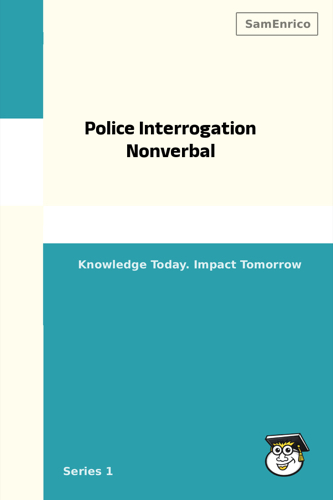
Police Interrogation Nonverbal
Decodes suspect stress, deception, and emotional s
by Otis Lai
Decodes suspect stress, deception, and emotional states during questioning.
Formats
About this book
Free sample
Chapter 1: The Broken Polygraph...-- Most police officers enter their first interrogation believing they can spot a liar. They have watched hours of television interrogations, read pop psychology articles about eye contact, and heard seasoned detectives say things like "He wouldn't look me in the eye" or "She kept touching her nose." These assumptions are not just wrong. They are dangerous. They send innocent people to prison and let guilty suspects walk out the front door, smiling at the receptionist on their way to freedom. This book exists because the old way of reading people—the "Pinocchio syndrome" of looking for single, magical tells—has failed the justice system for decades.
It is time to replace mythology with science, intuition with observation, and guesswork with a systematic framework.The seduction of the single cue is almost impossible to resist. The human brain craves pattern recognition. We want simple answers. We want a nose touch to mean "lie," a glance to the left to mean "memory retrieval," and crossed arms to mean "defensiveness." The problem is that none of these interpretations survive contact with reality. A suspect who glances to the left may be lying, or they may be left-handed, or they may be responding to a noise outside the door, or they may simply have a nervous tic.
A suspect who crosses their arms may be defensive, or they may be cold, or they may be more comfortable that way, or they may have just finished a workout and feel self-conscious about their posture.The research is unequivocal on this point. Decades of studies across multiple continents, involving thousands of subjects, have consistently demonstrated that no single nonverbal behavior reliably predicts deception. Not one. The US Department of Justice, after reviewing the available science, has warned law enforcement agencies that relying on single cues is "empirically unsupported and may contribute to false confessions." The Innocence Project has documented over 375 wrongful convictions in the United States alone, and in a significant percentage of those cases, the original interrogators reported that they "knew" the suspect was guilty because of their body language.…
This is the end of the free sample. Get the eBook to keep going. Buy now
Contents
- Chapter 1
- Chapter 2
- Chapter 3
- Chapter 4
- Chapter 5
- Chapter 6
- Chapter 7
- Chapter 8
- Chapter 9
- Chapter 10
- Chapter 11
- Chapter 12
Details
- Author
- Otis Lai
- Publisher
- SamEnrico
- Language
- English
- Genre
- Non-Fiction, Self-Help, Law Enforcement
- Released
- 2026-06-09
- Pages (approx.)
- 150
- Available as
- eBook, Audiobook

Read better in the ZLOADR app
Your eBooks on your phone or tablet. Sign in with your SamEnrico account and start reading.
More by Otis Lai
 Trello Due Date Reminders SetupOtis Lai$11.99
 Stolen Diamonds ValuationOtis Lai$11.99
 Cooling Bedding GuideOtis Lai$11.99
 Atomic Habits For SilenceOtis Lai$11.99
 Unidentified Remains Tattoo CluesOtis Lai$11.99
 Homicide Investigation First 48Otis Lai$11.99
 Title IX and the Stage: How a U.S. Law Changed Women's Sports WorldwideOtis Lai$11.99
 The Alchemists of the Nile: Egypt's Forgotten Masters of MatterOtis Lai$11.99
 How to Produce Nail Care ProductsOtis Lai$11.99
 How to Become a Roof-cement-and-paint-maker HelperOtis Lai$11.99
 How to Produce 100% Rayon FabricOtis Lai$11.99
 Return on Assets Formula GuideOtis Lai$12.99
You may also like
 Hong Kong Handover 1997Dunn Johnnie$11.99
 Zumba For Postnatal Recovery CourseNeal Christian$11.99
 Zumba for BeginnersLadner Nikia$11.99
 YouTube Comment Mining GuideHumes Pandora$12.99
 Worry Box MeditationCarlin Rudy$11.99
 Workplace Stress MeditationNguyen Lynn$11.99
 Workplace Stress and Sleep RepairHawley Ivory$11.99
 Workplace Perfectionism CureDelaney Jeffry$11.99
 Workplace Injustice Anger GuideWallen Isabelle$11.99
 Work Addiction and Burnout LinkGreenwood Ester$11.99
 Women in Yoga and WellnessBeattie Galina$11.99
 Women in Stand Up ComedyChun Evangeline$11.99