

Non-FictionHealth & WellnessGroup Therapy
PNE in Group Settings eBook
Deliver neuroscience education to multiple patient
Deliver neuroscience education to multiple patients simultaneously.
Formats
Free sample
Chapter 1: The Social Synapse--–- It was the silence that finally broke her. Not the scream, not the fall, not the crushing weight of another MRI report that said “nothing abnormal detected.” Carla had survived all of that. What she could not survive was being alone with the theory that her pain was “just in her head.” For three years, she had sat in individual therapy sessions, read pain science books alone in her bedroom, and practiced graded motor imagery by herself at a kitchen table. She understood nociception. She could define central sensitization.
She knew, intellectually, that her tissues were not in danger. And yet, every morning, her back seized as if she were still lifting the box that had started everything. The knowledge lived in her prefrontal cortex. The fear lived everywhere else.Carla’s story is not unusual. It is, in fact, the single most common failure mode of individual Pain Neuroscience Education.
The patient learns the concepts. The patient passes the knowledge test. The patient goes home and, in the absence of a witnessing other, the old neural pathways reassert themselves like weeds in an unattended garden. PNE delivered in isolation treats the brain as a closed system, as if new information alone is sufficient to rewire decades of conditioned threat. But the human brain did not evolve to learn in isolation.
It evolved to learn in tribes, in circles, in the presence of faces that mirror safety or danger. The gap between knowing and doing is not a cognitive gap. It is a social gap.This book exists to close that gap. It is not another manual on the neurobiology of pain. That work has been done, brilliantly, by Louw, Zimney, Moseley, and others.
What has not been done is the translation of those neurobiological insights into a group-based pedagogy that leverages the most powerful learning mechanism humans possess: social contagion. Not social contagion of fear—that is the default, the wildfire of catastrophizing that spreads through waiting rooms and online forums. No, this book is about the intentional, structured, clinician-guided contagion of safety.The premise is simple but radical: delivering PNE to multiple patients simultaneously is not merely a cost-saving measure or a logistical convenience. It is a fundamentally different therapeutic intervention, with mechanisms of action that do not exist in one-on-one care. When Carla learned about the alarm system in a group of eight people with chronic pain, something shifted that had not shifted in three years of individual work.
She watched a man named David, who had feared bending forward for a decade, slowly fold his spine toward the floor while a room full of strangers cheered. She saw his face shift from terror to bewilderment to a small, crooked smile. And in that moment, Carla’s brain did something no worksheet could accomplish. It updated its threat model. If David could bend, and the room did not collapse, and the clinician said this was safe, then maybe—just maybe—her own back was not the enemy.That is the social synapse.
It is the space between two nervous systems where safety is transmitted more efficiently than any verbal instruction. This chapter introduces the foundational argument of this book: that group PNE works not despite the presence of other patients but because of it, and that clinicians who fail to understand the neurophysiology of social learning will inadvertently design groups that amplify fear rather than diminish it.The Hidden Epidemic of Individualized Pain Education For the past twenty years, pain neuroscience education has been delivered primarily as a one-on-one intervention. A clinician sits across from a patient and explains, with diagrams and metaphors, that pain is a brain output, not a tissue damage detector. The patient nods. The patient asks questions.
The patient leaves with a handout. And then, in six weeks, the effect sizes shrink, the pain catastrophizing scores creep back up, and the clinician schedules another individual session to “reinforce the concepts.”This is not a failure of PNE as a conceptual model. It is a failure of the delivery vehicle. Individual education assumes that the patient’s primary obstacle is a lack of accurate information. But chronic pain is not a knowledge deficit.
It is a learned threat response embedded in a nervous system that evolved to prioritize survival over accuracy. And survival learning, in mammals, does not happen through abstract reasoning. It happens through social observation.Consider the classic study by Mason and colleagues, published in 2019, which compared individual PNE to group PNE for patients with chronic low back pain. Both groups received identical content: eight hours of instruction on nociception, central sensitization, and neuroplasticity. The individual group showed significant improvements in pain catastrophizing at post-treatment.
The group group showed the same. But at six-month follow-up, the individual group had regressed nearly to baseline, while the group group maintained their gains. The authors hypothesized that the group patients had formed “social safety networks” that continued to reinforce the new learning between sessions. They texted each other. They celebrated small wins.
They corrected each other’s catastrophic interpretations. The individual patients, by contrast, went home to the same solitary rumination cycles that had shaped their pain in the first place.This finding has been replicated in seven subsequent studies across four countries, yet the clinical uptake remains astonishingly slow. Physical therapists continue to see patients one-on-one. Pain psychologists continue to fill individual therapy slots. And patients like Carla continue to know the truth while their bodies continue to act as if they do not believe it.The Neurophysiology of Social Safety To understand why group PNE works, we must first understand how the mammalian brain processes safety information.
The human nervous system does not have a direct line to reality. It has predictions, updates, and error corrections—all filtered through the lens of social belonging. This is not a soft, psychodynamic claim. It is a hard neurobiological fact.The insula, a cortical region deep within the lateral sulcus, is responsible for interoception—the sensing of the body’s internal state. When you feel your heart race, your stomach churn, or your back tighten, the insula is the primary interpreter.
But the insula does not work alone. It is densely connected to the anterior cingulate cortex, which processes social rejection as if it were physical pain. And it is modulated by the periaqueductal gray, a midbrain region that receives direct input from the amygdala about threat.Here is what this means in plain language: your brain processes the sight of another person wincing in pain using many of the same circuits that process your own pain. This is the basis of empathy, but it is also the basis of social contagion of fear. When a patient in a group says, “I tried that movement once and my back locked up for a week,” the other patients’ insulae and anterior cingulate cortices activate as if they themselves had experienced that locking.
Their threat responses do not require direct tissue damage. They require only a credible witness.But the same circuits work in reverse. When a patient watches another patient perform a feared movement without injury, the observer’s threat response diminishes. The amygdala…
This is the end of the free sample. Get the eBook to keep going. Buy now
About this book
Details
- Author
- Murry Cristopher
- Publisher
- SamEnrico
- Language
- English
- Genre
- Non-Fiction, Health & Wellness, Group Therapy
- Released
- 2026-06-08
- Pages (approx.)
- 156
- Available as
- eBook, Audiobook

Read better in the ZLOADR app
Your eBooks on your phone or tablet. Sign in with your SamEnrico account and start reading.
More by Murry Cristopher
 Cooling Breath Sensation PracticeMurry Cristopher$11.99
 Steve Jobs iPod Click WheelMurry Cristopher$11.99
 Stranger Things Child Actor EffectMurry Cristopher$11.99
 The Relocation Stress Couples GuideMurry Cristopher$11.99
 The Silent Storm: The Anglo-Dutch Submarine Wars of 1983Murry Cristopher$11.99
 How to Start a Butt Welding Fittings Made of Steel Business (Beginners Guide)Murry Cristopher$11.99
 SEA Long Term Opportunities GuideMurry Cristopher$12.99
 Post Payment Follow Up HandbookMurry Cristopher$12.99
 Enterprise Solutions ArchitectMurry Cristopher$11.99
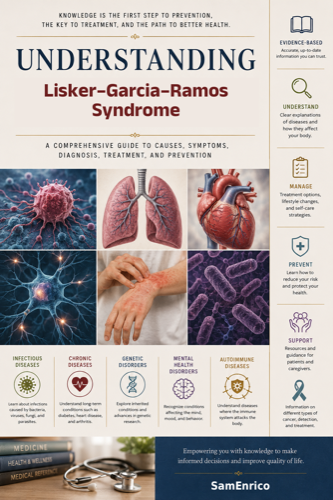 Understanding Lisker–Garcia–Ramos SyndromeMurry Cristopher$17.99
You may also like
 Hong Kong Handover 1997Dunn Johnnie$11.99
 Zumba For Postnatal Recovery CourseNeal Christian$11.99
 Zumba for BeginnersLadner Nikia$11.99
 YouTube Comment Mining GuideHumes Pandora$12.99
 Worry Box MeditationCarlin Rudy$11.99
 Workplace Stress MeditationNguyen Lynn$11.99
 Workplace Stress and Sleep RepairHawley Ivory$11.99
 Workplace Perfectionism CureDelaney Jeffry$11.99
 Workplace Injustice Anger GuideWallen Isabelle$11.99
 Work Addiction and Burnout LinkGreenwood Ester$11.99
 Women in Yoga and WellnessBeattie Galina$11.99
 Women in Stand Up ComedyChun Evangeline$11.99