
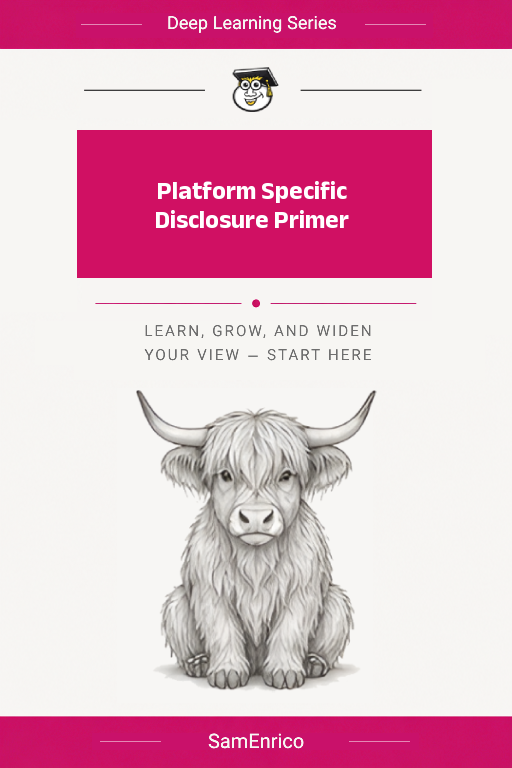
Non-FictionAnnual CheckupFTC & Global StandardsPlatform Guide
Platform Specific Disclosure Primer Audiobook
Apply 2025 disclosure rules for Instagram stories
by Horn Libby
Apply 2025 disclosure rules for Instagram stories (tags vs text), TikTok (built-in tools), YouTube (verbal+text), and LinkedIn (sponsored icon). Covers ephemeral content, live streams, and dark posts.
Formats
Free sample
Chapter 1: The Bio Lie--–- On a Tuesday morning in March 2024, a beauty influencer with 2.4 million Instagram followers posted a nine-slide Story promoting a luxury skincare line. She had received $15,000 and an all-expenses-paid trip to Paris. In the first slide, at the very top in tiny gray type, she placed the word "ad." Slides two through nine had nothing. Eighteen hours later, the FTC filed an inquiry. Her defense—"It was in the bio link"—failed before the investigator finished reading the sentence.That influencer is not an outlier.
She is the rule. And her mistake—believing that a single disclosure buried in one place covers everything—is precisely why this book exists.Welcome to the end of the "link in bio" era.The Funeral of a Bad Habit For nearly a decade, social media creators and the brands who paid them operated under an unspoken bargain: put a disclosure somewhere—anywhere—and you have probably done enough. A #sponsored at the bottom of a caption. A single "ad" in the first of ten Story slides. A note in the profile bio that says "affiliate links used." These practices were never fully compliant with FTC rules, but enforcement was inconsistent, penalties were rare, and the platforms looked the other way.That bargain is now broken.Beginning with the FTC's 2023 updates to the Endorsement Guides and accelerating through 2024 and into 2025, three forces have converged to make platform-specific, unavoidable disclosures mandatory.
First, the FTC signaled a dramatic increase in enforcement, hiring more investigators and naming individual creators in public complaints. Second, the platforms themselves—Tik Tok, Instagram, You Tube, and even Linked In—built automated tools to detect and penalize undisclosed commercial content. Third, a series of high-profile class action lawsuits created financial liability not just for brands, but for creators personally.The result is a new legal reality: any disclosure that requires a click, a scroll, or a visit to a profile is presumptively non-compliant. The disclosure must be in the content itself, where the consumer is looking, when the consumer is looking. "Link in bio" disclosures are not just weak practice—they are legally indefensible.What "Material Connection" Really Means (And What You've Been Missing)Before we can understand how to disclose, we must understand what triggers the obligation.
The FTC's definition of a material connection is deliberately broad, and most creators—and even many brand lawyers—underestimate its scope.A material connection…
This is the end of the free sample. Get the Audiobook to keep going. Buy now
About this book
Details
- Author
- Horn Libby
- Publisher
- SamEnrico
- Language
- English
- Genre
- Non-Fiction, Annual Checkup, FTC & Global Standards, Platform Guide
- Released
- 2026-05-29
- Pages (approx.)
- 152
- Available as
- eBook, Audiobook

Listen in the VoxFlicks app
Audiobooks and audio dramas wherever you go. Sign in with your SamEnrico account and press play.
More by Horn Libby
 Financial Recovery from Alcohol AddictionHorn Libby$11.99
 Opioid Overdose Reversal TrainingHorn Libby$11.99
 Wedding Dream Symbols WorkbookHorn Libby$11.99
 Say No Without GuiltHorn Libby$11.99
 OKRs for Vacation PlanningHorn Libby$11.99
 The Billionaire's Floating Palace: How Roman Abramovich Turned a Yacht into a Diplomatic BattlegroundHorn Libby$11.99
 Gene Edited Crops GuideHorn Libby$12.99
 How to Start a Casting of Aluminium Business (Beginners Guide)Horn Libby$11.99
 Understanding Idiopathic Eosinophilic Chronic PneumopathyHorn Libby$17.99
 Reliability & Condition Monitoring TechnicianHorn Libby$11.99
You may also like
 Hong Kong Handover 1997Dunn Johnnie$11.99
 Zumba For Postnatal Recovery CourseNeal Christian$11.99
 Zumba for BeginnersLadner Nikia$11.99
 YouTube Comment Mining GuideHumes Pandora$12.99
 Worry Box MeditationCarlin Rudy$11.99
 Workplace Stress MeditationNguyen Lynn$11.99
 Workplace Stress and Sleep RepairHawley Ivory$11.99
 Workplace Perfectionism CureDelaney Jeffry$11.99
 Workplace Injustice Anger GuideWallen Isabelle$11.99
 Work Addiction and Burnout LinkGreenwood Ester$11.99
 Women in Yoga and WellnessBeattie Galina$11.99
 Women in Stand Up ComedyChun Evangeline$11.99