
Non-FictionSelf-HelpPrescription Drug Recovery
Pills Anonymous Step Workbook eBook
Focuses on prescription medication addiction step
Focuses on prescription medication addiction step work with medical taper considerations.
Formats
Free sample
Chapter 1: The Prescription Trap...--The first time you took that pill, you probably thought you were doing something good for yourself.Maybe a doctor wrote the prescription after you described your anxiety, your chronic pain, your insomnia, or your inability to focus. Maybe a surgeon handed it to you on the way out of the hospital after a procedure. Maybe a well-meaning friend gave you one from their own bottle when you mentioned you were struggling. However that first pill entered your body, you almost certainly did not think: I am about to become addicted. This is the beginning of a nightmare that will cost me years of my life, thousands of dollars, and nearly everything I care about.No one starts there.You started where almost everyone starts: in pain, in fear, in exhaustion, or in desperation for relief.
And the pill worked. That is the part that no one talks about enough. The pill worked. It quieted the screaming anxiety. It lifted the fog of depression.
It erased the sharp edges of post-surgical pain. It let you sleep for the first time in weeks. It let you function when you could not function on your own.That is the trap.The trap is not that the pill feels bad. The trap is that the pill feels good—or at least feels like relief—and then slowly, imperceptibly, it stops being something you take to feel better and becomes something you take to feel normal. And then it becomes something you take to avoid feeling worse.
And then it becomes something you cannot stop taking even when every part of you wants to.If you are reading this book, you already know the rest of that story.You know about the early refills and the doctor shopping and the lying and the hiding and the running out and the withdrawal and the desperation and the shame. You know about the promises you made to yourself that you broke within days. You know about the friends and family members you disappointed, the jobs you lost or nearly lost, the money that disappeared, the person in the mirror who stopped looking like you.And you probably know, somewhere deep down, that you did not do this to yourself on purpose. You did not wake up one morning and decide to become addicted to prescription medication. You walked through a door that someone else opened—a doctor, a system, a culture that hands out pills like candy and then offers very little help when the candy becomes a cage.This chapter is about understanding how that cage was built.
Not so you can assign blame—blame is useless for recovery—but so you can see the architecture of your addiction clearly. Because you cannot dismantle what you refuse to understand.We are going to cover three essential things in this chapter. First, the critical distinction between physical dependence and addiction—a distinction that most people, including many doctors, get wrong. Second, a self-assessment tool adapted specifically for prescription medication users, so you can see where you actually stand. Third, the neuroscience of why withdrawal gets worse every time you try to stop, a concept called the Kindling Effect, which explains why your previous attempts to quit may have failed and why a slow, medically supervised taper is not just a good idea but a medical necessity.Let us begin with the distinction that might save your life.The Difference Between Dependence and Addiction: Why This Matters More Than You Think If you have been to any twelve-step meetings before, you have heard people say things like "I am an addict" or "I am powerless over my drug of choice." That language is powerful and necessary for many people.
But for the prescription medication user, it can also be confusing and even harmful if applied without nuance.Here is the truth that most recovery literature does not tell you: Physical dependence is not the same thing as addiction.Physical dependence means your body has adapted to the presence of a drug. When you take that drug regularly, your body adjusts its own chemistry to compensate. Your brain downregulates its own production of certain neurotransmitters because the drug is providing them. Your nervous system recalibrates to expect the drug's presence. This is not a moral failure.
This is normal biology. It happens with blood pressure medication, with antidepressants, with insulin, with caffeine, and yes, with opioids and benzodiazepines.Addiction, on the other hand, involves three specific behaviors:Loss of control over how much you take and when you take it Continued use despite negative consequences (health problems, relationship damage, financial loss)Cravings and compulsive use that override your stated values and intentions You can be physically dependent without being addicted. Millions of people take prescribed antidepressants every day exactly as their doctor ordered. Their bodies are dependent on those medications—they would experience withdrawal if they stopped abruptly. But they are not addicted.
They do not crave the medication. They do not take more than prescribed. They do not lie to get early refills. They do not hide pills from their families.You can also be addicted without being physically dependent, though that is rarer with prescription medications. The key point is this: Physical dependence is a medical condition.
Addiction is a behavioral and spiritual condition. They often overlap, but they are not the same thing.Why does this distinction matter for you, right now, in this chapter?Because if you have been shamed for being "addicted" when what you actually have is a physical dependence that was iatrogenic (doctor-caused), that shame is not yours to carry. Many people in this book's audience started taking medication exactly as prescribed. They followed the instructions on the bottle. They trusted their doctor.
And over months or years, their bodies became dependent. That was not a moral failure. That was a predictable biological response to a chemical.The addiction—the lying, the doctor shopping, the secret early refills, the hiding, the manipulation—may have come later. Or it may not have come at all for you yet. Only you can answer that.
But we cannot do the work of recovery if we cannot see clearly what we are recovering from.So let us get clear.The PA 20 Questions: A Self-Assessment for Prescription Medication Users The following questions are adapted from the standard Pills Anonymous self-diagnostic tool, modified to reflect the specific reality of prescription medication users rather than illicit drug users. Answer each question honestly. There is no penalty for honesty. There is only the cost of self-deception.Read each question slowly. Do not rush.
Do not rationalize. Do not say "well, technically" or "only once" or "that doesn't count because my doctor prescribed it." Your disease will try to argue with these questions. That is what addiction does. It defends itself.Take out a piece of paper or open a note on your phone. Write down "Yes" or "No" for each of the following twenty questions.
When you finish, you will have a much clearer picture of where you stand.The PA 20 Questions for Prescription Medication Users Have you ever taken more of your prescription medication…
This is the end of the free sample. Get the eBook to keep going. Buy now
About this book
Details
- Author
- Catalano Arlinda
- Publisher
- SamEnrico
- Language
- English
- Genre
- Non-Fiction, Self-Help, Prescription Drug Recovery
- Released
- 2026-06-07
- Pages (approx.)
- 159
- Available as
- eBook, Audiobook

Read better in the ZLOADR app
Your eBooks on your phone or tablet. Sign in with your SamEnrico account and start reading.
More by Catalano Arlinda
 Mindful Breathing For BeginnersCatalano Arlinda$11.99
 Franchise Builder's Late StarterCatalano Arlinda$11.99
 Time Blocking For Medical ResidentsCatalano Arlinda$11.99
 Neon Lotus: The Forgotten Code of the Silk RoadCatalano Arlinda$11.99
 The Last Letter: A Family’s Secret Through TimeCatalano Arlinda$11.99The Last Letter: A Family’s Secret Through TimeCatalano Arlinda$11.99
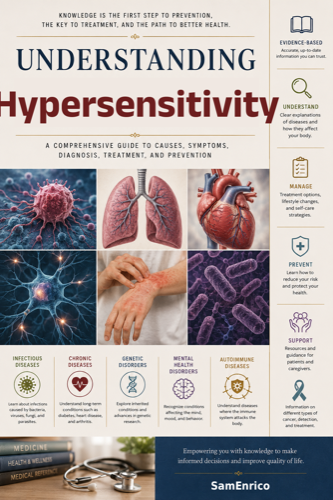 Understanding HypersensitivityCatalano Arlinda$17.99
 TikTok To Instagram Cross Post ManualCatalano Arlinda$12.99
 Financial Wellbeing Apps TechCatalano Arlinda$12.99
 Collecting CoinsCatalano Arlinda$11.99
 How to Start a Paving Tiles Made of Unglazed Clay Business (Beginners Guide)Catalano Arlinda$11.99
You may also like
 Hong Kong Handover 1997Dunn Johnnie$11.99
 Zumba For Postnatal Recovery CourseNeal Christian$11.99
 Zumba for BeginnersLadner Nikia$11.99
 YouTube Comment Mining GuideHumes Pandora$12.99
 Worry Box MeditationCarlin Rudy$11.99
 Workplace Stress MeditationNguyen Lynn$11.99
 Workplace Stress and Sleep RepairHawley Ivory$11.99
 Workplace Perfectionism CureDelaney Jeffry$11.99
 Workplace Injustice Anger GuideWallen Isabelle$11.99
 Work Addiction and Burnout LinkGreenwood Ester$11.99
 Women in Yoga and WellnessBeattie Galina$11.99
 Women in Stand Up ComedyChun Evangeline$11.99