
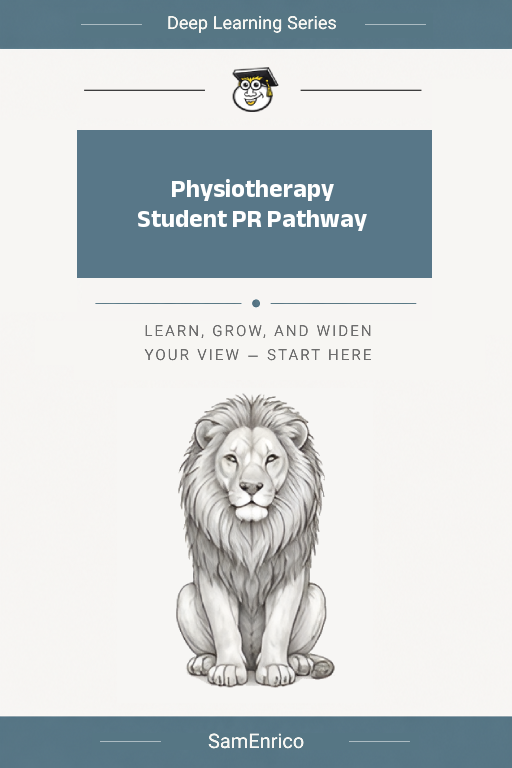
Physiotherapy Student PR Pathway eBook
Complete AHPRA registration and APC assessment for
Complete AHPRA registration and APC assessment for physiotherapist occupation on MLTSSL.
Formats
Free sample
Chapter 1: The Goldmine Map--–- The email arrived at 3:47 AM. A physiotherapist in Mumbai, Priya had been awake for hours, refreshing her inbox every few minutes. When the subject line finally appeared—“APC Assessment Outcome”—her heart stopped. She clicked. Six months of document gathering, three years of clinical experience, and a lifetime of dreaming about Australia condensed into a single PDF.
She passed.Priya is not unique. Every year, thousands of physiotherapists from over fifty countries begin this same journey. Some succeed. Many do not. The difference between success and failure rarely comes down to clinical skill.
It comes down to understanding something most applicants never realise: the pathway from physiotherapy student to Australian Permanent Resident follows a predictable, repeatable pattern. And that pattern is what this chapter reveals.The $90,000 Question Why Australia? The answer begins with a number that surprises most new graduates: $90,000. That is the approximate median annual income for a physiotherapist working in Australia, according to the Australian Government’s Job Outlook service. But the real story is not the starting salary.
It is the trajectory.A physiotherapist in their first year of private practice in regional Queensland might earn 75,000.Fiveyearslater,withacaseloadofloyalpatientsandagrowingreputation,thesamecliniciancouldearn75,000. Five years later, with a caseload of loyal patients and a growing reputation, the same clinician could earn 75,000.Fiveyearslater,withacaseloadofloyalpatientsandagrowingreputation,thesamecliniciancouldearn120,000. A titled specialist in sports physiotherapy working with professional athletic teams can exceed 200,000.Comparethistothe United Kingdom,wheretheaveragephysiotherapistearns£35,000(approximately200,000. Compare this to the United Kingdom, where the average physiotherapist earns £35,000 (approximately 200,000.Comparethistothe United Kingdom,wheretheaveragephysiotherapistearns£35,000(approximately67,000 AUD), or India, where experienced physiotherapists often earn the equivalent of 10,000−10,000-10,000−15,000 AUD annually. The financial arbitrage is striking.But money alone does not explain the exodus.
The deeper driver is opportunity structure.The Three-Legged Stool Every successful migration to Australia rests on three pillars. Remove any one, and the entire structure collapses.The first pillar is qualification recognition. Your degree, your clinical hours, your professional experience—these must be deemed equivalent to an Australian-trained physiotherapist. This is the role of the Australian Physiotherapy Council (APC). Without a positive assessment, you cannot practice, and without practice, you cannot stay.The second pillar is licensing.
Even with a recognised qualification, you cannot treat a single patient without registration with the Australian Health Practitioner Regulation Agency (AHPRA). AHPRA is the gatekeeper to the profession. It checks your English, your criminal history, your recent practice hours, and your fitness to practice. No registration, no work.The third pillar is visa. This is the domain of the Department of Home Affairs.
Even with APC assessment and AHPRA registration, you cannot live and work in Australia without the right visa. The most common pathways for physiotherapists are the Skilled Independent visa (subclass 189), the State Nominated visa (subclass 190), and the Regional visa (subclass 491). Each has different requirements, processing times, and points thresholds.Throughout this book, we return to these three pillars repeatedly. They are the skeleton of your journey. Every chapter adds muscle.The MLTSSL Advantage: Why Physiotherapy Is Bulletproof Some occupations appear on Australia’s skilled migration lists, then disappear.
Chefs, accountants, and even some nursing specialities have experienced this volatility. Physiotherapy has not.Since the introduction of the Medium and Long-term Strategic Skills List (MLTSSL), physiotherapist (ANZSCO 252511) has remained continuously listed. This is not an accident. The Australian Government’s own data shows persistent shortages in physiotherapy across multiple states and territories. The reasons are structural and unlikely to change soon.First, the aging population.
Australia, like many developed nations, is greying rapidly. By 2030, over 20% of Australians will be aged 65 or older. Older adults are the heaviest users of physiotherapy services—falls prevention, osteoarthritis management, post-operative rehabilitation, and chronic disease management. This demographic bulge creates demand that Australian universities cannot satisfy alone.Second, the National Disability Insurance Scheme (NDIS). Launched in 2013, the NDIS now supports over 600,000 Australians with permanent and significant disabilities.
Physiotherapy is one of the most commonly accessed services under the scheme. NDIS participants require functional assessments, equipment prescriptions (wheelchairs, walking frames, orthotics), therapy sessions, and home exercise programs. The NDIS has created an entirely new employment sector for physiotherapists, particularly in community and home-visit roles.Third, aged care reforms. The 2021 Royal Commission into Aged Care Quality and Safety exposed systemic neglect, including inadequate access to allied health services. In response, the Australian Government mandated increased physiotherapy hours per resident in aged care facilities.
This single reform created thousands of new positions almost overnight.Fourth, regional shortages. While major cities like Sydney, Melbourne, and Brisbane have reasonable physiotherapist-to-population ratios, regional and rural Australia faces a crisis. Some towns have waitlists of six months or more for a physiotherapy appointment. In response, states like South Australia, Western Australia, and Tasmania have aggressively nominated physiotherapists for state-sponsored visas, offering a faster pathway to permanent residency in exchange for a commitment to live and work outside metropolitan areas.Fifth, long-COVID rehabilitation. An estimated five to ten percent of COVID-19 cases result in persistent symptoms requiring physiotherapy—fatigue, breathlessness, deconditioning, and cognitive impairments.
This new patient population has created unexpected demand across both public hospital outpatient departments and private practices.Taken together, these five demand drivers mean that physiotherapy will likely remain on the MLTSSL for the foreseeable future. For anyone contemplating migration, this is the single most important fact to internalise. The door is open. The question is whether you will walk through it.The Numbers That Matter: Employment and Earnings Let us move from generalities to specifics. The Australian Government’s Quality Indicators for Learning and Teaching (QILT) survey provides the most reliable data on graduate outcomes.
For physiotherapy, the results are exceptional.Within four months of completing an Australian-accredited physiotherapy program, 94.5% of graduates are employed full-time. This is not a typo. Ninety-four point five percent. To put this in perspective, the average for all university graduates is approximately 70-75 percent. Law graduates?
Around 78 percent. Architecture? 65 percent. Physiotherapy is in a tier of its own, alongside medicine and dentistry.But employment is not the whole story. Earnings matter too.Entry-level salaries for physiotherapists vary significantly by setting and location.
In metropolitan private practices, new graduates typically earn 70,000to70,000 to 70,000to75,000. In regional public hospitals, where competition for staff is fierce, starting salaries can reach $85,000 plus relocation assistance and housing subsidies.Mid-career physiotherapists—those with five to ten years of experience—earn substantially more. Private practice owners or principals often report incomes between 120,000and120,000 and 120,000and150,000. Public hospital physiotherapists at the senior clinician level earn 100,000to100,000 to 100,000to120,000, with additional allowances for on-call work, shift penalties, and weekend duty.At the top of the profession, titled specialists earn 150,000to150,000 to 150,000to200,000 or more. A sports physiotherapist working with a professional rugby league team might earn a base salary of 180,000plusbonuses.Acontinenceandwomen’shealthspecialistrunningtheirownclinicinanaffluent Sydneysuburbmightbill180,000 plus bonuses.
A continence and women’s health specialist running their own clinic in an affluent Sydney suburb might bill 180,000plusbonuses.Acontinenceandwomen’shealthspecialistrunningtheirownclinicinanaffluent Sydneysuburbmightbill250,000 annually.These figures are pre-tax. Australia’s tax system is progressive, with marginal rates ranging from 0% to 45%. But even after tax, the disposable income is substantial.The Myth of "Too Hard": Reframing the English Test Every aspiring physiotherapist has heard the horror stories. “IELTS 7.0 in each band is impossible.” “I know someone who failed eight times.” “Only native…
This is the end of the free sample. Get the eBook to keep going. Buy now
About this book
Details
- Author
- Warden Laurinda
- Publisher
- SamEnrico
- Language
- English
- Genre
- Non-Fiction, Student's Shortcut
- Released
- 2026-05-30
- Pages (approx.)
- 156
- Available as
- eBook, Audiobook

Read better in the ZLOADR app
Your eBooks on your phone or tablet. Sign in with your SamEnrico account and start reading.
More by Warden Laurinda
 Lagos Pop Up Payment SystemsWarden Laurinda$11.99
 The Beginner's Handwashing MeditationWarden Laurinda$11.99
 Congo Child Soldier EscapeWarden Laurinda$11.99
 Muslim Leadership in 1857Warden Laurinda$11.99
 Recall Statute Of LimitationsWarden Laurinda$11.99
 Bulgarian Cultural Tourism RevivalWarden Laurinda$11.99
 Body Image After InfidelityWarden Laurinda$11.99
 Post Meal Walking ProtocolWarden Laurinda$11.99
 Hospital Dream SupportWarden Laurinda$11.99
 Neon Requiem: The Last Days of the Soviet InternetWarden Laurinda$11.99
 The Last Telegram: How One Message Changed the Course of World War IIWarden Laurinda$11.99
 Gwythaint: The Shadowed Wings of the Arthurian WildsWarden Laurinda$11.99
You may also like
 Hong Kong Handover 1997Dunn Johnnie$11.99
 Zumba For Postnatal Recovery CourseNeal Christian$11.99
 Zumba for BeginnersLadner Nikia$11.99
 YouTube Comment Mining GuideHumes Pandora$12.99
 Worry Box MeditationCarlin Rudy$11.99
 Workplace Stress MeditationNguyen Lynn$11.99
 Workplace Stress and Sleep RepairHawley Ivory$11.99
 Workplace Perfectionism CureDelaney Jeffry$11.99
 Workplace Injustice Anger GuideWallen Isabelle$11.99
 Work Addiction and Burnout LinkGreenwood Ester$11.99
 Women in Yoga and WellnessBeattie Galina$11.99
 Women in Stand Up ComedyChun Evangeline$11.99