
Non-FictionSelf-HelpCall Center
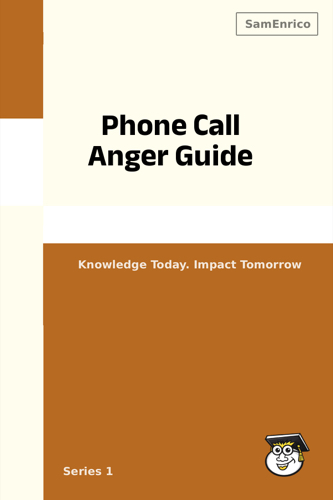
Phone Call Anger Guide eBook
Calming angry callers on customer service lines.
by Hong Novella
Calming angry callers on customer service lines.
Formats
Free sample
Chapter 1: The Invisible Suitcase--Every angry caller arrives carrying a suitcase you cannot see. Inside are five pounds of emotional baggage they did not choose to bring—past traumas with other companies, the press of a ticking clock, the cold weight of financial fear, the dizziness of helplessness, and the dull ache of exhaustion. Your first mistake, and the one that guarantees escalation, is assuming that suitcase is empty. It is not. And until you learn to recognize what is inside it, every angry caller will remain a mystery you cannot solve.This chapter reframes everything you think you know about phone-based anger.
It is not about "difficult people" or "bad customers." It is about unmet needs, invisible burdens, and a fundamental mismatch between what the caller wants and what they are actually asking for. By the end of this chapter, you will never hear an angry voice the same way again. You will hear the suitcase open.The Two Faces of Anger: Instrumental vs. Affective Not all anger is the same. This is the single most important distinction in this entire book, and if you remember nothing else, remember this: some callers are angry on purpose, and some callers are angry because they have lost control.
The difference changes everything about how you respond.Instrumental anger is a tool. It is calculated, targeted, and often effective. The caller using instrumental anger has made a cold calculation: if I yell loud enough, long enough, or meanly enough, I will get what I want. They are not emotionally flooded. Their heart rate may be perfectly normal.
They are acting. You have seen this caller before—the one who screams for a manager, gets a refund, and then speaks to the manager in a perfectly calm voice. That is instrumental anger. It is a performance.Affective anger is a flood. It is genuine, uncontrollable, and driven by the limbic system, not the prefrontal cortex.
The caller experiencing affective anger has been tipped over an edge by fear, pain, helplessness, or a perceived injustice. Their heart rate is elevated. Their thinking is narrowed. They are not choosing to yell; they are yelling because they cannot stop. You have seen this caller too—the one whose voice cracks, who repeats the same sentence three times, who sounds less like a person complaining and more like a person drowning.Why does this distinction matter?
Because instrumental anger requires boundaries. The performing caller needs to know that the performance is not working. Affective anger requires empathy. The flooded caller needs to feel heard before they can even hear themselves.Here is the trap that most agents fall into: they treat every angry caller as if they are being manipulative (instrumental), or they treat every angry caller as if they are having a breakdown (affective). Both are wrong.
The skilled agent diagnoses within the first thirty seconds and responds accordingly.How do you tell the difference? Look for three clues.Clue One: Specificity. Instrumental anger is often vague ("You people are always terrible") while affective anger is often painfully specific ("On Tuesday at 3:47 PM, your website charged me twice and now my rent check is going to bounce"). The instrumental caller does not need details; details would make the performance harder to sustain. The affective caller cannot stop giving details; the details are the evidence that something real has happened.Clue Two: Escalation pattern.
Instrumental anger escalates when you say no and de-escalates when you offer something. Watch what happens when you say "I understand your frustration." The instrumental caller will often get louder, because they need to overcome your calmness. The affective caller will often get quieter, because your calmness is a relief. Affective anger escalates when you interrupt and de-escalates when you listen. Instrumental anger does the opposite.Clue Three: Recovery time.
Instrumental anger can turn off like a switch. Offer the instrumental caller a solution, and the yelling stops immediately. The affective caller takes time to recover, even after the problem is solved. Their nervous system needs to settle. If you offer a refund and the caller is still breathing heavily thirty seconds later, that is affective anger.
If they say "thank you" in a normal voice three seconds after yelling, that was a performance.Throughout this book, you will learn techniques for both. Part II focuses on affective anger—listening, mirroring, labeling, and the AES framework. Chapters 5 and 9 focus on instrumental anger—broken record, boundaries, and the three-strike rule. But you cannot apply the right tool until you know which face of anger you are seeing. Diagnose first.
Then act.The Baggage Claim: Five Invisible Burdens Every caller, regardless of anger type, arrives with baggage. Not the kind they check at the airport—the kind they have been carrying for weeks, months, or years. The Baggage Claim is a framework for understanding the five most common invisible burdens that turn a small problem into an explosive call. Learn these five burdens, and you will stop asking "Why are they so angry?" and start asking "What are they carrying?"Baggage #1: Past Trauma with the Company The caller has been here before. Not with you, personally, but with your company.
Six months ago, they spent forty-five minutes on hold only to be disconnected. Last year, a different agent told them something that turned out to be false. Three weeks ago, they received an email promising a callback that never came. Every one of those experiences is a scar. And now, on this call, those scars are reactivated.You can spot this caller by phrases like "last time," "every single time," or "I should have known." They are not angry about this problem.
They are angry about the accumulation of every previous problem that was never properly resolved. Your job is not to defend the company's past. Your job is to acknowledge that the past exists.The antidote: a simple statement that names the pattern without defending it. "I hear that this has happened to you before, and I am sorry for that pattern" can lower the temperature faster than any solution. Do not say "That was a different department." Do not say "I wasn't working here then." The caller does not care about your organizational chart.
They care that the pattern stops with you.Baggage #2: Time Scarcity The caller is watching the clock. Not because they are impatient by nature, but because time is genuinely scarce. They called during their fifteen-minute break at work. They are on hold while their child is in the bath. They have been trying to solve this problem for three days and every minute feels like a theft.
Time scarcity is not about rudeness; it is about the feeling that their life is being stolen one minute at a time.You can spot this caller by phrases like "I don't have time for this," "I've already spent an hour," or the repeated checking of their tone—a rising urgency that has nothing to do with the complexity of the issue. They are not angry at you. They are angry at the clock, and you are standing in front of it.The antidote to time scarcity is time certainty. Do not say "I'll look into…
This is the end of the free sample. Get the eBook to keep going. Buy now
About this book
Details
- Author
- Hong Novella
- Publisher
- SamEnrico
- Language
- English
- Genre
- Non-Fiction, Self-Help, Call Center
- Released
- 2026-06-08
- Pages (approx.)
- 127
- Available as
- eBook, Audiobook

Read better in the ZLOADR app
Your eBooks on your phone or tablet. Sign in with your SamEnrico account and start reading.
More by Hong Novella
 Gacy Victim Impact StatementsHong Novella$11.99
 Fitness and Wellness SpendingHong Novella$11.99
 Parenting with BipolarHong Novella$11.99
 Mozambican Civil WarHong Novella$11.99
 Ramirez DNA Evidence RetrospectiveHong Novella$11.99
 Travel With IBS GuideHong Novella$11.99
 Dawn Simulator Therapy GuideHong Novella$11.99
 The Great Toilet Paper Panic: How a Virus Exposed the Flaws of CapitalismHong Novella$11.99
 Ballots and Blood: The 1893 New Zealand Suffrage RevolutionHong Novella$11.99
 A Collector's Handbook to the Citroën Citroen BijouHong Novella$11.99
 Understanding Pelizaeus-merzbacher DiseaseHong Novella$11.99
 Factoring Credit Insurance Overlay WorkbookHong Novella$12.99
You may also like
 Hong Kong Handover 1997Dunn Johnnie$11.99
 Zumba For Postnatal Recovery CourseNeal Christian$11.99
 Zumba for BeginnersLadner Nikia$11.99
 YouTube Comment Mining GuideHumes Pandora$12.99
 Worry Box MeditationCarlin Rudy$11.99
 Workplace Stress MeditationNguyen Lynn$11.99
 Workplace Stress and Sleep RepairHawley Ivory$11.99
 Workplace Perfectionism CureDelaney Jeffry$11.99
 Workplace Injustice Anger GuideWallen Isabelle$11.99
 Work Addiction and Burnout LinkGreenwood Ester$11.99
 Women in Yoga and WellnessBeattie Galina$11.99
 Women in Stand Up ComedyChun Evangeline$11.99