
Non-FictionForecast & OutlookPhilippines
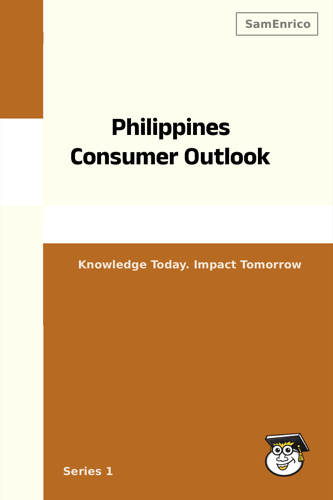
Philippines Consumer Outlook
Track remittance-driven spending and BPO sector im
by Muller Billi
Track remittance-driven spending and BPO sector impacts on household consumption.
Formats
About this book
Free sample
Chapter 1: The 73% Riddle--When a country spends nearly three-fourths of everything it produces on what its own people buy at home, economists raise their eyebrows. When that same country has virtually no world-famous export brands, no dominant manufacturing sector, and no reputation for making anything the rest of the world desperately wants, those economists start asking uncomfortable questions. The Philippines presents exactly such a puzzle. Private consumption accounts for approximately 73 percent of the nation's Gross Domestic Product. That number is not a rounding error or a statistical quirk.
It is the single most important fact about the Philippine economy, and yet it is almost entirely misunderstood by everyone except the families who live it every day.To grasp why this matters, consider a simple comparison. Vietnam, celebrated as Asia's next manufacturing tiger, derives roughly 45 percent of its GDP from exports of electronics, textiles, and footwear. Thailand, the region's longtime factory floor, sends cars, hard drives, and agricultural products abroad to account for nearly 60 percent of its economic activity. Indonesia, the giant of Southeast Asia, balances consumption at about 55 percent of GDP while leaning heavily on commodity exports like palm oil, coal, and nickel. Even China, famously consumption-shy by global standards, hovers around 55 to 60 percent domestic spending.
The Philippines stands alone in its region—and among the top ten most populous nations globally—for having an economy that feeds almost entirely on itself.But here is the riddle that this chapter will spend the next several pages unraveling: the Philippines does not actually produce most of what its people consume. The country imports rice, fuel, electronics, machinery, chemicals, plastics, and even much of the processed food that fills its grocery shelves. The trade deficit runs persistently high, often exceeding $40 billion annually. So how can a country that imports so much sustain such high domestic consumption? The answer lies in two words that will appear on almost every page of this book: remittances and BPO.
Money earned outside the country and money earned serving foreign clients inside the country have created what this chapter calls the "Easter Egg Economy"—an economy where value is…
This is the end of the free sample. Get the eBook to keep going. Buy now
Contents
- Chapter 1
- Chapter 2
- Chapter 3
- Chapter 4
- Chapter 5
- Chapter 6
- Chapter 7
- Chapter 8
- Chapter 9
- Chapter 10
- Chapter 11
- Chapter 12
Details
- Author
- Muller Billi
- Publisher
- SamEnrico
- Language
- English
- Genre
- Non-Fiction, Forecast & Outlook, Philippines
- Released
- 2026-06-07
- Pages (approx.)
- 134
- Available as
- eBook, Audiobook

Read better in the ZLOADR app
Your eBooks on your phone or tablet. Sign in with your SamEnrico account and start reading.
More by Muller Billi
 Animal Phobia TreatmentMuller Billi$11.99
 Cognitive Behavioral Self Talk CourseMuller Billi$11.99
 Estate Planning for Blended FamiliesMuller Billi$11.99
 The Persuasive Grant Writing GuideMuller Billi$11.99
 The Kidnapping of Aristeo López: A Prohibition-Era Cartel GambitMuller Billi$11.99
 Understanding Pacman DysplasiaMuller Billi$17.99
 Retargeting First Campaign GuideMuller Billi$12.99
 Jim Farley InterviewMuller Billi$12.99
 How to Start a Ballpoint Pen and Refill Business (Beginners Guide)Muller Billi$11.99
 Banquet ChefMuller Billi$11.99
You may also like
 Hong Kong Handover 1997Dunn Johnnie$11.99
 Zumba For Postnatal Recovery CourseNeal Christian$11.99
 Zumba for BeginnersLadner Nikia$11.99
 YouTube Comment Mining GuideHumes Pandora$12.99
 Worry Box MeditationCarlin Rudy$11.99
 Workplace Stress MeditationNguyen Lynn$11.99
 Workplace Stress and Sleep RepairHawley Ivory$11.99
 Workplace Perfectionism CureDelaney Jeffry$11.99
 Workplace Injustice Anger GuideWallen Isabelle$11.99
 Work Addiction and Burnout LinkGreenwood Ester$11.99
 Women in Yoga and WellnessBeattie Galina$11.99
 Women in Stand Up ComedyChun Evangeline$11.99