
Non-FictionStrategic AtlasHealthcare Sector
Pharmaceutical ESG Performance eBook
Compare drug pricing, access programs, and clinica
by Halcomb Ola
Compare drug pricing, access programs, and clinical trial diversity among Pfizer, Merck, J&J, and Novartis.
Formats
Free sample
Chapter 1: The Nairobi Rule...--–- In 2023, a 54-year-old schoolteacher named Faith Achieng walked into the Kenyatta National Hospital in Nairobi. She had been coughing for four months and had lost nearly fifteen kilograms. The oncologist on duty, Dr. Samuel Omondi, delivered the news softly but directly: Faith had chronic myeloid leukemia – CML – a cancer of the blood and bone marrow. Without treatment, she had six to twelve months to live.The good news, Dr.
Omondi explained, was that CML is no longer a death sentence. A class of drugs called tyrosine kinase inhibitors can turn the disease into a manageable chronic condition, much like diabetes or high blood pressure. Patients who take these drugs daily can live normal lifespans. The bad news was also the good news: the drug that works best – a generic version of imatinib – costs approximately 3,600peryearin Ethiopia,wherethegovernmentnegotiatesdirectlywithgenericmanufacturers.In Switzerland,thesamemolecule,brandedas Gleevecby Novartis,costs3,600 per year in Ethiopia, where the government negotiates directly with generic manufacturers. In Switzerland, the same molecule, branded as Gleevec by Novartis, costs 3,600peryearin Ethiopia,wherethegovernmentnegotiatesdirectlywithgenericmanufacturers.In Switzerland,thesamemolecule,brandedas Gleevecby Novartis,costs98,000 per year.
In Kenya, the price was $4,800 – just above what Faith earned annually as a teacher.Faith could not afford $4,800. She asked Dr. Omondi if Novartis had a patient assistance program. It did – for U.S. residents.
She asked if Kenya was included in any tiered pricing arrangement. It was not. She asked if a generic version was legally available. It was, but not in Kenya, because Novartis had not registered it there. Faith Achieng died on March 14, 2024.
She was fifty-five years old.This book is not about Faith. It is about the four pharmaceutical companies – Pfizer, Merck & Co., Johnson & Johnson, and Novartis – that decide, every day, whether patients like Faith get to live or die. And it is about the investment community that funds those decisions through pension funds, mutual funds, and ESG portfolios. The central argument of this chapter – and the entire book – is that pharmaceutical ESG is not a compliance exercise or a public relations campaign. It is a matter of life and death.
And the framework used to evaluate it today is dangerously broken.The Social License: What It Is and Why It Matters Every industry requires a social license to operate – the implicit permission granted by the public and regulators to conduct business. For extractive industries like oil and mining, the social license hinges on environmental damage. For technology companies, it centers on privacy and disinformation. For pharmaceuticals, the social license rests on a single, brutal question: Do you put patients before profits?The pharmaceutical industry has been losing that social license for decades. In 2004, the Gallup poll on industry reputation ranked pharmaceuticals as the second most admired industry, behind only computers.
By 2015, pharmaceuticals had dropped to the bottom tier, tied with the federal government. In 2024, according to the Edelman Trust Barometer, only 48 percent of respondents in high-income countries said they trusted pharmaceutical companies to do what is right. In middle-income countries – where the majority of the world's poor live – that number fell to 32 percent.The erosion of trust is not abstract. It manifests in congressional hearings, shareholder resolutions, state-level price caps, and the Inflation Reduction Act – which we will examine in Chapter 2. It manifests in the rise of pharmacy benefit managers, which exist largely to negotiate secret rebates against inflated list prices.
And it manifests in the quiet fury of oncologists like Dr. Omondi, who must watch patients die because a drug that costs pennies to manufacture is priced like a luxury car.The social license is not a static asset. It can be earned, lost, and partially regained. The framework we introduce in this chapter – and deploy throughout the book – evaluates social license through three measurable indicators:Public trust surveys (Gallup, Edelman, Ipsos)Frequency and outcome of shareholder ESG resolutions Negative media sentiment volume indexed to earnings calls Applying this framework to the four companies reveals the starting point for our investigation:Novartis consistently scores highest on public trust, with a net positive sentiment of +12 percent in 2024 surveys. It also receives the fewest shareholder resolutions (only two in 2024, both withdrawn).
However, as we will see in Chapter 6, Novartis still fails to disclose country-level sales data, leaving its access claims unverifiable.Johnson & Johnson scores second, with neutral net sentiment and a mixed record on shareholder resolutions – three filed in 2024, one passed.Pfizer scores third, with net negative sentiment driven largely by COVID-19 vaccine pricing controversies, which we explore in Chapter 3.Merck & Co. scores last, with net negative sentiment of minus 18 percent, the highest number of shareholder resolutions (six in 2024), and the most sustained negative media coverage of any large pharmaceutical company.These rankings are not static. They are the result of deliberate strategic choices made by executives, boards, and investors. The purpose of this book is to expose those choices and to provide a roadmap for change.The Central Tension: Profit Versus Purpose Every pharmaceutical executive will tell you that the industry exists to save lives. Every pharmaceutical executive will also tell you that research and development is expensive, risky, and requires substantial profit margins to sustain.
Both statements are true. The average cost to develop a new drug – accounting for failures – is estimated at 1.3billionto1.3 billion to 1.3billionto2.6 billion. Only one in ten drugs that enter clinical trials ever reaches the market.But the tension between profit and purpose is not about whether companies should make money. It is about how much, and at whose expense. The case of Keytruda, Merck's blockbuster oncology drug, illustrates the dilemma.Keytruda (pembrolizumab) is an immunotherapy that has revolutionized the treatment of lung cancer, melanoma, and dozens of other malignancies.
It is also extraordinarily expensive. The list price in the United States is 210,000peryear.In Japan,thesamedrugcosts210,000 per year. In Japan, the same drug costs 210,000peryear.In Japan,thesamedrugcosts38,000 per year – a 5.5-fold difference. The cost of goods sold for Keytruda is estimated at 1,500to1,500 to 1,500to3,000 per patient per year, meaning the gross profit margin exceeds 98 percent.Merck's defense is value-based pricing: Keytruda extends life, and extended life has economic value. By that logic, a $210,000 price tag is justified because it saves the healthcare system money in the long run – fewer hospitalizations, fewer surgeries, fewer end-of-life interventions.
The defense is intellectually coherent. But it is morally insufficient for patients who cannot afford the upfront cost, for healthcare systems in low-income countries, and for uninsured Americans who face bankruptcy or death.This is the central tension of pharmaceutical ESG. It is not a trade-off between good and evil. It is a trade-off between two goods – innovation and access – that conflict in practice. The companies that resolve this tension best will survive the coming decade.
Those that do not will face investor revolts, regulatory crackdowns, and reputational collapse.The Four Companies: A Comparative Introduction Before we proceed, a word on selection. Pfizer, Merck & Co., Johnson & Johnson, and Novartis are not the only large pharmaceutical companies. But they represent the four distinct business models that dominate the industry today:Pfizer: A diversified giant with a blockbuster vaccine portfolio and an aggressive access program (the Accord for a Healthier World) that some praise and others dismiss as…
This is the end of the free sample. Get the eBook to keep going. Buy now
About this book
Details
- Author
- Halcomb Ola
- Publisher
- SamEnrico
- Language
- English
- Genre
- Non-Fiction, Strategic Atlas, Healthcare Sector
- Released
- 2026-06-01
- Pages (approx.)
- 142
- Available as
- eBook, Audiobook

Read better in the ZLOADR app
Your eBooks on your phone or tablet. Sign in with your SamEnrico account and start reading.
More by Halcomb Ola
 Solar Temple Canadian Deaths HandbookHalcomb Ola$11.99
 Vision Loss Loneliness GuideHalcomb Ola$11.99
 Free Creator Legal Stack GuideHalcomb Ola$11.99
 Private Debt Landscape GuideHalcomb Ola$11.99
 Mindfulness for IBS ManagementHalcomb Ola$11.99
 The Silk Wars: How Two Families Shaped the Global Fashion EmpireHalcomb Ola$11.99
 Seeds of Defiance: The Woman Who Stole the World’s CropsHalcomb Ola$11.99
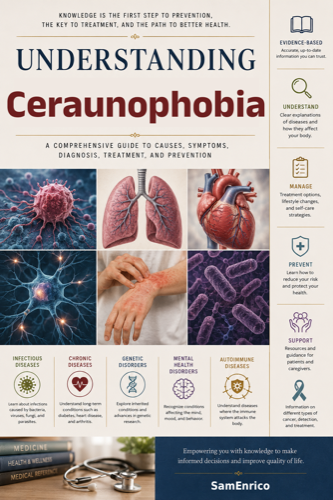 Understanding CeraunophobiaHalcomb Ola$17.99
 Alder HarvestingHalcomb Ola$11.99
 British University Dubai GuideHalcomb Ola$12.99
 How to Become a Automatic-nailing-machine FeederHalcomb Ola$11.99
You may also like
 Hong Kong Handover 1997Dunn Johnnie$11.99
 Zumba For Postnatal Recovery CourseNeal Christian$11.99
 Zumba for BeginnersLadner Nikia$11.99
 YouTube Comment Mining GuideHumes Pandora$12.99
 Worry Box MeditationCarlin Rudy$11.99
 Workplace Stress MeditationNguyen Lynn$11.99
 Workplace Stress and Sleep RepairHawley Ivory$11.99
 Workplace Perfectionism CureDelaney Jeffry$11.99
 Workplace Injustice Anger GuideWallen Isabelle$11.99
 Work Addiction and Burnout LinkGreenwood Ester$11.99
 Women in Yoga and WellnessBeattie Galina$11.99
 Women in Stand Up ComedyChun Evangeline$11.99