
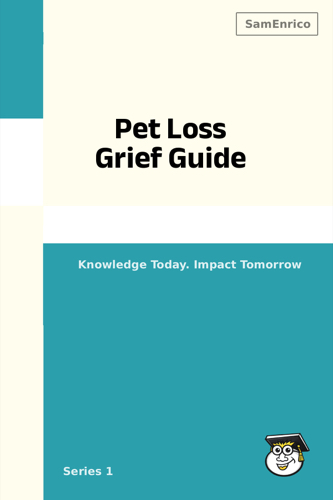
Pet Loss Grief Guide Audiobook
Validates the unique pain of losing an animal comp
Validates the unique pain of losing an animal companion and offers healing steps.
Formats
Free sample
Chapter 1: More Than Just a Pet--The first time you hear someone say “it was just a dog,” something inside you breaks a second time. Not because the words are cruel—though they are—but because they reveal a chasm between how you feel and how the world sees your loss. You are drowning, and someone has just informed you that the water is only ankle-deep. This chapter exists to close that chasm. It will give you language for your pain, science to back it up, and permission to stop apologizing for a grief that is not only real but biologically, neurologically, and psychologically profound.The Neuroscience of a Broken Bond Let us begin with a fact that would have seemed impossible to previous generations: the human brain does not distinguish between a beloved pet and a beloved human family member when it comes to attachment.
Functional magnetic resonance imaging (f MRI) studies have repeatedly shown that the same neural circuitry activates when a person views their dog as when a parent views their child. The anterior cingulate cortex—responsible for emotional salience and social bonding—lights up. The insula, which processes empathy and interoceptive awareness, activates. The dorsal raphe nucleus, involved in attachment and reward, responds with the same oxytocin-dopamine cascade.This is not anthropomorphism. This is neurobiology.When you lose that pet, your brain experiences an attachment rupture identical in its underlying mechanisms to the loss of a human child, partner, or parent.
The opioid-withdrawal-like response in your attachment pathways creates genuine physical pain. Researchers have documented that social pain—the kind caused by separation from a loved one—activates the same brain regions (the dorsal anterior cingulate and anterior insula) as physical pain. Taking Tylenol has been shown to reduce social pain in experimental settings, a finding that underscores how literally your brain registers this loss as an injury.You are not weak. You are not overreacting. You are experiencing a neurological event.The attachment bond between humans and companion animals has evolutionary roots stretching back at least 15,000 years.
Co-evolution shaped both species. Dogs, for example, developed the ability to read human pointing gestures—a skill that chimpanzees do not reliably possess. Humans, in turn, developed heightened sensitivity to canine facial expressions and vocalizations. This mutual domestication created a cross-species attachment system so robust that your brain treats your dog or cat as a member of your in-group, your…
This is the end of the free sample. Get the Audiobook to keep going. Buy now
About this book
Details
- Author
- Solis Allegra
- Publisher
- SamEnrico
- Language
- English
- Genre
- Non-Fiction, Self-Help / Grief
- Released
- 2026-06-10
- Pages (approx.)
- 135
- Available as
- eBook, Audiobook

Listen in the VoxFlicks app
Audiobooks and audio dramas wherever you go. Sign in with your SamEnrico account and press play.
More by Solis Allegra
 Mindful Walking for PregnancySolis Allegra$11.99
 Pre Sleep Memory CueSolis Allegra$11.99
 Study Environment Optimization GuideSolis Allegra$11.99Study Environment Optimization GuideSolis Allegra$11.99
 Compulsive Spending Recovery CoachSolis Allegra$11.99
 The Pomodoro Study MethodSolis Allegra$11.99
 Difficult Customer TalksSolis Allegra$11.99
 SMART Goals for VolunteeringSolis Allegra$11.99
 The Silk Road Kingpin: The Untold Story of Paul Le RouxSolis Allegra$11.99
 The Iron Will of the Arctic: Nansen’s Impossible JourneySolis Allegra$11.99
 Service Providers Guide to Special EventsSolis Allegra$11.99
 How to Produce a KitSolis Allegra$11.99
You may also like
 Hong Kong Handover 1997Dunn Johnnie$11.99
 Zumba For Postnatal Recovery CourseNeal Christian$11.99
 Zumba for BeginnersLadner Nikia$11.99
 YouTube Comment Mining GuideHumes Pandora$12.99
 Worry Box MeditationCarlin Rudy$11.99
 Workplace Stress MeditationNguyen Lynn$11.99
 Workplace Stress and Sleep RepairHawley Ivory$11.99
 Workplace Perfectionism CureDelaney Jeffry$11.99
 Workplace Injustice Anger GuideWallen Isabelle$11.99
 Work Addiction and Burnout LinkGreenwood Ester$11.99
 Women in Yoga and WellnessBeattie Galina$11.99
 Women in Stand Up ComedyChun Evangeline$11.99