
Non-FictionProfessional's Cheat SheetPeer Feedback
Peer Review Collaboration Guide eBook
Shares your draft business case with trusted colle
by Akins Tuan
Shares your draft business case with trusted colleagues for feedback before submission, incorporating constructive criticism for polish.
Formats
Free sample
Chapter 1: The Vulnerability Advantage...–- The email arrived at 11:47 PM on a Tuesday. Marcus, a senior product manager at a fast-growing tech company, had been working on a business case for six weeks. It was his ticket to a promotion – a $2.3 million proposal to expand the company's analytics platform into three new markets. He had polished every chart, refined every sentence, and rehearsed every assumption. At 11:47 PM, he hit send.
The proposal landed in his VP's inbox with a simple note: "Ready for your review. Thanks."Three days later, Marcus sat in a conference room while the VP flipped through the printed document. The silence lasted seven minutes. Then the VP spoke: "Marcus, this is beautiful work. The formatting is exceptional.
But you've made three catastrophic assumptions about our data infrastructure, and no one caught them. This proposal would have cost us $800,000 in unplanned engineering work. I'm putting the promotion on hold."Marcus had not shared the draft with anyone. Not his peers, not his direct reports, not even his mentor. He believed that asking for feedback would signal incompetence.
He believed that polished work was strong work. He was wrong – and the cost was a delayed promotion and a bruised reputation.This book exists because Marcus's story is not rare. It happens every day in every industry: smart, ambitious professionals polish their work in isolation, submit it with held breath, and then wonder why it gets rejected or, worse, approved with hidden flaws that surface months later as spectacular failures. The problem is not a lack of skill. The problem is a lack of structured vulnerability.The Myth of the Lone Genius Corporate culture has a dangerous archetype: the brilliant individual who works alone, emerges from a cave, and presents flawless work to an amazed audience.
Think of movies depicting genius programmers writing code in the dark, or visionary founders unveiling perfect pitch decks. This archetype is seductive because it promises control. If you work alone, no one can criticize your unfinished thoughts. No one can see your confusion. No one can question your assumptions before you have perfected them.But the lone genius is largely a fiction.
In reality, the most successful professionals – from Nobel Prize-winning scientists to Fortune 500 CEOs – share their work early and often. They treat feedback as a resource, not a threat. They understand what organizational psychologist Amy Edmondson calls "psychological safety": the belief that taking interpersonal risks will not be punished. When psychological safety exists, people share half-formed ideas. When it is absent, they polish in secret until it is too late.The research is startling.
In a study of 200 business cases submitted to a corporate investment committee, researchers found that cases shared with at least three colleagues before submission were 43% more likely to be approved on the first attempt. More importantly, cases that were not shared were three times more likely to contain a critical error – a wrong assumption, a miscalculated ROI, a missing risk factor – that would later cause project failure. Polishing in isolation did not produce better work. It produced more confident errors.The Cost of Perfectionism Perfectionism is often praised as a virtue in professional settings. We say things like "She is such a perfectionist" as a compliment.
But perfectionism has a dark side, and it manifests most destructively in how we handle drafts. There are two harmful forms of perfectionism, and understanding the difference is the first step toward recovery.Polishing as perfectionism is the belief that every word, every number, every alignment must be flawless before anyone else sees the document. The perfectionist spends hours adjusting margins, choosing the exact shade of blue for a chart, and rewriting the same sentence seventeen times. This feels productive, but it is actually a form of procrastination disguised as diligence. The perfectionist avoids the vulnerability of feedback by focusing on low-risk, low-value activities.
The charts look beautiful, but the logic is unsound. The grammar is impeccable, but the assumptions are wrong.Polishing as procrastination is different but equally dangerous. Here, the professional knows they need feedback but delays asking because the draft is "not ready yet." They set arbitrary thresholds: "I'll share it after I finish the financials," then "after I add the appendix," then "after one more round of edits." The deadline approaches, and suddenly it is too late to ask for feedback. They submit the draft alone, telling themselves they ran out of time. But the truth is they ran out of courage.Both forms of perfectionism share a common root: fear.
The fear of being seen as incompetent. The fear of criticism. The fear that someone will point out a flaw you should have caught yourself. This book will not eliminate that fear – fear is a normal human response. But this book will give you a system for acting despite the fear.The Vulnerability Advantage Brené Brown, the researcher who popularized the concept of vulnerability in leadership, defines vulnerability as "uncertainty, risk, and emotional exposure." By that definition, sharing an unfinished draft is the definition of vulnerability.
You are uncertain whether your ideas hold up. You are risking judgment from your peers. You are emotionally exposed.But here is the counterintuitive insight that transforms vulnerability from a weakness into a strength: people trust and promote those who ask for help, not those who pretend to have all the answers. In a study of 357 managers, researchers found that managers who regularly asked peers for feedback on their work-in-progress were rated as more competent, more collaborative, and more promotion-ready than managers who submitted only polished final products. The asking signaled confidence – the confidence to admit you do not know everything.Think of it this way: a polished draft sent without review says, "I have considered every possible angle and found no flaws." A Level 2 draft (structured, with flagged assumptions) sent with specific questions says, "I have done my best, but I am smart enough to know I might have missed something.
Help me make this better." Which professional would you rather promote? The one who pretends to be infallible or the one who proves they can improve?The Three-Level Draft Maturity Scale Throughout this book, we will refer to a critical framework: the Three-Level Draft Maturity Scale. Understanding this scale resolves a common confusion about how "rough" a draft should be before sharing it. The answer depends on the level.Level 1: Raw. This draft contains bulleted ideas, incomplete sentences, flagged unknowns in brackets, and no formatting.
It might look like: "Problem: customer churn up 15% – need data on Q3. Solution: retention campaign? Budget: TBD. Assumption: email open rates will hold – [CHECK THIS]." A Level 1 draft is only appropriate for your closest trusted critics – perhaps one or two colleagues who have explicitly agreed to see very early thinking. You would never send a Level 1 draft to a manager or a cross-functional peer unless you have a specific agreement about its roughness.Level 2: Structured.
This draft has full sections, complete sentences, working data tables, and highlighted assumptions (using comments, brackets, or a different font color). The structure is clear: problem statement, analysis, recommended solution, financials, risks. But the draft is not polished. There may be placeholders like "[INSERT CUSTOMER QUOTE]" or "[NEED CONFIRMATION…
This is the end of the free sample. Get the eBook to keep going. Buy now
About this book
Details
- Author
- Akins Tuan
- Publisher
- SamEnrico
- Language
- English
- Genre
- Non-Fiction, Professional's Cheat Sheet, Peer Feedback
- Released
- 2026-06-01
- Pages (approx.)
- 145
- Available as
- eBook, Audiobook

Read better in the ZLOADR app
Your eBooks on your phone or tablet. Sign in with your SamEnrico account and start reading.
More by Akins Tuan
 Stretching for Tight HipsAkins Tuan$11.99
 Loving Kindness for Stepfamily LifeAkins Tuan$11.99
 Attempt Survivor OCD StoryAkins Tuan$11.99
 Childhood Cancer Survivor GuideAkins Tuan$11.99
 Helping Siblings Understand Baby LossAkins Tuan$11.99
 Dien Bien Phu: The Valley of No ReturnAkins Tuan$11.99
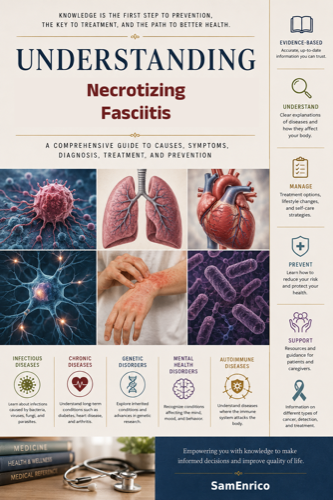 Understanding Necrotizing FasciitisAkins Tuan$17.99
 Facility MaintenanceAkins Tuan$11.99
 Excel Macros for Economics StudentsAkins Tuan$12.99
 How to Start a Orthopaedic Appliances (not Footwear) Business (Beginners Guide)Akins Tuan$11.99
You may also like
 Hong Kong Handover 1997Dunn Johnnie$11.99
 Zumba For Postnatal Recovery CourseNeal Christian$11.99
 Zumba for BeginnersLadner Nikia$11.99
 YouTube Comment Mining GuideHumes Pandora$12.99
 Worry Box MeditationCarlin Rudy$11.99
 Workplace Stress MeditationNguyen Lynn$11.99
 Workplace Stress and Sleep RepairHawley Ivory$11.99
 Workplace Perfectionism CureDelaney Jeffry$11.99
 Workplace Injustice Anger GuideWallen Isabelle$11.99
 Work Addiction and Burnout LinkGreenwood Ester$11.99
 Women in Yoga and WellnessBeattie Galina$11.99
 Women in Stand Up ComedyChun Evangeline$11.99