
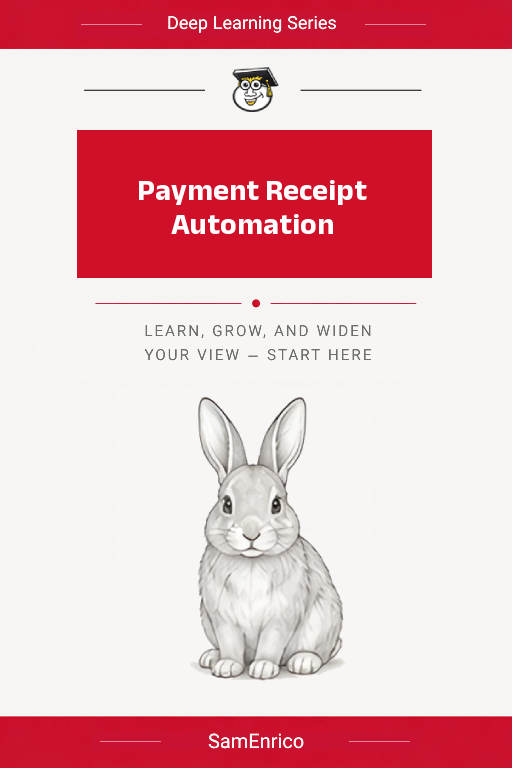
Non-FictionBusiness BriefAutomation
Payment Receipt Automation eBook
Automatically match incoming cross border payments
Automatically match incoming cross border payments to invoices using reconciliation software.
Formats
Free sample
Chapter 1: The Eleven-Day Payroll...--–- The phone rang at 4:47 PM on a Thursday. Maria Chen, CFO of a $45 million industrial components manufacturer, watched the caller ID flash: Payroll Services. Her stomach tightened. She already knew what they were going to say."Maria, we don't have the funds to process tomorrow's payroll," the voice on the other end said. "Your German customer's payment hasn't cleared.""But they wired it eleven days ago," Maria replied, already pulling up the bank portal."I know.
We show nothing. You have 62,000inavailablecash.Payrollis62,000 in available cash. Payroll is 62,000inavailablecash.Payrollis487,000."That phone call cost Maria's company more than a missed payroll. It cost them their reputation. Fourteen employees gave notice the following week.
Two key salespeople left for competitors. A supplier put them on cash-on-delivery terms, strangling their inventory cycle. All because $500,000 worth of goods shipped to a credit-worthy German buyer had disappeared into the black hole of cross-border payments—not lost, not stolen, just stuck.The payment existed. The buyer had proof of wire. The manufacturer had proof of delivery.
But somewhere between a Deutsche Bank branch in Munich and a regional bank in Ohio, that $500,000 had entered what this book calls the Float—the purgatory of cross-border finance where money is neither in the sender's account nor the receiver's, where correspondent banks take their cuts unseen, and where currency values shift like desert sands.This book exists because Maria's story is not an anomaly. It is the daily reality for hundreds of thousands of companies selling across borders. And the problem is getting worse, not better, as global trade expands while banking infrastructure lags a generation behind.The Anatomy of a Cross-Border Payment To understand why Maria's payroll was at risk, we must first understand what actually happens when a buyer clicks "send" on an international wire. Most finance professionals believe they know. They are wrong.A domestic ACH transfer in the United States works like an elevator: money enters at the sender's floor and exits at the receiver's floor, usually within one to two business days.
The path is direct. The fees are visible and capped. The funds are guaranteed by the Federal Reserve system.A cross-border wire transfer works like a connecting flight through an unfamiliar hub airport—with no baggage tracking and a series of invisible fees deducted along the way.Here is what actually happens when a German buyer sends €500,000 to an Ohio manufacturer:Step One: The Initiation. The buyer instructs their local bank (Deutsche Bank, Munich branch) to send €500,000 to the manufacturer's US bank account. The buyer pays a wire fee of €15-€35.
The bank generates a SWIFT MT103 message—the standard format for cross-border payment instructions.Step Two: The Correspondent Chain. Deutsche Bank does not have a direct settlement relationship with every regional bank in Ohio. Instead, it sends the payment through a correspondent bank—usually a large global institution like JPMorgan Chase or Citibank. That correspondent bank deducts a fee (15−15-15−50) for acting as the intermediary. If the correspondent bank does not have a direct relationship with the Ohio bank, it passes the payment to a second correspondent bank, which deducts another fee.Step Three: The Currency Conversion.
The payment was sent in euros. The manufacturer's bank account is in US dollars. Somewhere in the chain—usually at the final correspondent bank or the receiving bank—the currency is converted. The bank uses its own exchange rate, which typically includes a spread of 0.5% to 3% above the mid-market rate.Step Four: The Settlement. The converted dollars arrive in the manufacturer's bank account.
But "arrive" does not mean "available." Banks often place holds on international wires for 1-5 additional business days for compliance review (anti-money laundering checks, OFAC sanctions screening).The result? Maria's eleven-day wait was not unusual. According to SWIFT data, the average cross-border wire takes 3-5 business days to settle, but outliers of 10-14 days are common. And during that time, the seller's cash flow is held hostage.The Two Currency Problems (And Why Confusing Them Is Costing You)Before we go further, we must make a distinction that will run through every chapter of this book. Most finance professionals conflate two separate problems, and that confusion leads to failed automation strategies.Problem One: Settlement Speed.
This is how long it takes for money to physically move from the buyer's bank to the seller's bank. Settlement speed is measured in days (or hours, for newer systems like SWIFT gpi). The causes are correspondent banking delays, compliance holds, and weekend/holiday closures.Problem Two: Rate Volatility. This is how much the value of the payment changes between the moment the buyer sends it and the moment the seller can use it. Rate volatility is measured in percentage change.
The cause is the floating exchange rate market, where currency values shift continuously based on economic news, central bank policies, and market sentiment.Here is the critical insight that most automation guides miss: Faster settlement does not solve rate volatility, and rate controls do not accelerate settlement.If you use a stablecoin or a blockchain-based settlement system (which we will discuss in Chapter 12), you might reduce settlement time from five days to five seconds. But if the buyer sends euros and you need dollars, the value will still fluctuate based on the exchange rate at the moment of conversion. Conversely, if you lock in a forward contract to fix the exchange rate, you have eliminated volatility risk, but the money still takes five days to arrive.A complete cross-border automation strategy must address both problems separately. This book addresses both. But first, we must understand why the traditional approach to reconciliation—exact amount matching—fails so spectacularly in a cross-border context.The Exact Amount Matching Fallacy Every off-the-shelf accounting system—Quick Books, Xero, Net Suite, Sage—was built around a simple, elegant assumption: the amount the customer pays will exactly match the amount on the invoice.This assumption holds reasonably well for domestic transactions.
In the United States, a 1,000invoicegeneratesa1,000 invoice generates a 1,000invoicegeneratesa1,000 ACH debit or $1,000 check. The payment arrives. The system matches it. The invoice is closed.In cross-border transactions, this assumption is catastrophic.Consider a simple example: You invoice a customer in Brazil for 10,000USD.Thecustomerpays50,000Brazilianreais,whichatthetimeofinvoicewasexactly10,000 USD. The customer pays 50,000 Brazilian reais, which at the time of invoice was exactly 10,000USD.Thecustomerpays50,000Brazilianreais,whichatthetimeofinvoicewasexactly10,000.
But by the time the wire travels through three correspondent banks and settles five days later, the exchange rate has moved. The 50,000 reais are now worth 9,800.Yourbankchargesa9,800. Your bank charges a 9,800.Yourbankchargesa35 incoming wire fee and a 20correspondentbankfee.Thenetdeposittoyouraccountis20 correspondent bank fee. The net deposit to your account is 20correspondentbankfee.Thenetdeposittoyouraccountis9,745.Your accounting system sees a payment of 9,745againstaninvoiceof9,745 against an invoice of 9,745againstaninvoiceof10,000. It flags a short-pay.
Someone—probably a clerk earning $22 per hour—spends 15 minutes researching: Did the customer short-pay? Is there a dispute? Is this a bank fee? They call the customer. The customer sends proof of 50,000 reais sent.
More confusion. Eventually, after 45 minutes and three emails, someone figures out that the difference is bank fees and FX.Now multiply that by 500 cross-border invoices per month. That is 375 hours of manual research per month.…
This is the end of the free sample. Get the eBook to keep going. Buy now
About this book
Details
- Author
- Chaffin Noelia
- Publisher
- SamEnrico
- Language
- English
- Genre
- Non-Fiction, Business Brief, Automation
- Released
- 2026-06-01
- Pages (approx.)
- 153
- Available as
- eBook, Audiobook

Read better in the ZLOADR app
Your eBooks on your phone or tablet. Sign in with your SamEnrico account and start reading.
More by Chaffin Noelia
 Dream Narrative TimelineChaffin Noelia$11.99
 Walking Meditation for Hot WeatherChaffin Noelia$11.99
 Cold Nap GuideChaffin Noelia$11.99
 Vitamin D GuideChaffin Noelia$11.99
 The Chunking Memory MethodChaffin Noelia$11.99
 Leaseback and Rent Back NegotiationChaffin Noelia$11.99
 Pet Loss CourseChaffin Noelia$11.99
 The Unlikely Symphony: How a Prison Choir Transformed LivesChaffin Noelia$11.99
 Habit Stacking Goal PlannerChaffin Noelia$11.99
 The Achille Lauro Hijacking: Terror on the High SeasChaffin Noelia$11.99
 A Collector's Handbook to the Lanchester Fourteen RoadriderChaffin Noelia$11.99
 Cooperative Gender Equity GuideChaffin Noelia$12.99
You may also like
 Hong Kong Handover 1997Dunn Johnnie$11.99
 Zumba For Postnatal Recovery CourseNeal Christian$11.99
 Zumba for BeginnersLadner Nikia$11.99
 YouTube Comment Mining GuideHumes Pandora$12.99
 Worry Box MeditationCarlin Rudy$11.99
 Workplace Stress MeditationNguyen Lynn$11.99
 Workplace Stress and Sleep RepairHawley Ivory$11.99
 Workplace Perfectionism CureDelaney Jeffry$11.99
 Workplace Injustice Anger GuideWallen Isabelle$11.99
 Work Addiction and Burnout LinkGreenwood Ester$11.99
 Women in Yoga and WellnessBeattie Galina$11.99
 Women in Stand Up ComedyChun Evangeline$11.99