
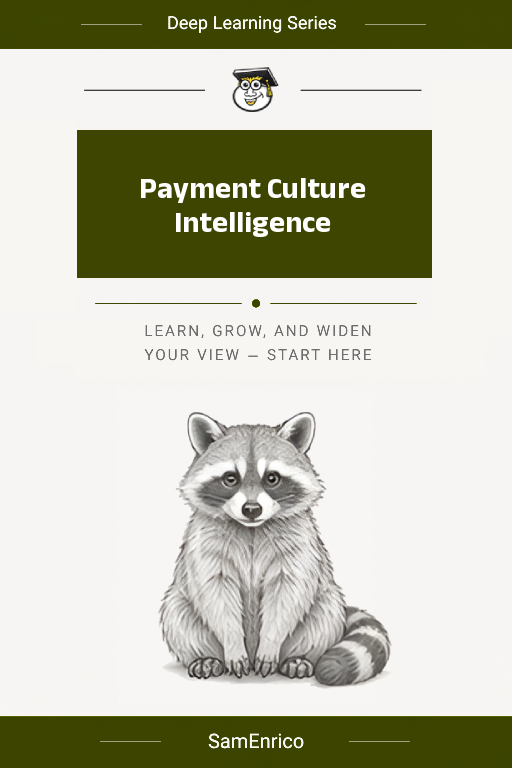
Payment Culture Intelligence eBook
Adapt cross-border payment expectations to buyer c
Adapt cross-border payment expectations to buyer country cultures from Chinese prepayment to European net-60.
Formats
Free sample
Chapter 1: The Million-Dollar Misunderstanding--The conference room in Shenzhen was seventy-two degrees Fahrenheit, perfectly lit, and utterly silent. Two senior procurement managers from a German automotive supplier sat across from a Chinese manufacturing executive named Mr. Chen. On the table between them lay a contract worth $2.4 million annually. The Germans had flown fourteen hours for this meeting.
They had reviewed the factory’s quality certifications, audited the production line, and agreed on specifications down to the millimeter. Only one point remained unresolved.Payment terms.The German procurement lead, Frau Schmidt, pushed a standard offer across the table: “Net-45, as we do with all our Tier Two suppliers in Europe.” She smiled, assuming the conversation was finished.Mr. Chen looked at the proposal, then back at Frau Schmidt. He did not smile. He slid the paper back across the table and said, quietly but firmly: “Fifty percent deposit before production.
Fifty percent balance before shipment.”Frau Schmidt’s smile vanished. “That is… unusual. We have never prepaid a supplier. Not in thirty years.”Mr. Chen nodded slowly.
“And I have never shipped to a new buyer without payment in advance. Not in twenty years.”The meeting ended seventeen minutes later. No contract was signed. The $2.4 million deal walked out the door with the Germans, who found another supplier in Poland willing to offer Net-45. Mr.
Chen’s factory ran at eighty-five percent capacity for the next six months. Neither party was malicious. Neither party was unreasonable. Both were acting completely rationally within their own cultural and financial reality. And both lost because neither understood that there is no such thing as a standard invoice.This chapter is about that misunderstanding—the most expensive mistake in cross-border trade.
It will introduce the foundational framework of this book: the distinction between Trust-Based Economies and Process-Based Economies. It will explain why your payment terms feel “fair” to you and “insulting” to someone else. And it will give you the first tool in your Payment Culture Intelligence toolkit: the ability to decode a buyer’s payment reality before you send the first invoice.The WYSIATI Trap Daniel Kahneman, the Nobel Prize-winning behavioral economist, coined a memorable acronym: WYSIATI, which stands for “What You See Is All There Is.” The idea is simple and devastating. When humans make decisions, we act as if the information immediately in front of us is the only information that exists. We do not search for what we are missing.
We do not imagine alternative realities. We see our own context, our own history, our own norms—and we assume that is all there is to see.In cross-border trade, WYSIATI is a silent killer.The American exporter looks at Net-30 and sees a standard, reasonable, even generous offer. After all, every domestic buyer pays Net-30. The American exporter does not see what the Chinese buyer sees: a request to assume all the risk, provide all the financing, and wait sixty days for money that might never arrive, all while operating in a legal system where collecting on a bad debt takes eighteen months and costs more than the debt itself. What You See (Net-30 is normal) Is All There Is (Net-30 is the only reasonable option).The Chinese manufacturer looks at 100 percent prepayment and sees prudence, respect, and the way business has always been done.
After all, domestic buyers pay before shipment, often in cash or via instant mobile transfer. The Chinese manufacturer does not see what the German buyer sees: a request to hand over money for goods that have not been inspected, certified, or even manufactured yet, all while operating under EU laws that make post-delivery payment the legal and cultural default. What You See (prepayment is normal) Is All There Is (prepayment is the only trustworthy option).Both parties are trapped. Both are seeing only their own reality. And both are losing money because of it.The first step toward Payment Culture Intelligence is recognizing that your payment reality is not universal.
It is not even particularly portable. It is a local adaptation to local conditions—and when you cross a border, your assumptions cross with you, whether they fit or not.The Two Worlds of Global Payment Every economy in the world, at its core, solves the same problem: how do I ensure that I get paid for goods or services delivered to someone I may not know personally? The answer varies dramatically based on the strength of three institutional pillars: legal enforcement, banking infrastructure, and cultural norms around credit and trust.After analyzing payment behavior across seventy-three countries and interviewing more than two hundred exporters, importers, and trade financiers, this book has identified two dominant models. I call them Trust-Based Economies and Process-Based Economies.Trust-Based Economies In Trust-Based Economies, the legal system is weak, slow, or unreliable. Courts are backlogged.
Contract enforcement is expensive. Bankruptcy protections for creditors are minimal. Banking infrastructure may be underdeveloped or concentrated in a few state-controlled institutions. In this environment, you cannot rely on a judge or a bank to make you whole if a buyer does not pay. You must rely on something else.That something else is personal trust.In Trust-Based Economies, payment is a receipt.
It comes before the goods ship. It is proof of relationship, not just a transfer of funds. The logic flows like this: I do not know you well enough to trust you to pay me after delivery. Therefore, you must pay me first. Once you have paid me several times without incident, I will begin to trust you.
Eventually, after a long history of successful transactions, I may extend credit. But that is a privilege earned over years, not a right granted on the first invoice.Countries that operate primarily as Trust-Based Economies include China, Vietnam, Nigeria, Egypt, Pakistan, the Philippines, and many Gulf states. Each has its own local flavor—Guanxi in China, Wasta in the Middle East, extended family networks in Nigeria—but the underlying logic is the same: value before goods.Here is a crucial clarification that many observers get wrong. Trust-Based Economies are often described as “cash economies.” But that is imprecise and misleading. The principle is not cash.
The principle is sequence. Payment comes first. The medium of payment can be physical cash, but it can also be a bank transfer, a mobile wallet credit, or even a digital currency. In China, for example, Alipay and We Chat Pay have made prepayment nearly frictionless, but the sequence has not changed. Pay first.
Receive later. The medium evolved; the logic did not.In Trust-Based Economies, asking for post-delivery payment from a new buyer is not a negotiation. It is a signal that you do not understand basic commercial reality. It makes you look naive at best, reckless at worst.Process-Based Economies In Process-Based Economies, the legal system is strong, predictable, and reasonably fast. Courts enforce contracts.
Credit bureaus track payment behavior. Bankruptcy laws provide clear rules for creditors. Banking infrastructure is mature, competitive, and often digitized. In this environment, you do not need personal trust to transact safely. You need a properly formatted invoice.In Process-Based Economies, payment is an administrative step.
It comes after the goods are delivered, inspected, and approved. It is the final checkbox on a procurement workflow, not…
This is the end of the free sample. Get the eBook to keep going. Buy now
About this book
Details
- Author
- Roche Alejandra
- Publisher
- SamEnrico
- Language
- English
- Genre
- Non-Fiction, Business Brief
- Released
- 2026-05-29
- Pages (approx.)
- 143
- Available as
- eBook, Audiobook

Read better in the ZLOADR app
Your eBooks on your phone or tablet. Sign in with your SamEnrico account and start reading.
More by Roche Alejandra
 The IBS in Children GuideRoche Alejandra$11.99
 Owning Your SuccessRoche Alejandra$11.99
 The Values And Mission Alignment Decision MakingRoche Alejandra$11.99
 Parental Anger and Financial StressRoche Alejandra$11.99
 Incubation For Grief Processing GuideRoche Alejandra$11.99
 Whispers of the First Fire: The Maori Creation ChantRoche Alejandra$11.99
 Understanding ThrombocytopeniaRoche Alejandra$17.99
 MVP Without Coding GuideRoche Alejandra$12.99
 Regional Engineering ManagerRoche Alejandra$11.99
 How to Become a Plate GaugerRoche Alejandra$11.99
You may also like
 Hong Kong Handover 1997Dunn Johnnie$11.99
 Zumba For Postnatal Recovery CourseNeal Christian$11.99
 Zumba for BeginnersLadner Nikia$11.99
 YouTube Comment Mining GuideHumes Pandora$12.99
 Worry Box MeditationCarlin Rudy$11.99
 Workplace Stress MeditationNguyen Lynn$11.99
 Workplace Stress and Sleep RepairHawley Ivory$11.99
 Workplace Perfectionism CureDelaney Jeffry$11.99
 Workplace Injustice Anger GuideWallen Isabelle$11.99
 Work Addiction and Burnout LinkGreenwood Ester$11.99
 Women in Yoga and WellnessBeattie Galina$11.99
 Women in Stand Up ComedyChun Evangeline$11.99