
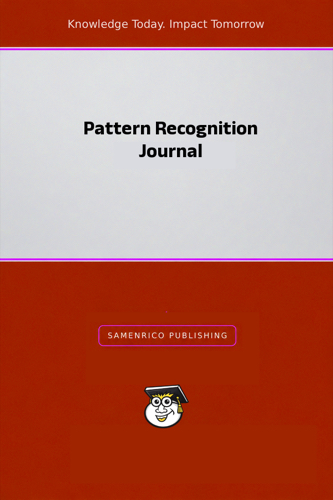
Pattern Recognition Journal Audiobook
undefined
by Pipkin Kizzy
undefined
Formats
Free sample
Chapter 1: The Blindness Epidemic...--–- Your brain is lying to you right now. Not because it’s malicious, but because it’s efficient. Every moment of every day, your senses are bombarded with approximately eleven million bits of information. Your conscious mind can process roughly fifty of those bits. The rest?
Filtered, summarized, interpreted, and often distorted before you ever become aware of it. This filtering is not optional. It is not a design flaw. It is the fundamental operating principle of your brain—a pattern recognition machine that evolved to keep you alive on the African savanna, not to help you succeed in a boardroom, detect a lying politician, or recognize the early warning signs of a failing relationship.This chapter is about the gap between what you think you see and what is actually there. It is about the patterns you miss, the patterns you imagine, and the patterns that are quietly running your life while you remain blissfully unaware.
By the time you finish reading these pages, you will understand why smart people make the same mistakes repeatedly, why experts are often worse at prediction than novices, and why the most valuable skill of the twenty-first century is not coding, not statistics, but something far more fundamental: the ability to see clearly.Welcome to The Pattern Recognition Journal. Your old brain won’t know what hit it.The Anatomy of a Pattern Before we can fix your broken pattern detector, we need to understand what a pattern actually is. In the simplest possible terms, a pattern is a regularity in data that can be used for prediction or decision-making. That definition sounds dry, but its implications are extraordinary. A pattern is not a rule.
It is not a law of nature. It is a statistical regularity that holds often enough to be useful, but never perfectly.Consider your morning commute. You leave your house at 8:15 AM, and you typically arrive at work at 8:47 AM. That is a pattern. It is not a law—some days traffic is lighter, some days there is an accident, some days you hit every green light.
But the regularity exists, and you rely on it. You plan your morning around it. When the pattern breaks (a 9:00 AM arrival after a bridge closure), you notice the deviation precisely because the pattern was so reliable.Patterns exist everywhere, but they are not always…
This is the end of the free sample. Get the Audiobook to keep going. Buy now
About this book
Details
- Author
- Pipkin Kizzy
- Publisher
- SamEnrico
- Language
- English
- Genre
- Non-Fiction, Self-Help / Journal
- Released
- 2026-06-07
- Pages (approx.)
- 146
- Available as
- eBook, Audiobook

Listen in the VoxFlicks app
Audiobooks and audio dramas wherever you go. Sign in with your SamEnrico account and press play.
More by Pipkin Kizzy
 OCD Treatment Without Specialists GuidePipkin Kizzy$11.99
 Silencing Your Inner Fraud VoicePipkin Kizzy$11.99Silencing Your Inner Fraud VoicePipkin Kizzy$11.99
 Hydration and Memory SleepPipkin Kizzy$11.99
 Music Playlist For Road CalmPipkin Kizzy$11.99
 Delegation HandbookPipkin Kizzy$11.99
 Overcoming Sexual NarcissismPipkin Kizzy$11.99
 TM For Skin ConditionsPipkin Kizzy$11.99
 Affirmations For Boss BullyingPipkin Kizzy$11.99
 The Billionaire's Shadow: The Untold Empire of Sam Walton's HeirsPipkin Kizzy$11.99
 Whispers of the Crystal Cavern: The Lost Symphony of the DwarvesPipkin Kizzy$11.99
 Pixel Pioneers: The Untold Story of the First Video Game TournamentPipkin Kizzy$11.99
You may also like
 Hypnosis Script JournalCohen Leah$11.99
 Nightmare JournalLoftin Page$11.99
 Self Hypnosis Athletic JournalLusk Phylis$11.99
 Remote Work JournalFerrell Hassie$11.99
 Goal JournalMchugh Stasia$11.99
 Habit JournalHanna Herminia$11.99
 Resilience JournalPederson Kirstie$11.99
 Empathy Journal GuideBermudez Maren$11.99
 Palace JournalJohnson Luz$11.99
 Pain JournalMccarter Laurette$11.99
 Difficult Conversation JournalConaway Tanna$11.99
 Body Scan Meditation JournalWaite Haywood$11.99