
Parent Self Care Scheduling eBook
Protects time for parental mental health.
by Mace Ciera
Protects time for parental mental health.
Formats
Free sample
Chapter 1: The Busy Trap--–- You are exhausted. Not the kind of tired that a good night’s sleep can fix. Not the kind of busy that feels productive at the end of the day. You are the kind of tired where your bones feel heavy and your thoughts feel like mud. The kind where you sit down for the first time at 9:47pm, and instead of relief, you feel a strange, buzzing emptiness.
You have done everything for everyone, and yet you have nothing left for yourself. And here is the cruelest part: you cannot even remember the last time you felt truly rested.If this sounds familiar, you are not broken. You are not lazy. You are not failing. You are suffering from a modern epidemic that has been normalized to the point of invisibility: the collapse of busy into depleted.
Most parents believe that being busy is the same as being productive, and that being productive is the same as being a good parent. This chapter will dismantle that belief. It will show you, with uncomfortable clarity, the difference between high activity and high cognitive load, between physical fatigue and emotional exhaustion, between the pride of a full calendar and the quiet danger of an empty cup.By the end of this chapter, you will have a new language for what you are feeling, a taxonomy of exhaustion that names your specific kind of tired, and a practical tool—the Energy Audit Worksheet—that will forever change how you see your own daily life. You will stop asking “Why am I so tired?” and start asking “What, specifically, is draining me?”The Cultural Lie: Why We Wear Busy Like a Badge of Honor Let us begin with a hard truth. Somewhere along the way, parenting became a competitive sport.
And the primary metric of success is exhaustion.Think about the last time another parent asked you, “How are you?” What did you say? If you are like most parents, you said something like “So busy” or “Surviving” or “I don’t even know what day it is.” And when you said it, did you notice a small, secret flicker of pride? Did you feel, for just a moment, that your exhaustion was evidence of your effort—that if you were not this tired, you would not be trying hard enough?This is not your fault. This is a cultural script we have all been handed. Social media rewards the parent who wakes up at 5am to pack bento boxes and the parent who volunteers for every school committee and the parent whose children are in three activities each.
The message is subtle but relentless: good parents are busy parents. Great parents are exhausted parents.But here is what the script does not tell you. Exhaustion is not a virtue. It is a vulnerability. When you are depleted, you cannot regulate your emotions.
You yell at your children for spilling milk. You snap at your partner for asking a simple question. You lie awake at 2am, flooded with shame about the person you became at 6pm. The cultural lie of “busy as a badge” has convinced you that your exhaustion is proof of your love. In reality, it is the thing that prevents you from showing up as the parent you actually want to be.This chapter is an intervention.
We are going to separate the healthy, sustainable busyness of a full life from the dangerous, soul-crushing depletion of a life run by invisible demands. And we are going to start by naming something you may have never considered: you can be sitting completely still and still be utterly depleted.Activity Versus Cognitive Load: The Crucial Distinction Most people think of exhaustion in terms of doing. If you have folded laundry, driven carpool, cooked dinner, and helped with homework, of course you are tired. You did things. Your body moved.
But this understanding misses the larger, more insidious source of parental fatigue: the endless, churning, invisible work of thinking about doing.Let me introduce two terms that will appear throughout this book:High Activity is the visible labor of parenting. It is the physical acts: chopping vegetables, wiping counters, buckling car seats, reading bedtime stories. High activity is real. It burns calories and creates fatigue. But high activity is not the primary problem for most parents.High Cognitive Load is the invisible labor of parenting.
It is the mental soundtrack that never stops: Did I sign the permission slip? What day is the dentist appointment? We are almost out of laundry detergent. His teacher seemed annoyed at pickup—did he do something wrong? I need to buy a birthday gift for the party on Saturday.
Did we ever pay that pediatrician bill? The car is making a noise. I have not called my mother in two weeks. The baby has a weird rash. Is that normal?Cognitive load is the experience of running a server in your brain 24 hours a day, 7 days a week.
It is the background process that never quits. And here is the devastating truth: high cognitive load does not require physical movement. You can be lying on the couch, completely still, while your brain runs a marathon. You can be in bed, eyes closed, while your mind cycles through tomorrow’s to-do list. You can be sitting in a parked car, doing nothing, while your internal monologue screams about everything you are not doing.This is why so many parents report feeling exhausted despite having “done nothing all day.” They did nothing visible.
But they did everything invisible. And invisible work is still work. In fact, it is often more draining than visible work because it has no end point. When you fold a basket of laundry, the basket is empty. You can see completion.
When you mentally track every upcoming obligation, every potential problem, every forgotten task, there is no empty basket. There is only the next thought, and the next, and the next.The Three Faces of Exhaustion: Physical, Emotional, and Sensory Not all tired is the same. And one of the reasons parents fail to protect their mental health is that they use the same word—“exhausted”—to describe radically different experiences. This is like using the word “sick” for both a paper cut and pneumonia. The treatment for one is useless for the other.This chapter introduces a taxonomy of exhaustion.
Learn these three categories. They will give you the vocabulary to finally name what you are feeling.Physical Exhaustion Physical exhaustion is the tiredness of the body. It feels like heavy limbs, drooping eyelids, the need to lie down. It is the result of genuine physical exertion: lifting children, running after toddlers, standing for hours, carrying groceries, cleaning the house, or simply not sleeping enough.Physical exhaustion responds to physical solutions: sleep, rest, lying down, reducing physical activity, eating nourishing food. If you are physically exhausted, a fifteen-minute nap will help.
A night of uninterrupted sleep will transform you.Here is the challenge. Many parents assume they are physically exhausted when they are actually emotionally or sensorily exhausted. They try to solve the wrong problem. They take a nap (which…
This is the end of the free sample. Get the eBook to keep going. Buy now
About this book
Details
- Author
- Mace Ciera
- Publisher
- SamEnrico
- Language
- English
- Genre
- Non-Fiction, Self-Help, Self Care
- Released
- 2026-06-07
- Pages (approx.)
- 130
- Available as
- eBook, Audiobook

Read better in the ZLOADR app
Your eBooks on your phone or tablet. Sign in with your SamEnrico account and start reading.
More by Mace Ciera
 Purpose For IntrovertsMace Ciera$11.99
 Early Morning Shift SleepMace Ciera$11.99
 Francis and the Nativity DevotionMace Ciera$11.99
 Stress Management For IBS CourseMace Ciera$11.99
 Resentment Release Letter WritingMace Ciera$11.99
 Wound Master GuideMace Ciera$11.99
 GLP 1 and PlateausMace Ciera$11.99
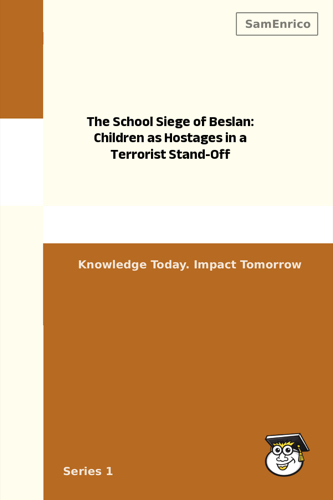 The School Siege of Beslan: Children as Hostages in a Terrorist Stand-OffMace Ciera$11.99
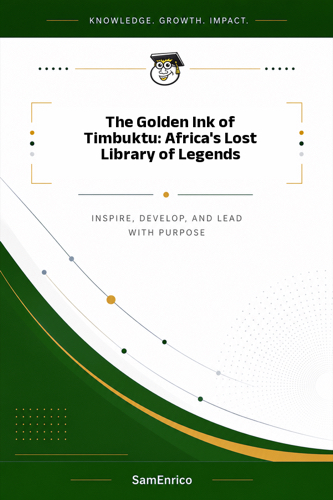 The Golden Ink of Timbuktu: Africa's Lost Library of LegendsMace Ciera$11.99
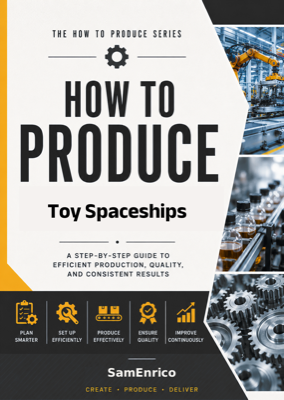 How to Produce Toy SpaceshipsMace Ciera$11.99
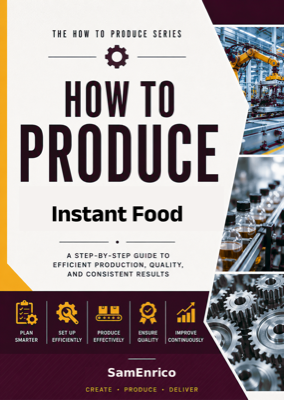 How to Produce Instant FoodMace Ciera$11.99
 Indian Raise Negotiation GuideMace Ciera$12.99
You may also like
 Hong Kong Handover 1997Dunn Johnnie$11.99
 Zumba For Postnatal Recovery CourseNeal Christian$11.99
 Zumba for BeginnersLadner Nikia$11.99
 YouTube Comment Mining GuideHumes Pandora$12.99
 Worry Box MeditationCarlin Rudy$11.99
 Workplace Stress MeditationNguyen Lynn$11.99
 Workplace Stress and Sleep RepairHawley Ivory$11.99
 Workplace Perfectionism CureDelaney Jeffry$11.99
 Workplace Injustice Anger GuideWallen Isabelle$11.99
 Work Addiction and Burnout LinkGreenwood Ester$11.99
 Women in Yoga and WellnessBeattie Galina$11.99
 Women in Stand Up ComedyChun Evangeline$11.99