
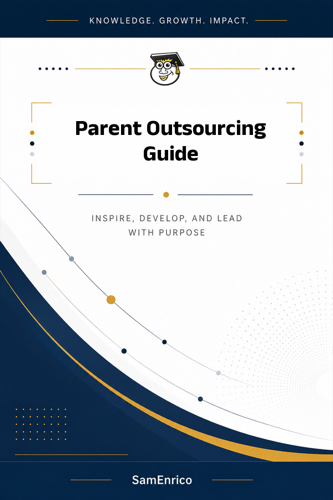
Free sample
Chapter 1: The Village You Never Had--–- The photograph arrived on a Tuesday afternoon, slipped between a pizza coupon and a credit card offer. A new mother, professionally photographed with perfect lighting, holding her sleeping infant against a cream-colored sweater. The caption read: “So grateful to be home with our little one. Wouldn’t trade these precious moments for anything. #Blessed #Motherhood #Doing It All.”The woman receiving that photograph—let’s call her Sarah—had not slept more than four consecutive hours in eleven months.
She had eaten lunch standing over the kitchen sink for three days straight. She had not showered in forty-eight hours. And she had just spent twenty minutes crying in her car because her toddler had a tantrum over the “wrong” color cup, and somewhere in that tantrum, Sarah had lost the ability to distinguish between a normal two-year-old meltdown and evidence of her complete and utter failure as a parent.She looked at the photograph. She looked at her own reflection in the microwave door: hair in a messy bun, a stain on her shirt that she could not identify, eyes hollowed by exhaustion. And she thought: What is wrong with me?The answer, as this chapter will show you, is nothing.
The problem is not Sarah. The problem is the story she has been told—the story all of us have been told—about what parenting is supposed to look like when you are doing it “right.”The Myth That Is Killing Your Sanity The self-sufficient family is a lie. It is one of the most damaging, exhausting, and pervasive lies in modern life, and it has convinced millions of parents that they should be able to handle everything alone. The lie sounds reasonable enough on the surface: “You chose to have children. You are responsible for them.
A good parent does the work themselves.” But beneath that reasonable surface lies an impossible standard that has driven parents to burnout, depression, and quiet desperation for generations.Let us be precise about what this lie actually says. The myth of the self-sufficient family holds that a “good” mother or father should be able to:Care for their children’s physical, emotional, and developmental needs without significant outside help Maintain a clean, organized, welcoming home Prepare nutritious, home-cooked meals (preferably from scratch)Manage school communications, medical appointments, extracurricular schedules, and social calendars Hold down a job or manage the household economy Maintain their own physical and mental health Nurture their marriage or partnership And do all of this while “cherishing every moment” and appearing grateful for the privilege This is not a list of responsibilities. It is a recipe for collapse. No human being in the history of our species has ever been equipped to do all of these things alone. And yet, millions of parents wake up every morning believing that they should.A Brief History of Parenting (Or: How We Got Here)To understand how this myth took hold, we need to take a short trip back in time.
For the vast majority of human history, raising children was not something parents did alone. It was something the village did together.In hunter-gatherer societies, child-rearing was intensely communal. Anthropologists have documented that among the !Kung people of the Kalahari, infants are held or carried by someone—mother, father, grandmother, older sibling, aunt, cousin—for nearly 100% of their waking hours, but not by the same person. Care is distributed across a network of familiar, trusted adults. A child might be fed by one person, comforted by another, played with by a third, and put to sleep by a fourth.
No single adult bears the full weight of that child’s needs.In medieval Europe, the extended family was the basic unit of child-rearing. Grandparents lived with or near their adult children. Aunts and uncles participated in daily care. Older children cared for younger children as a matter of course. The notion that a mother would isolate herself with her infant in a private home, without the daily presence of other adults, would have seemed not just difficult but bizarre—almost cruel.The shift began with the Industrial Revolution.
As families moved from farms to cities, from multigenerational households to cramped urban apartments, from agricultural labor to factory work, the structure of family life changed dramatically. Men left home for work. Women were increasingly expected to manage the household alone. Children became dependents rather than economic contributors. The extended family scattered.But the real turning point came after World War II.
The post-war suburban boom created a new ideal: the nuclear family in a single-family home, father working, mother tending to children and household. This was presented not as a historical accident—the result of economic forces and housing policies—but as the natural and moral way to raise children. Magazines, television shows, and parenting books of the 1950s and 1960s cemented this image in the cultural imagination.The problem is that this model was never sustainable. Even in the 1950s, the idealized nuclear family depended on a hidden infrastructure of unpaid female labor, racialized domestic work, and economic prosperity that excluded most of the population. For every perfect housewife on television, there were real women taking amphetamines to get through the day, tranquilizers to sleep at night, and alcohol to dull the edges of their exhaustion.The myth persisted because it served powerful interests.
If parents believe they should do everything themselves, they will buy products and services that promise to help them do it better. The parenting industry—worth over $1 billion annually in the United States alone—has a direct financial incentive to maintain your anxiety. Every normal childhood behavior becomes a problem to be solved. Every moment of doubt becomes an opportunity to sell you a solution.The Parenting Industrial Complex Let me be very clear about what I mean when I say the “parenting industry.” I am not talking about local businesses that provide genuine value—the nanny who helps a single mother work, the tutor who helps a struggling child, the therapist who saves a family in crisis. Those are services.
That is not the industry I am criticizing.The parenting industrial complex is the network of corporations, media platforms, influencers, and experts whose business model depends on making you feel inadequate. They profit from your insecurity. They thrive on your exhaustion. Their success is built on convincing you that you are failing.Consider the following, all of which are real products and services currently being marketed to parents:A $500 “sleep training package” that promises to teach your three-month-old to sleep through the night (despite the fact that pediatricians agree waking to feed is normal at this age)A $200 “baby-led weaning kit” that includes special spoons, bowls, and cutting tools you absolutely do not need A $1,200 “potty training boot camp” where a consultant comes to your home for three days to teach your toddler to use the toilet A $400 “birthday party planner” who will organize a princess-themed party complete with a “qualified birthday leader” to manage the children A $3,000 “kindergarten readiness package” that includes academic testing, tutoring, and a portfolio of your child’s “work”None of these products existed twenty…
This is the end of the free sample. Get the eBook to keep going. Buy now
About this book
Details
- Author
- Morley Mathilde
- Publisher
- SamEnrico
- Language
- English
- Genre
- Non-Fiction, Self-Help / Outsourcing
- Released
- 2026-06-07
- Pages (approx.)
- 142
- Available as
- eBook, Audiobook

Read better in the ZLOADR app
Your eBooks on your phone or tablet. Sign in with your SamEnrico account and start reading.
More by Morley Mathilde
 Year Review VisualizationMorley Mathilde$11.99
 Teacher Classroom ListeningMorley Mathilde$11.99
 Contract Abstraction Prompt VersioningMorley Mathilde$11.99
 Indigenous Forgiveness Rituals GuideMorley Mathilde$11.99
 Diarrhea in ChildrenMorley Mathilde$11.99
 Role Transition Imposter GuideMorley Mathilde$11.99
 The Catholic League CrusadeMorley Mathilde$11.99
 Remote Work Isolation FixesMorley Mathilde$11.99
 The Blood Eagle: Odin’s Forgotten CurseMorley Mathilde$11.99
 The Ballpoint Breakthrough: How a Disruptive Pen Changed the WorldMorley Mathilde$11.99
 Feast of the Northmen: The Viking Banquets That Built KingdomsMorley Mathilde$11.99
 Growing PimeleaMorley Mathilde$11.99
You may also like
 Hong Kong Handover 1997Dunn Johnnie$11.99
 Zumba For Postnatal Recovery CourseNeal Christian$11.99
 Zumba for BeginnersLadner Nikia$11.99
 YouTube Comment Mining GuideHumes Pandora$12.99
 Worry Box MeditationCarlin Rudy$11.99
 Workplace Stress MeditationNguyen Lynn$11.99
 Workplace Stress and Sleep RepairHawley Ivory$11.99
 Workplace Perfectionism CureDelaney Jeffry$11.99
 Workplace Injustice Anger GuideWallen Isabelle$11.99
 Work Addiction and Burnout LinkGreenwood Ester$11.99
 Women in Yoga and WellnessBeattie Galina$11.99
 Women in Stand Up ComedyChun Evangeline$11.99