
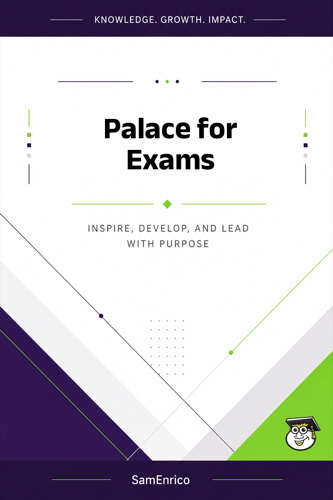
About this book
Free sample
Chapter 1: The Certainty Trap--–- You are sitting in the exam room. The clock on the wall ticks loudly, each second a small hammer driving into your chest. You turn the page and read the first question. It is not what you expected. You have studied for weeks.
You know the material. You have highlighted every important passage, reread your notes three times, and spent countless hours drilling facts. But this question does not ask for a fact. It presents a scenario—messy, ambiguous, full of conflicting possibilities. Two answers seem plausible.
Maybe three. You freeze. Your mind races through the possibilities, searching for the one right answer you are sure must be hiding somewhere. Minutes pass. Your palms sweat.
The clock ticks. You have not written a word.This is the certainty trap. It is the single most common reason that knowledgeable students fail exams. Not because they don't know the material. Because they cannot tolerate "maybe."The Anatomy of Freezing Let us name what just happened.
You encountered a question that did not have a single correct answer. It had multiple plausible answers. Your brain, trained by years of multiple-choice tests and fact-based quizzes, interpreted this ambiguity as a threat. The threat triggered a freeze response. The freeze response prevented you from thinking clearly.
And the clock kept ticking.This is not a failure of knowledge. It is a failure of framing. You approached the exam as if every question were a locked box containing one key. Some exams are like that. Closed-book, fact-based, multiple-choice tests often have a single correct answer.
But many high-stakes exams—essay exams, case studies, analytical problems, professional certifications—are not like that at all. They present scenarios with multiple legitimate interpretations. They reward not the "right" answer but the reasoned answer. They want to see how you think, not just what you know.Most students never learn this distinction. They study for open exams using closed-exam methods.
They memorize facts when they should be practicing analysis. They hunt for certainty when they should be exploring possibility. And they freeze.The Two Kinds of…
This is the end of the free sample. Get the eBook to keep going. Buy now
Contents
- Chapter 1
- Chapter 2
- Chapter 3
- Chapter 4
- Chapter 5
- Chapter 6
- Chapter 7
- Chapter 8
- Chapter 9
- Chapter 10
- Chapter 11
- Chapter 12
Details
- Author
- Hudson Mona
- Publisher
- SamEnrico
- Language
- English
- Genre
- Non-Fiction, Self-Help / Test Taking
- Released
- 2026-06-08
- Pages (approx.)
- 127
- Available as
- eBook, Audiobook

Read better in the ZLOADR app
Your eBooks on your phone or tablet. Sign in with your SamEnrico account and start reading.
More by Hudson Mona
 Withdrawal Symptoms GuideHudson Mona$11.99
 Mindfulness Meditation for Beginners Audio TracksHudson Mona$11.99
 Meditation for Public Restroom AnxietyHudson Mona$11.99
 The Cram Session CalmerHudson Mona$11.99
 Florida Talent GrowthHudson Mona$11.99
 Peg System for Daily LifeHudson Mona$11.99
 Self Worth And Eating DisordersHudson Mona$11.99
 Metta For The DyingHudson Mona$11.99
 The Nubian Hydraulic Genius: Engineering the Nile's FlowHudson Mona$11.99
 The Last Dance of the Highlanders: The Battle of Culloden's LegacyHudson Mona$11.99
 Longwu: The Dragon Who Forged the Jade MountainsHudson Mona$11.99
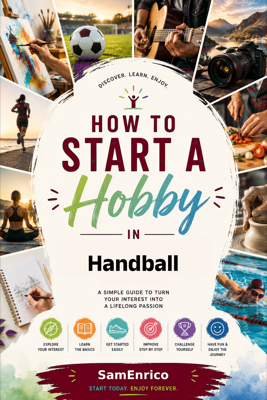 How to Start a Hobby in HandballHudson Mona$11.99
You may also like
 Hong Kong Handover 1997Dunn Johnnie$11.99
 Zumba For Postnatal Recovery CourseNeal Christian$11.99
 Zumba for BeginnersLadner Nikia$11.99
 YouTube Comment Mining GuideHumes Pandora$12.99
 Worry Box MeditationCarlin Rudy$11.99
 Workplace Stress MeditationNguyen Lynn$11.99
 Workplace Stress and Sleep RepairHawley Ivory$11.99
 Workplace Perfectionism CureDelaney Jeffry$11.99
 Workplace Injustice Anger GuideWallen Isabelle$11.99
 Work Addiction and Burnout LinkGreenwood Ester$11.99
 Women in Yoga and WellnessBeattie Galina$11.99
 Women in Stand Up ComedyChun Evangeline$11.99