
Free sample
Chapter 1: The Royal Feast...--–- Imagine stepping into a grand palace. The halls stretch endlessly in four directions. To your left, corridors of white and black marble. To your right, diagonal galleries adorned with tapestries. Ahead, a great hall where sixteen statues stand at attention, awaiting your command.
This is not a dream. This is the battlefield. This is the game of chess.Every chess player remembers the moment they first saw the board not as a collection of plastic pieces but as a living world. For some, it happens during their first tournament. For others, it happens when they finally beat the parent who always won.
For many, it never happens at all—because no one ever gave them the keys to the Palace.This book is those keys.Before you can launch devastating attacks or defend against grandmaster-level traps, you must understand what you are commanding. A general who does not know his soldiers' capabilities will lose the battle before it begins. A chess player who does not know the pieces will lose before the first pawn moves.This chapter—The Royal Feast—is your invitation to sit at the table of power. You will learn the hierarchy of the Palace: who rules, who serves, and who dies first. You will learn the single most important rule of material value (and the one exception that confuses almost every beginner).
And you will discover why the King—the most useless piece on the board for most of the game—is simultaneously the only piece that truly matters.Let us begin.The Architecture of the Palace Before we meet the pieces, we must understand the room they inhabit. The chessboard is sixty-four squares—thirty-two light, thirty-two dark—arranged in eight rows (called ranks) and eight columns (called files). This is not random. The alternating colors create a visual rhythm that helps players calculate movement at a glance.The Single Most Important Setup Rule Place the board between you and your opponent so that each player has a dark square in their bottom-right corner. Chess players have a simple mnemonic for this: "White on right." If the bottom-right corner is dark, you have the board oriented correctly.
If it is light, rotate the board.Why does this matter? Because the geometry of movement—diagonals, ranks, files—is fixed to the board's orientation. Play on a rotated board, and every diagonal changes. The Bishop that should attack your opponent's King will attack empty space instead. Professional players can spot an incorrectly oriented board from across the room.
Now you can too.The Two Wings of the Palace The board is divided into two halves from the perspective of each player. The King's Side (also called the Kingside) consists of files e, f, g, and h—the half where the Kings begin. The Queen's Side (Queenside) consists of files a, b, c, and d—the half where the Queens begin.These are not arbitrary labels. The Kingside is where most beginner attacks happen because the King lives there. The Queenside is where the longer-range pieces (Bishops and Rooks) often battle for control of open space.
Understanding which wing is which is the first step toward understanding chess strategy—but for now, simply know that the board has a geography, and every piece has a preferred territory.The Four Quadrants For advanced planning, players divide the board into four quadrants: Queenside back rank (a1-d2), Queenside front rank (a3-d4), Kingside front rank (e3-h4), and Kingside back rank (e1-h2). Do not memorize this now. The quadrants will become relevant when we discuss king safety in later chapters. For the purpose of understanding piece movement, the only thing that matters is that the board is a grid—and every piece moves across that grid according to strict laws.The Royal Hierarchy: Who Rules the Palace?Every chess piece has a value. These values are not arbitrary; they emerged from hundreds of years of play, analysis, and statistical tracking of millions of games.
When grandmasters say "I am winning a piece," they mean they have captured more value than they have lost.Here is the hierarchy of the Palace, from the lowest servant to the highest power.The Pawn: The Foot Soldier (Value: 1)The Pawn is the smallest piece on the board, the shortest, and the most numerous. Each player begins with eight pawns, lined up across the second rank like a wall of shields. But do not mistake small for weak.The Pawn is worth exactly one point. This is the baseline against which all other pieces are measured. A Knight is worth three pawns.
A Rook is worth five pawns. The Queen is worth nine pawns.But the Pawn has a secret: it is the only piece that changes its value depending on where it stands. A Pawn on the second rank, unmoved, is a foot soldier awaiting orders. A Pawn that has crossed the board to the seventh rank—one square away from promotion—is a potential Queen. In endgames, an "advanced passed pawn" (a pawn with no enemy pawns blocking its path to promotion) can be worth as much as a Rook.For now, remember this: pawns are your foundation.
Lose too many, and the Palace collapses.How Pawns Move Pawns are the only pieces that move forward but capture diagonally. A Pawn moves one square straight ahead—but only if that square is empty. On its very first move, a Pawn may choose to move two squares straight ahead. After that, it moves one square at a time.A Pawn captures by moving one square diagonally forward—left or right—into a square occupied by an enemy piece. A Pawn cannot capture straight ahead.
If an enemy piece sits directly in front of a Pawn, the Pawn is blocked and cannot move at all until that piece moves or is captured by another piece.This unique movement (straight advance, diagonal capture) is what gives chess its distinctive tactical flavor. Pawns create chains. Pawns block lines. Pawns are the skeleton of every position.The Knight: The Royal Messenger (Value: 3)The Knight is the only piece that can jump over other pieces. This makes it invaluable in crowded positions where every other piece is blocked by its own allies.The Knight is worth three points—the same as a Bishop.
But the Knight and Bishop are not interchangeable. A Knight in the center of the board attacks up to eight squares. A Knight in the corner attacks only two. A Knight is strongest when placed on an "outpost" (a square deep in enemy territory defended by one of your pawns) and weakest when pinned against the edge.How Knights Move The Knight moves in an "L" shape: two squares in one direction (forward, backward, left, or right), then one square perpendicular to that direction. Think of it as a staircase with two steps forward and one step to the side.The Knight's L-shape means it always changes the color of its square with every move.
A Knight on a light square will move to a dark square. A Knight on a dark square will move to a light square. This…
This is the end of the free sample. Get the eBook to keep going. Buy now
About this book
Details
- Author
- Mcgee Judy
- Publisher
- SamEnrico
- Language
- English
- Genre
- Non-Fiction, Self-Help / Chess
- Released
- 2026-06-07
- Pages (approx.)
- 145
- Available as
- eBook, Audiobook

Read better in the ZLOADR app
Your eBooks on your phone or tablet. Sign in with your SamEnrico account and start reading.
More by Mcgee Judy
 The Thesis Writer's AnxietyMcgee Judy$11.99
 Self Regulation EQ Skills HandbookMcgee Judy$11.99
 Mindfulness Meditation for Seniors GuideMcgee Judy$11.99
 Drug Dependency AssessmentMcgee Judy$11.99
 Trauma Dream Journal WorkbookMcgee Judy$11.99
 Self Worth And AddictionMcgee Judy$11.99
 Memory Palaces for ActorsMcgee Judy$11.99
 Metta For Your EmotionsMcgee Judy$11.99
 The Gold Heist of Mansa Musa: The Empire That Outsmarted the WorldMcgee Judy$11.99
 Operation Midnight Climax: The CIA's Secret Mind Control LabMcgee Judy$11.99
 Love in the Shadow of the Ziggurat: The Forbidden Bond of Ishtar and TammuzMcgee Judy$11.99
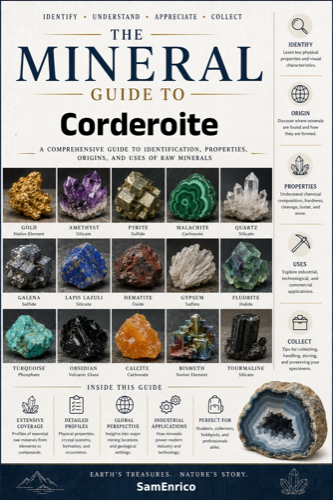 The Mineral Guide to CorderoiteMcgee Judy$11.99
You may also like
 Hong Kong Handover 1997Dunn Johnnie$11.99
 Zumba For Postnatal Recovery CourseNeal Christian$11.99
 Zumba for BeginnersLadner Nikia$11.99
 YouTube Comment Mining GuideHumes Pandora$12.99
 Worry Box MeditationCarlin Rudy$11.99
 Workplace Stress MeditationNguyen Lynn$11.99
 Workplace Stress and Sleep RepairHawley Ivory$11.99
 Workplace Perfectionism CureDelaney Jeffry$11.99
 Workplace Injustice Anger GuideWallen Isabelle$11.99
 Work Addiction and Burnout LinkGreenwood Ester$11.99
 Women in Yoga and WellnessBeattie Galina$11.99
 Women in Stand Up ComedyChun Evangeline$11.99