
Non-FictionInformativeEducational
Ottoman Craft eBook
A Coursebook on Ottoman Craft
A Coursebook on Ottoman Craft
Formats
Free sample
Chapter 1: The Hungry Hand...--–- Before the brush touched paper, before the chisel met wood, before the tile saw its first fire—there was hunger. Not the hunger of an empty stomach, though that existed in plenty. A different hunger. The hunger of a hand that knows it can make something beautiful but has not yet been shown how. The hunger of an empire that needed not just swords and treaties but also silk and symmetry to convince the world of its permanence.
The hunger of a young apprentice in Bursa, age twelve, sitting cross-legged on a stone floor, grinding lapis lazuli for six hours a day for three years before he was ever allowed to touch a brush. That boy’s name was Mehmet, and he is not a historical figure—he is a composite of thousands. But his hunger is real. And if you have opened this book, it is yours too.This is not a history book. It is a coursebook.
That means you will not simply read about Ottoman craft; you will learn to see it, to recognize its materials and methods, and—in the workshop exercises that conclude each chapter—to begin practicing its disciplines. By the time you finish these twelve chapters, you will be able to identify a Gördes knot from a Senneh knot under a magnifying lens. You will understand why Iznik red sits above the glaze while cobalt sinks below it. You will have traced a simplified Tugra and floated a marbled pattern on thickened water. You will not become a master—that takes decades—but you will no longer be a stranger to the workshop.
You will know what the tools are called, how they are held, and why they matter.But before any of that, you must understand one thing: in the Ottoman world, craft was not decoration. It was infrastructure.The Fabric of an Empire The Ottoman state lasted from roughly 1300 to 1922—over six centuries. For comparison, the Roman Empire (counting only the Western half) lasted about five hundred years. The Ottoman Empire outlived the Ming Dynasty, the Spanish Habsburgs, and the entire industrial revolution. It stretched at its height from Budapest to Basra, from Algiers to the Caucasus.
Thirty-two million people lived under its flag. And what held this vast, multilingual, multi-religious patchwork together? Swords and taxes, certainly. But also carpets.Think about that for a moment. A carpet is soft.
It does not conquer. But a carpet does something that a sword cannot: it creates shared space. A Christian merchant from Athens, a Muslim scribe from Cairo, a Jewish physician from Salonika, and a Sufi sheikh from Konya—all four might disagree on theology, but all four sat on carpets. They prayed on carpets. They buried their dead wrapped in woven textiles.
The material culture of the Ottoman world was not an afterthought; it was the stage upon which the drama of empire was performed.This chapter introduces you to that stage. We will establish the geography of Ottoman craft—where things were made and why there. We will establish the chronology—how craft evolved from a nomadic tradition into a palace bureaucracy and then faced the slow erosion of its guilds. And we will establish the most important conceptual tool you will need for the rest of this book: the spectrum of Ottoman art, which runs from the sacred to the secular, from the Qur’an copied in gold on black paper to the miniature painting of a circumcision parade. Neither end is superior to the other.
But you must learn to tell them apart, because the Ottoman craftsman never confused them.The Spectrum of Ottoman Art: From Kutsal to Tarihsel Western art history has a habit of imposing its own categories onto other cultures. The Renaissance had sacred art (altarpieces, madonnas) and secular art (portraits, landscapes), and the distinction was relatively clear because the Christian Church was an institution separate from the state. The Ottoman world had no such separation. The sultan was also the caliph—the leader of the Muslim community. The palace housed the imperial workshop, and the imperial workshop produced objects for both the mosque and the throne room.
So how do we distinguish?The answer is a spectrum. At one end lies kutsal sanat—sacred art. These are objects made explicitly for religious use or infused with religious meaning. A Qur’an manuscript is sacred. The calligraphy of a Tugra is not inherently sacred (it is a political signature), but calligraphy itself was considered sacred because it preserved divine revelation.
The line is not always sharp, and this book will not pretend it is. At the other end lies tarihsel sanat—historical or documentary art. These are objects made to record events, display wealth, or serve practical functions without religious intent. The miniature paintings of the Süleymanname are documentary. The silver-inlaid mosque lamps (kandil) fall in the middle—they serve a religious space but are valued for their craft, not their blessing.You will find this spectrum referenced throughout the book.
Chapter 4 (calligraphy) and Chapter 5 (illumination) sit firmly at the sacred end. Chapter 6 (miniature) sits at the secular end. Chapter 8 (marbling) is meditative but not religious. Do not force every object into one category. The Ottoman craftsman did not.
He simply knew that a Qur’an stand (rahle) was different from a coffee tray, even if both were inlaid with mother-of-pearl.Geography: Where Craft Lived The Ottoman Empire was not a single workshop. Craft production was distributed across hundreds of cities, each with its own specialty, its own raw materials, and its own guild culture. Before we dive into techniques, you need a mental map. Here are the nine cities you must know, listed with their primary craft and the century in which they peaked.Bursa (silk, 15th–16th centuries). The first Ottoman capital, conquered in 1326, sat at the western end of the Silk Road.
Raw silk came from Persia and China; Bursa’s weavers turned it into velvet, brocade, and kutnu (a silk-cotton blend). The great caravanserais of Bursa still stand—the Koza Han, built in 1491, was the world’s first silk exchange. If you visit Bursa today, you can still buy silk in the same courtyard where Mehmet the Conqueror’s merchants once bargained.Istanbul (imperial luxury, 16th–19th centuries). The capital after 1453 was not a production center for raw materials but a finishing center. Raw goods arrived from across the empire—ivory from Egypt, coral from the Red Sea, amber from the Baltic via Crimean intermediaries—and were transformed in the imperial atelier (Ehl-i Hiref) inside Topkapi Palace.
Istanbul’s guilds were the most regulated in the empire, with separate markets (bedestens) for goldsmiths, leatherworkers, and candle-makers.Iznik (ceramics, 16th century). A small town southeast of Istanbul, Iznik had access to the two things necessary for high-quality fritware: quartz from the mountains and beechwood for the kilns. Between 1480 and 1600, Iznik produced the finest ceramics in the Islamic world. The secret of its coral-red slip, developed around 1550, has never been successfully reproduced. Today, Iznik is a village again, but its name is spoken with reverence in every ceramics studio from Tokyo to Los Angeles.Kütahya…
This is the end of the free sample. Get the eBook to keep going. Buy now
About this book
Details
- Author
- Marcum Sunday
- Publisher
- SamEnrico
- Language
- English
- Genre
- Non-Fiction, Informative, Educational
- Released
- 2026-06-02
- Pages (approx.)
- 152
- Available as
- eBook, Audiobook

Read better in the ZLOADR app
Your eBooks on your phone or tablet. Sign in with your SamEnrico account and start reading.
More by Marcum Sunday
 Feature Based Positioning HandbookMarcum Sunday$11.99
 Remote Retreats Activity SelectionMarcum Sunday$11.99
 Highlighter Strategy GuideMarcum Sunday$11.99
 Rabies Hydrophobia HistoryMarcum Sunday$11.99
 French Resistance Sabotage HandbookMarcum Sunday$11.99
 The Silent Stalker: Unraveling the Mind of the 'Boston Strangler'Marcum Sunday$11.99
 Fever and Fortune: The Doctors Who Mapped the Nile’s Deadly SecretsMarcum Sunday$11.99
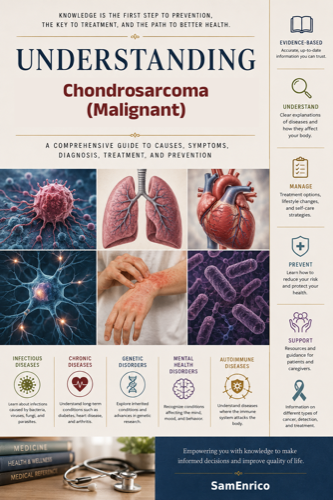 Understanding Chondrosarcoma (Malignant)Marcum Sunday$17.99
 Young Adult Mental BoardMarcum Sunday$12.99
 Travel And Entertainment BudgetMarcum Sunday$12.99
You may also like
 Hong Kong Handover 1997Dunn Johnnie$11.99
 Zumba For Postnatal Recovery CourseNeal Christian$11.99
 Zumba for BeginnersLadner Nikia$11.99
 YouTube Comment Mining GuideHumes Pandora$12.99
 Worry Box MeditationCarlin Rudy$11.99
 Workplace Stress MeditationNguyen Lynn$11.99
 Workplace Stress and Sleep RepairHawley Ivory$11.99
 Workplace Perfectionism CureDelaney Jeffry$11.99
 Workplace Injustice Anger GuideWallen Isabelle$11.99
 Work Addiction and Burnout LinkGreenwood Ester$11.99
 Women in Yoga and WellnessBeattie Galina$11.99
 Women in Stand Up ComedyChun Evangeline$11.99