
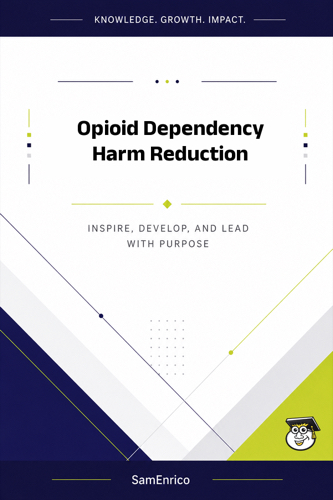
Non-FictionSelf-HelpHarm ReductionOverdose Prevention
Opioid Dependency Harm Reduction eBook
Reduce overdose risk with safe using practices, te
by Irby Hedy
Reduce overdose risk with safe using practices, testing strips, and connections to treatment.
Formats
Free sample
Chapter 1: The Living Proof...–- The first time I watched someone die from an overdose, I was nineteen years old, standing in the bathroom of a punk house in Baltimore, and the only thing I knew for certain was that I did not know what to do. His name was Marcus. He was twenty-two. He had injected what he thought was heroin, and within two minutes he was blue, making a sound like a snorkel underwater, and the five other people in that room did exactly what most people do: they ran. I ran too.
I ran outside and I stood on the porch and I called my older brother instead of 911 because I was afraid of the police. Marcus lived, barely, because someone eventually found a cop on the next block who had naloxone. But that night stayed with me like a splinter. The fear, the running, the not knowing—that is not a moral failure. That is a systems failure.
And this book exists because no one should have to watch someone die just because they didn't have the right information in time.This is not a book about how to stop using drugs, though it will help you find treatment if and when you want it. This is not a book about how to become abstinent, though it will support you if that is your goal. This is a book about how to survive long enough to make those choices for yourself. It is a book about how to reduce the risk of dying today, tomorrow, and next week, without requiring you to be anyone other than who you are right now. If you are reading this because you use opioids, or because you love someone who does, or because you work in a clinic or a syringe service program or an emergency room, you have come to the right place.
The pages ahead are filled with specific, actionable, evidence-based tools: how to test your drugs for fentanyl and xylazine, how to use a virtual hotline when you are alone, how to store naloxone in a car without destroying it, how to talk to a cop during an overdose without getting arrested, how to get buprenorphine same-day without being required to stop using first. But before any of that, we have to clear the ground. Because the single biggest barrier to using these tools is not cost or availability or even legality. The biggest barrier is shame.The Shame Trap: Why Good People Die From Bad Information Shame is not a feeling. It is a cage.
And the particular shame that surrounds opioid use is one of the most lethal forces in American public health. Here is what the data tells us: people who use drugs are less likely to call 911 during an overdose if they feel judged by the people around them. They are less likely to carry naloxone if they believe carrying it marks them as a "real addict." They are less likely to access syringe services if they think someone will recognize them. They are less likely to ask for help when they are ready because they have internalized the message that they do not deserve help until they are clean. This is not a theory.
This is epidemiology. A 2019 study in the Journal of Urban Health found that 62 percent of people who use opioids reported avoiding calling 911 during an overdose because they feared police involvement. A 2021 study in Harm Reduction Journal found that one of the strongest predictors of naloxone refusal was the belief that carrying it meant you had "given up" on recovery. And the most heartbreaking finding: people who have been treated with dignity by a single harm reduction program are two to three times more likely to enter treatment within six months than those who have only encountered punitive or shaming approaches.Let me say that again. Dignity predicts treatment entry.
Shame predicts death.This is not opinion. This is the scientific consensus of every major public health body on earth: the World Health Organization, the CDC, SAMHSA, the UN Office on Drugs and Crime. All of them endorse harm reduction as an evidence-based strategy that saves lives and increases treatment engagement. And yet, the dominant cultural narrative remains stuck in a moralistic framework that treats drug use as a character flaw rather than a health condition. That framework has a name.
It is called the abstinence-only paradigm, and it has been failing for fifty years. The War on Drugs, launched in 1971, has cost an estimated one trillion dollars and resulted in zero measurable reductions in drug use prevalence while producing the highest incarceration rate on the planet. Overdose deaths have risen every single year for three decades, with a brief plateau in 2018 followed by the catastrophic spike of the fentanyl era. In 2022, more than 110,000 Americans died of drug overdoses. That is more than the peak annual deaths from HIV/AIDS, car crashes, or gun violence.
And the vast majority of those deaths were preventable with tools that already exist: test strips, naloxone, safe supply, and connection to medication treatment.What Harm Reduction Actually Is (And What It Is Not)Because the term "harm reduction" has been so thoroughly distorted by both its advocates and its critics, let me give you a clean definition. Harm reduction is a set of practical strategies and ideas aimed at reducing the negative consequences associated with drug use. That is it. It does not promote drug use. It does not celebrate drug use.
It acknowledges that drug use exists, that some people will continue to use regardless of policy, and that those people deserve to live. The core principles are simple:People who use drugs are the primary experts on their own lives and needs.Drug use is a health issue, not a moral issue.Any reduction in harm is a success, including reductions that fall short of abstinence.Coercion and shame do not work; dignity and respect do.Survival is the first and most important goal.Notice what is not in that list. There is no requirement to like drug use. There is no requirement to use drugs yourself. There is no requirement to abandon abstinence as a goal for yourself or others.
Harm reduction is compatible with abstinence. It is compatible with twelve-step programs. It is compatible with faith-based recovery. What it is not compatible with is requiring abstinence as a precondition for help.The most common objection I hear from clinicians and family members is some version of this: "If you give someone a clean needle or a test strip, aren't you just enabling them? Won't they use more?" This sounds intuitive.
It is also completely wrong. The research is unambiguous: harm reduction services do not increase drug use. A landmark study in Vancouver followed 1,090 people who inject drugs over ten years. Those who used the city's supervised injection site were significantly more likely to enter detox and treatment programs than those who did not. They were not more likely to use more drugs or to use more frequently.
Similar findings have been replicated in Sydney, New York, San Francisco, and Toronto. The reason is obvious once you think about it.…
This is the end of the free sample. Get the eBook to keep going. Buy now
About this book
Details
- Author
- Irby Hedy
- Publisher
- SamEnrico
- Language
- English
- Genre
- Non-Fiction, Self-Help, Harm Reduction, Overdose Prevention
- Released
- 2026-06-07
- Pages (approx.)
- 149
- Available as
- eBook, Audiobook

Read better in the ZLOADR app
Your eBooks on your phone or tablet. Sign in with your SamEnrico account and start reading.
More by Irby Hedy
 The Sfas Emes RebbeIrby Hedy$11.99
 Ransom Negotiation TerrorIrby Hedy$11.99
 Hearst Anti Trust BattlesIrby Hedy$11.99
 Court Mandated Twelve Step AttendanceIrby Hedy$11.99
 The Unseen Victory: The Story of the 1992 Barcelona ParalympicsIrby Hedy$11.99
 Plague Ships and Trade Winds: The Dutch Battle Against Atlantic EpidemicsIrby Hedy$11.99
 10 Ways to Use Coulis (Recipe Book)Irby Hedy$11.99
 Assistant DeanIrby Hedy$11.99
 Tesla Distributed Internship GuideIrby Hedy$12.99
 Remote Data Entry Teams KenyaIrby Hedy$12.99
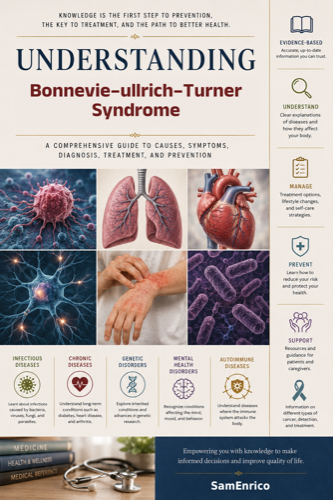 Understanding Bonnevie–ullrich–Turner SyndromeIrby Hedy$17.99
You may also like
 Hong Kong Handover 1997Dunn Johnnie$11.99
 Zumba For Postnatal Recovery CourseNeal Christian$11.99
 Zumba for BeginnersLadner Nikia$11.99
 YouTube Comment Mining GuideHumes Pandora$12.99
 Worry Box MeditationCarlin Rudy$11.99
 Workplace Stress MeditationNguyen Lynn$11.99
 Workplace Stress and Sleep RepairHawley Ivory$11.99
 Workplace Perfectionism CureDelaney Jeffry$11.99
 Workplace Injustice Anger GuideWallen Isabelle$11.99
 Work Addiction and Burnout LinkGreenwood Ester$11.99
 Women in Yoga and WellnessBeattie Galina$11.99
 Women in Stand Up ComedyChun Evangeline$11.99