
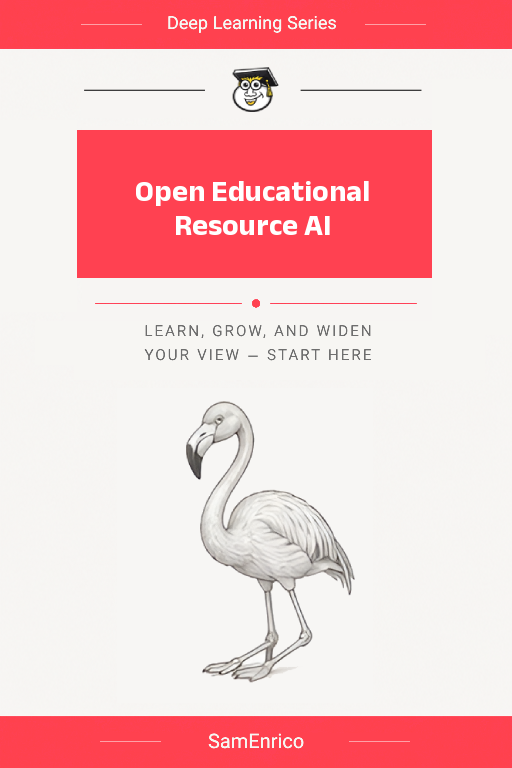
Non-FictionForecast & OutlookOER
Open Educational Resource AI eBook
Discover AI tagging and curating free learning mat
by Zook Gonzalo
Discover AI tagging and curating free learning materials aligned to curriculum standards.
Formats
Free sample
Chapter 1: The 2 AM Folder...--It was 11:47 PM on a Sunday, and Maria Cortez, a fourth-grade teacher in Phoenix, Arizona, had already spent four hours searching for a single worksheet on equivalent fractions. She had bookmarked forty-seven different resources. She had downloaded nineteen PDFs. She had watched three You Tube videos and read two blog posts. Her laptop had seventeen open tabs, her desktop was a graveyard of untitled downloads, and she still did not have a lesson plan for 8 AM.The problem was not that the resources did not exist.
They did. Thousands of them. Free worksheets, interactive simulations, video lessons, printable games, and full curriculum units—all available at no cost under open licenses. The problem was that Maria could not find the right resource in the time she had. She needed something that explicitly taught equivalent fractions using visual models, aligned to Arizona’s math standards for fourth grade, and was accessible to her students who read two grade levels below average.
Instead, she found everything but that.At 12:15 AM, Maria closed her laptop, cried for seven minutes, and resigned herself to adapting a paid worksheet from last year’s discontinued textbook—a resource her students had already seen twice before. She went to bed defeated, knowing she had just spent four hours of her weekend to end up exactly where she started.Maria’s story is not an outlier. It is the rule.The Paradox of Plenty We live in an age of unprecedented educational abundance. According to the Hewlett Foundation, there are over 1.5 billion openly licensed educational resources available online. OER Commons alone hosts more than 150,000 resources.
Merlot adds hundreds per month. CK-12 provides thousands of free, customizable textbooks. You Tube has millions of educational videos. The Library of Congress offers millions of primary source documents. And every day, teachers create more—blog posts, lesson plans, worksheets, slide decks—and release them under Creative Commons licenses, contributing to a fire hose of free content that never stops flowing.On paper, this is a utopia.
No teacher should ever pay for a worksheet again. No school should ever sign a seven-figure textbook contract out of necessity. No parent should ever be unable to find free, high-quality materials for their child.But the reality is far from utopian. A 2023 study by the RAND Corporation found that teachers spend an average of seven hours per week searching for instructional materials. Seven hours.
That is nearly a full workday each week. When asked about their top barriers to using open educational resources, teachers did not cite lack of quality or lack of relevance. They cited discovery. They could not find what they needed when they needed it. The resources existed somewhere.
They just could not surface them.This is the paradox of choice in action. Psychologist Barry Schwartz, in his seminal work on the subject, demonstrated that while choice is theoretically good, too much choice leads to decision paralysis, lower satisfaction, and avoidance. When a teacher searches for “fractions worksheet” and receives 50,000 results, their brain enters a state of cognitive overload. They cannot compare 50,000 options, so they compare the first ten, choose none, and then keep searching—hoping the next page will yield something better. This is not a failure of effort.
It is a failure of organization.The contrast with commercial alternatives is instructive. When a school buys a textbook from Pearson or Mc Graw-Hill, they are not paying primarily for the content. They are paying for the curation. The textbook comes pre-organized into chapters, units, lessons, and assessments. Someone has already decided what order to teach things in.
Someone has already aligned the content to standards. Someone has already filtered out the irrelevant, the redundant, and the low-quality. A teacher opens the book to Unit 3, Lesson 2, and there it is—the worksheet they need, exactly when they need it.Open educational resources, by contrast, are a library without a librarian. They are a grocery store where every item has been dumped in a single aisle. The content is there, sometimes better than the commercial alternatives.
But the organization is absent.The Hidden Half of OERThere is a phrase that appears frequently in the open education movement: “create, share, remix.” It is a rallying cry, and it has been remarkably successful. Millions of teachers have created OER. Millions have shared. Millions have remixed. These are the visible acts of the OER movement—the creation and distribution of free materials.But there is a hidden half of OER that no one talks about.
The labor of management, discovery, alignment, and curation that actually dwarfs the labor of creation. Creating a worksheet takes twenty minutes. Finding it again six months later takes fifteen. Creating a lesson plan takes an hour. Finding it when you need it for a substitute teacher takes forty-five minutes.
Over the course of a thirty-year teaching career, the time spent finding resources exceeds the time spent creating them by a factor of three to one, according to a 2021 time-motion study published in the Journal of Learning Technologies.The open education movement has focused almost exclusively on the supply side. How do we create more OER? How do we persuade more teachers to share? How do we build larger repositories? These are worthy goals.
But they have inadvertently made the discovery problem worse. Adding more resources to an unorganized repository does not help teachers find what they need. It buries it deeper.Consider this analogy. A library that has ten thousand books but no card catalog is not a library. It is a storage room.
No one would defend such a system. But that is precisely the state of most OER repositories today. They have massive collections and rudimentary search. A teacher types “Civil War” and receives every resource that contains the words “Civil” or “War”—lesson plans, primary sources, quizzes, images, videos, blog posts, and student projects, all mixed together, with no filtering by grade level, standard, resource type, or reading level. The search engine returns results, but it does not curate them.Manual curation is the obvious solution, and it is the standard approach.
A human librarian or instructional designer reviews each resource, assigns metadata (subject, grade level, resource type, standards alignment), and writes a summary. This produces high-quality organization, but it does not scale. The average OER repository receives thousands of new submissions per month. A single curator can tag perhaps fifty resources per hour. To keep up with the inflow, a repository would need hundreds of full-time curators.
No OER repository has that budget. Most rely on volunteers or part-time staff, and as a result, most resources in most repositories have minimal or incomplete metadata.Teachers are then forced into a tragic trade-off. They can either:Spend hours searching through poorly organized OER repositories, gambling their limited planning time on the hope of finding something useful.Pay for commercial curriculum that is pre-organized but expensive and less adaptable.Create everything themselves, reinventing the wheel for every lesson.Most teachers choose a combination of all three, and none of the options are good.The Syllabus Is a Curation Problem Before we go further, we need to be precise about what we mean by “curation” in an educational context. The word is…
This is the end of the free sample. Get the eBook to keep going. Buy now
About this book
Details
- Author
- Zook Gonzalo
- Publisher
- SamEnrico
- Language
- English
- Genre
- Non-Fiction, Forecast & Outlook, OER
- Released
- 2026-05-30
- Pages (approx.)
- 135
- Available as
- eBook, Audiobook

Read better in the ZLOADR app
Your eBooks on your phone or tablet. Sign in with your SamEnrico account and start reading.
More by Zook Gonzalo
 Cocaine Relapse Home Environment GuideZook Gonzalo$11.99
 US Energy Efficient Home CreditZook Gonzalo$11.99
 Sleep Meditation For VeteransZook Gonzalo$11.99
 Mindfulness Drills for Craving ControlZook Gonzalo$11.99
 OKR Retrospective MethodZook Gonzalo$11.99
 The Thunderbird's Sky Palace: A Haida Legend of the Celestial StrongholdZook Gonzalo$11.99
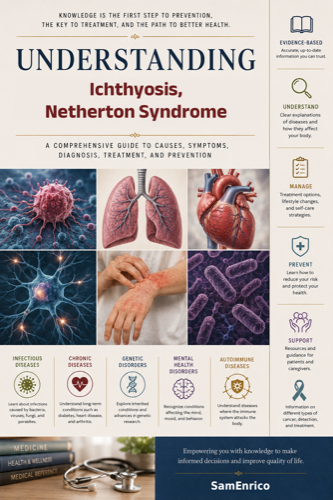 Understanding Ichthyosis, Netherton SyndromeZook Gonzalo$17.99
 Ultimate Handbook Guide to The Hague : (Netherlands) Travel GuideZook Gonzalo$11.99
 EU AI Act Compliance Guide 2025Zook Gonzalo$12.99
 Playing MusicZook Gonzalo$11.99
You may also like
 Hong Kong Handover 1997Dunn Johnnie$11.99
 Zumba For Postnatal Recovery CourseNeal Christian$11.99
 Zumba for BeginnersLadner Nikia$11.99
 YouTube Comment Mining GuideHumes Pandora$12.99
 Worry Box MeditationCarlin Rudy$11.99
 Workplace Stress MeditationNguyen Lynn$11.99
 Workplace Stress and Sleep RepairHawley Ivory$11.99
 Workplace Perfectionism CureDelaney Jeffry$11.99
 Workplace Injustice Anger GuideWallen Isabelle$11.99
 Work Addiction and Burnout LinkGreenwood Ester$11.99
 Women in Yoga and WellnessBeattie Galina$11.99
 Women in Stand Up ComedyChun Evangeline$11.99