

Non-FictionSelf-HelpBody Image
OnlyFans Comparison and Body Image
Stop comparing your appearance and desirability to
Stop comparing your appearance and desirability to curated adult content creators.
Formats
About this book
Free sample
Chapter 1: The Comparison Loop--You are scrolling at 11:47 PM. The room is dark except for the blue glow of your screen. You tell yourself this is just boredom, just curiosity, just a quick look before bed. But somewhere between the third and the tenth profile, something shifts. A creator who looks vaguely like you—same hair color, similar build, perhaps the same age—appears in a pose that seems effortless.
Her skin glows. Her stomach is flat but soft in a way that reads as “real.” Her smile suggests she just woke up like this. And your brain, which has been quietly cataloging data all evening, suddenly presents you with a report you never requested: She is what you could look like if you tried harder. She is what desire looks like when it’s done correctly. You are the draft.
She is the final version.This is the comparison loop. It is not a moral failing. It is not a sign of weakness or low self-esteem. It is, quite simply, your brain doing exactly what evolution designed it to do—applying an ancient survival mechanism to a modern environment that weaponizes that mechanism for profit. The loop has four stages: exposure, upward comparison, scarcity calculation, and self-devaluation.
Then it repeats. And because the content never stops arriving, the loop never reaches a natural end. You close the app feeling worse than when you opened it, but you cannot quite identify what happened. You just know your body feels heavier. Your face feels less interesting.
Your entire existence feels like a lower-resolution version of someone else’s highlight reel.This chapter is not designed to make you feel ashamed of the loop. Shame is part of the loop. The goal is to name the mechanism so precisely that it loses its invisibility. Once you see the gears turning, you can stop being the clock and start being the person who decides whether to look at the clock at all.The Neuroscience of Unfair Comparisons Let us begin with a foundational concept from social psychology: social comparison theory, proposed by Leon Festinger in 1954. Festinger…
This is the end of the free sample. Get the eBook to keep going. Buy now
Contents
- Chapter 1
- Chapter 2
- Chapter 3
- Chapter 4
- Chapter 5
- Chapter 6
- Chapter 7
- Chapter 8
- Chapter 9
- Chapter 10
- Chapter 11
- Chapter 12
Details
- Author
- Vernon Taylor
- Publisher
- SamEnrico
- Language
- English
- Genre
- Non-Fiction, Self-Help, Body Image
- Released
- 2026-06-10
- Pages (approx.)
- 126
- Available as
- eBook, Audiobook

Read better in the ZLOADR app
Your eBooks on your phone or tablet. Sign in with your SamEnrico account and start reading.
More by Vernon Taylor
 HIIT For BasketballVernon Taylor$11.99
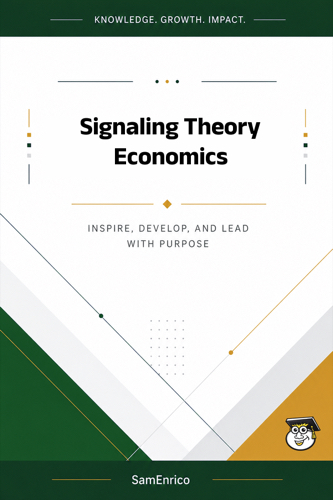 Signaling Theory EconomicsVernon Taylor$11.99
 Food Addiction for Bariatric PatientsVernon Taylor$11.99
 The Iron Emperor's Gambit: How the Qing Dynasty Forged a Gunpowder EmpireVernon Taylor$11.99
 Playtest CoordinatorVernon Taylor$11.99
 Learn to Play the Handpan/hang DrumVernon Taylor$11.99
 Meeting Time Blocking GuideVernon Taylor$12.99
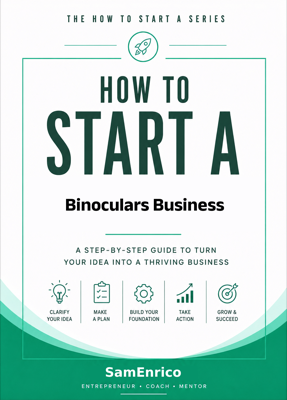 How to Start a Binoculars Business (Beginners Guide)Vernon Taylor$11.99
You may also like
 Hong Kong Handover 1997Dunn Johnnie$11.99
 Zumba For Postnatal Recovery CourseNeal Christian$11.99
 Zumba for BeginnersLadner Nikia$11.99
 YouTube Comment Mining GuideHumes Pandora$12.99
 Worry Box MeditationCarlin Rudy$11.99
 Workplace Stress MeditationNguyen Lynn$11.99
 Workplace Stress and Sleep RepairHawley Ivory$11.99
 Workplace Perfectionism CureDelaney Jeffry$11.99
 Workplace Injustice Anger GuideWallen Isabelle$11.99
 Work Addiction and Burnout LinkGreenwood Ester$11.99
 Women in Yoga and WellnessBeattie Galina$11.99
 Women in Stand Up ComedyChun Evangeline$11.99