
Online Support Groups Grief eBook
Finds Facebook and Reddit communities.
Finds Facebook and Reddit communities.
Formats
Free sample
Chapter 1: The Loneliest Generation...--–- The first time I saw a grown man cry into his phone at 2:00 AM, I was sitting alone in my kitchen, wearing sweatpants I had not changed in four days, staring at a screen that glowed like a false sun. He was a stranger. I did not know his name, his city, or whether the face he showed to his own family looked anything like the face he showed to Reddit. But he was sobbing, openly and without shame, into a voice memo posted on a grief support forum for people who had lost a spouse. His wife had died of cancer eleven months earlier.
He had just found a pair of her reading glasses behind the refrigerator. That was it. That was the whole post. And three hundred people responded before sunrise.This is not how grief was supposed to look. The books I had read—the ones stacked on my nightstand, the ones pressed into my hands by well-meaning friends, the ones with soft watercolor covers and endorsements from therapists—had prepared me for a different kind of mourning.
They described quiet church basements with folding chairs arranged in a circle. They described the gentle clink of teacups and the careful, measured language of professional facilitators. They described a world where grief was private, linear, and contained within reasonable business hours. No one told me that I would find my most honest moments of healing not in a room with other humans, but in a Reddit thread titled “Does anyone else feel relieved?” at 3:17 on a Tuesday morning. No one told me that the algorithm would become my chaplain.This book exists because the old books are not wrong, but they are incomplete.
They were written for a world that no longer exists—a world where your neighbors knew your name, where your church or synagogue or mosque had a bereavement committee, where the people who came to the funeral also showed up six months later when the casseroles ran out. That world is not gone, but it is badly fractured. According to the Survey Center on American Life, the number of Americans who say they have no close friends has quadrupled since 1990. The average American has not made a new friend in the last five years. And in the wake of the COVID-19 pandemic, the grief support groups that once met in hospitals and community centers have either shuttered, gone hybrid, or disappeared entirely.Into that void stepped Facebook and Reddit.
Not because they are perfect. Not because they are even good, necessarily, at the job they accidentally inherited. But because they are there. They are always there. And for a generation that has been told to “reach out if you need help” but given no practical instruction on how to do so, a “Join Group” button is infinitely more accessible than a therapist’s voicemail.This chapter is the foundation of everything that follows.
It will establish why you are reading this book in the first place—because something in your life has broken, and the usual tools are failing you. It will introduce the central paradox of modern grief: we have never been more connected, and we have never been more alone. It will define the key concept of Ambient Grief, the constant, low-level absorption of other people’s sorrow that social media feeds now deliver whether you asked for it or not. And it will provide the hard data—the exponential growth of grief-related subreddits and Facebook Secret Groups since 2020—that proves this is not a passing trend but a permanent shift in how humans mourn.Let us begin with a confession: I did not want to write this book. I wanted to be someone who did not need it.
I wanted to be the kind of person who could process loss through journaling and long walks and the occasional tearful conversation with a close friend. But life had other plans. And when the loss came—I will not burden you with the specifics here, though they will appear in scattered moments throughout these pages—I found that my carefully constructed support system collapsed almost immediately. My friends meant well, but they said the wrong things. My family was too close to the loss to be objective.
My therapist was helpful, but she charged two hundred dollars an hour and was only available Tuesdays and Thursdays between 10:00 AM and 4:00 PM. My grief did not keep those hours.So I did what millions of other people have done. I opened my phone. I typed “grief support” into the Reddit search bar. And I fell down a rabbit hole that would change not only how I mourned, but how I understood the very nature of human connection in the digital age.The Great Unraveling: Why Church Basements Are Empty To understand why online grief communities have exploded in popularity, we must first understand what they have replaced.
And to understand that, we must look at the slow, steady unraveling of physical community in the Western world.The sociologist Robert Putnam documented this decline in his landmark 2000 book Bowling Alone, and the trend has only accelerated since. Putnam observed that Americans were participating in fewer bowling leagues, fewer church groups, fewer parent-teacher associations, and fewer labor unions. They were volunteering less, entertaining at home less, and trusting their neighbors less. The social capital that once held communities together—the informal networks of reciprocity and trust—was eroding.Grief support groups were never immune to this trend. In the 1980s and 1990s, a typical hospital or hospice might host three or four in-person grief support groups per week, each attended by a dozen or more people.
Today, many of those groups have been discontinued entirely. Those that remain are often sparsely attended, dominated by elderly participants, and facilitated by overworked social workers who are expected to cover multiple groups across multiple locations.The COVID-19 pandemic delivered a final blow. In March 2020, virtually every in-person grief support group in North America and Europe either went virtual or went dark. Some adapted, moving to Zoom with varying degrees of success. But many simply never reopened.
The facilitators retired. The funding was redirected. The rooms were repurposed for vaccine clinics or storage. And the grieving were told, essentially, to figure it out on their own.They did figure it out. They just did not figure it out in the places that the old books had taught them to look.The Rise of Digital Mourning: By the Numbers The data is staggering.
Consider the following:r/Grief Support, the largest general grief subreddit, had approximately 15,000 members in January 2020. As of this writing, it has over 180,000 members. That is a twelvefold increase in four years.r/Widowers, specifically for those who have lost a spouse, grew from 8,000 to over 70,000 members in the same period.r/Suicide Bereavement, one of the most heavily moderated and trauma-focused communities, has seen its membership triple since 2020.Facebook reports that searches for “grief support group” increased by more than 400 percent between March 2020 and March 2021. The number of active Secret Groups—invite-only communities that do not appear in search results—dedicated to specific…
This is the end of the free sample. Get the eBook to keep going. Buy now
About this book
Details
- Author
- Barba Racheal
- Publisher
- SamEnrico
- Language
- English
- Genre
- Non-Fiction, Self-Help, Online
- Released
- 2026-06-07
- Pages (approx.)
- 130
- Available as
- eBook, Audiobook

Read better in the ZLOADR app
Your eBooks on your phone or tablet. Sign in with your SamEnrico account and start reading.
More by Barba Racheal
 Grief Relationship Self WorthBarba Racheal$11.99
 The Labeling Thoughts MethodBarba Racheal$11.99
 NA Basic Text GuideBarba Racheal$11.99
 Assertiveness For PsychologistsBarba Racheal$11.99
 Growing Up in a BasementBarba Racheal$11.99
 AI Image Generation SlidesBarba Racheal$11.99
 Kids Dream Journal MethodBarba Racheal$11.99
 Reformation Augsburg Confession BattleBarba Racheal$11.99
 Hashtag Revolution: The Viral Uprising That Toppled a GovernmentBarba Racheal$11.99
 Whispers of the Dreaming SandsBarba Racheal$11.99
 The Silent War: How a 1980s Cold War Hacker Almost Triggered Nuclear ArmageddonBarba Racheal$11.99
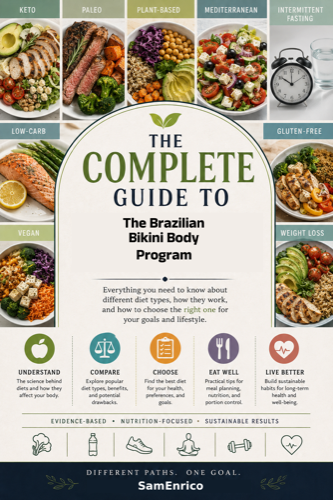 The Complete Guide to the Brazilian Bikini Body ProgramBarba Racheal$11.99
You may also like
 Hong Kong Handover 1997Dunn Johnnie$11.99
 Zumba For Postnatal Recovery CourseNeal Christian$11.99
 Zumba for BeginnersLadner Nikia$11.99
 YouTube Comment Mining GuideHumes Pandora$12.99
 Worry Box MeditationCarlin Rudy$11.99
 Workplace Stress MeditationNguyen Lynn$11.99
 Workplace Stress and Sleep RepairHawley Ivory$11.99
 Workplace Perfectionism CureDelaney Jeffry$11.99
 Workplace Injustice Anger GuideWallen Isabelle$11.99
 Work Addiction and Burnout LinkGreenwood Ester$11.99
 Women in Yoga and WellnessBeattie Galina$11.99
 Women in Stand Up ComedyChun Evangeline$11.99