
Online Student Isolation Guide eBook
Combat loneliness and stay motivated in fully remo
Combat loneliness and stay motivated in fully remote or hybrid learning environments.
Formats
Free sample
Chapter 1: The Notification Lie--–- You check your phone. Forty-seven unread messages. Three missed calls from your mom. A reminder that your discussion post is due in six hours. Two classmates have already replied to a thread you haven't even started.
Your professor posted an announcement. Your group chat is debating dinner plans you cannot attend because you have a lecture to watch. Your screen glows. Your thumb scrolls. Your inbox fills.
And yet—somewhere between the fourteenth email and the fifteenth—you realize something that terrifies you: you have never felt more alone in your life.This is the paradox of modern online learning. You are drowning in digital communication, yet starving for human connection. The notifications never stop, but neither does the silence. You are surrounded by voices you cannot hear, faces you cannot read, and a crowd that does not know your name. The problem is not that you are isolated.
The problem is that you are isolated while pretending not to be. Every notification is a reminder that others are out there, talking, laughing, collaborating, existing—and you are watching from behind a glass screen, knocking on a door that never opens.This chapter is called The Notification Lie because we need to name the deception at the heart of remote education. The lie is this: more communication equals more connection. It does not. In fact, the opposite is often true.
The more you are bombarded with asynchronous, text-based, low-bandwidth digital signals, the more your brain learns to tune them out—and the more you feel the absence of what truly matters: spontaneous, unplanned, warm, human moments that cannot be scheduled, drafted, or archived.If you have picked up this book, you already know the truth. You have refreshed a discussion board hoping for a reply that never came. You have sat through a two-hour Zoom session and realized you did not speak a single word. You have finished an assignment, felt nothing, and closed your laptop to an empty room. You are not broken.
You are not weak. You are experiencing a predictable, documented, and solvable consequence of how online learning is designed. And the first step toward solving it is understanding exactly what has been taken from you—and why your brain misses it more than you realize.The Two Kinds of Empty Let us begin with a distinction that will matter for every chapter that follows. Psychologists and education researchers draw a critical line between two experiences that feel similar but are fundamentally different: passive isolation and active loneliness.Passive isolation is the structural condition of being alone. It is the absence of social interaction built into the design of your learning environment.
When your course has no live sessions, you are passively isolated. When your discussion board requires you to post but not reply, you are passively isolated. When your professor records lectures and never appears on camera, you are passively isolated. This is the architecture of distance—and it is not your fault. You did not choose to remove the hallway conversations, the coffee shop encounters, the post-lecture clusters of confused students.
The system removed them for you.Active loneliness, by contrast, is the emotional pain that results from that structural absence. It is the feeling, not the fact. You can be physically surrounded by people and still feel actively lonely. You can be entirely alone and feel perfectly content. The problem for online learners is that passive isolation reliably produces active loneliness over time.
The human brain is a social organ. It expects input. When that input does not arrive—or when it arrives in the wrong format—the brain sounds an alarm. That alarm feels like sadness, restlessness, disconnection, and a vague sense that something is wrong even when nothing bad has happened.Here is what most books get wrong: they tell you to fix the loneliness (the feeling) without addressing the isolation (the structure). You cannot meditate your way out of a poorly designed course.
You cannot journal your way into a spontaneous conversation that was never scheduled. You cannot affirm your way into a community that does not exist. This book will give you tools for the feeling, yes. But first, it will help you see the structure—because once you see it, you can change it.The Transactional Distance Trap In 1993, a researcher named Michael Moore proposed a theory that, thirty years later, explains exactly why you feel the way you do. Moore called it transactional distance—the psychological space between a learner and their instructor, and between learners themselves, that emerges not from physical distance but from structural distance.
You can be sitting next to someone on a Zoom grid and feel miles apart. You can be on opposite sides of the planet and feel close. Transactional distance is the gap that matters.Moore argued that three variables control transactional distance: dialogue (the quality of two-way communication), structure (how rigidly the course is organized), and learner autonomy (how much control you have over your own learning). When dialogue is low, structure is high, and autonomy is absent, transactional distance grows. You feel far away.
You feel alone. You feel like a spectator, not a participant.Here is the cruel irony that Moore identified and that every online student has felt: flexibility increases transactional distance. When you are told you can "learn anytime, anywhere," what you are actually being told is that there is no shared time and no shared space. You are being given freedom at the cost of collision. The hallway conversation, the coffee line nod, the shared groan after a difficult exam—these things happen because people are in the same place at the same time.
They are not scheduled. They are not in the syllabus. They are emergent properties of co-presence. And co-presence is the first thing online learning eliminates.Think about your best friendships from in-person school. Can you remember the moment you first spoke?
Probably not. Because most friendships begin not with a planned conversation but with a thousand tiny unplanned collisions: sitting near each other, making eye contact during a boring lecture, laughing at the same joke, walking in the same direction after class. Each collision is low stakes. Each one says, "I see you. You exist.
We are here together." Over time, these micro-moments accumulate into trust, and trust becomes friendship.Now think about your online courses. Where do those collisions happen? They do not. The discussion board is not a collision; it is a broadcast. The Zoom breakout room is not spontaneous; it is assigned.
The group chat is not ambient; it is intentional. Everything requires a decision, a click, a typed message, a moment of explicit vulnerability. The barrier to entry is so high that most people never cross it. And so you remain alone—not because you are unlikeable, not because you are shy, but because the architecture of collision has been demolished and replaced with the architecture of broadcast.The Hidden Curriculum of Eye Contact Before we go further, I want you to try something. Close your eyes for five seconds and remember the last time you had a real, in-person conversation with a classmate.…
This is the end of the free sample. Get the eBook to keep going. Buy now
About this book
Details
- Author
- Maness Mozella
- Publisher
- SamEnrico
- Language
- English
- Genre
- Non-Fiction, Self-Help, Online Learning, Student Connection
- Released
- 2026-06-12
- Pages (approx.)
- 136
- Available as
- eBook, Audiobook

Read better in the ZLOADR app
Your eBooks on your phone or tablet. Sign in with your SamEnrico account and start reading.
More by Maness Mozella
 Sleep Soundscape GuideManess Mozella$11.99
 The Bering Strait CrossingManess Mozella$11.99
 Hospice Nurse Stress ReliefManess Mozella$11.99
 Antwerp Heist Key Witness ProtectionManess Mozella$11.99
 The Silk Road to the Reef: Zheng He’s Forgotten Marine BiologistsManess Mozella$11.99
 The Silent Treaty: How a 19th-Century Pact Shaped Modern DiplomacyManess Mozella$11.99
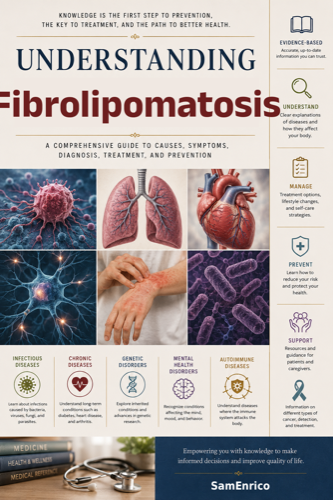 Understanding FibrolipomatosisManess Mozella$17.99
 How to Become a MycologistManess Mozella$11.99
 Strategic Partnership DevelopmentManess Mozella$11.99
 Remote Radical CandorManess Mozella$12.99
 Marc Andreessen Debt WorkbookManess Mozella$12.99