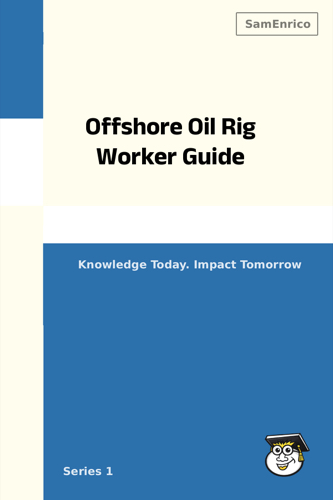
Offshore Oil Rig Worker Guide
Manages isolation and danger on platform.
Manages isolation and danger on platform.
Formats
About this book
Free sample
Chapter 1: The Sky Crane...--The last thing you hear before leaving the world is not a prayer or a goodbye text. It is the rhythmic thump-thump-thump of rotor blades chopping the humid Gulf air into submission, and the tinny voice of a flight medic saying, “If we ditch, put the breathing tube in your mouth before you inflate the vest.” You are thirty miles from shore, strapped into a Sikorsky S-92 that smells of jet fuel, sweat, and the quiet terror of ten other men who will never admit they are scared. Welcome to the commute. This is not travel. This is the first test of whether you will survive long enough to see a paycheck.Most people think the most dangerous part of working on an offshore oil rig is the rig itself—the spinning pipe, the high-pressure wells, the hundred-foot waves that crash against steel legs.
They are wrong. According to data from the International Association of Drilling Contractors and the United States Bureau of Safety and Environmental Enforcement, approximately seventeen percent of all offshore fatalities occur during the commute. That is nearly one in five deaths happening before the worker even steps onto the platform. The helicopter ditch. The crew boat capsize.
The gangway fall during transfer. These are not rare tragedies. They are the price of getting to work, and the industry has spent billions trying to reduce that price—better survival suits, automatic life raft deployers, underwater escape training. But no piece of equipment can replace the most critical survival tool you have: your own mind, prepared and hardened before the rotors begin to turn.This chapter is not a dry recitation of safety checklists. You can find those in the thirty-page booklet the company gives you during orientation, the one you will stuff into your locker and never read again.
Instead, this chapter is about the psychology of the commute. It is about why visualization reduces panic by forty percent. It is about why seasickness is not just uncomfortable but genuinely dangerous—because a worker who has been vomiting for two hours makes cognitive errors…
This is the end of the free sample. Get the eBook to keep going. Buy now
Contents
- Chapter 1
- Chapter 2
- Chapter 3
- Chapter 4
- Chapter 5
- Chapter 6
- Chapter 7
- Chapter 8
- Chapter 9
- Chapter 10
- Chapter 11
- Chapter 12
Details
- Author
- Sherrill Jonas
- Publisher
- SamEnrico
- Language
- English
- Genre
- Non-Fiction, Self-Help, Oil Industry
- Released
- 2026-06-09
- Pages (approx.)
- 152
- Available as
- eBook, Audiobook

Read better in the ZLOADR app
Your eBooks on your phone or tablet. Sign in with your SamEnrico account and start reading.
More by Sherrill Jonas
 The Breath While WalkingSherrill Jonas$11.99
 Anger Management for Office GossipSherrill Jonas$11.99
 COVID Anxiety DBTSherrill Jonas$11.99
 Insurance Policy AI AbstractionSherrill Jonas$11.99
 Sunken Aircraft Carrier LogSherrill Jonas$11.99
 Family History PalaceSherrill Jonas$11.99
 Egyptian Astronomy GuideSherrill Jonas$11.99
 Rewiring ImpatienceSherrill Jonas$11.99
 The Piltdown Hoax of the Andes: How a Fake Fossil Fooled the WorldSherrill Jonas$11.99
 The Midnight Ferry: Harriet Tubman’s Secret Water RoutesSherrill Jonas$11.99
 The Rendlesham Forest Enigma: When the Military Met the UnknownSherrill Jonas$11.99
 Ultimate Handbook Guide to Nouakchott : (Mauritania) Travel GuideSherrill Jonas$11.99