
Non-FictionSelf-HelpNuclear Engineering
Nuclear Engineering Creativity eBook
Generate novel reactor designs and safety systems
by Holman Gus
Generate novel reactor designs and safety systems using structured innovation.
Formats
Free sample
Chapter 1: The Expertise Trap...--–- The control room at Three Mile Island had been running smoothly for three months before anyone noticed the turbine trip indicators were miswired. Not because the wiring had failed, but because every shift leader had assumed the previous shift had checked it. The assumption was rational, efficient, and completely wrong. On March 28, 1979, that unchecked assumption contributed to the worst commercial nuclear accident in American history. The engineers who designed the plant, the operators who ran it, and the regulators who approved it were not novices.
They were among the most experienced nuclear professionals in the world. And that was precisely the problem.This chapter confronts a disturbing pattern that has repeated itself across the nuclear industry for seven decades: the engineers with the most experience are often the least likely to produce breakthrough designs, the least likely to question legacy assumptions, and paradoxically, sometimes the most likely to miss emergent failure modes. The pattern is not limited to nuclear power. Kodak's engineers invented the digital camera and then buried it because it threatened their film business. Blockbuster passed on acquiring Netflix because streaming seemed impossible.
But in nuclear engineering, the stakes are infinitely higher. When an experienced team fails to imagine a new safety system or a novel reactor architecture, the cost is not lost market share—it is lost decades of low-carbon energy, continued reliance on fossil fuels, and in worst-case scenarios, accidents that could have been prevented.This book is about breaking that pattern. It is about learning to be creative not despite your expertise, but by learning when to set that expertise aside. The central argument of this chapter—and the foundation for everything that follows—is that nuclear engineering creativity is a structured discipline, not a bolt of lightning. It requires a clear understanding of when deep knowledge helps and when it hurts.
It requires a framework for switching between two fundamentally different cognitive modes. And it requires the courage to ask the one question that experienced engineers are trained to avoid: "Why?"The Expertise Trap: Why Smart People Make the Same Mistakes The concept of the expertise trap was first systematically studied by cognitive psychologists in the 1980s, but nuclear engineers have been falling into it since the first reactors were built under the University of Chicago's football stadium. The basic mechanism is simple and insidious. As you gain experience with a particular system, your brain builds increasingly efficient mental models. These models are shortcuts that allow you to predict behavior, diagnose problems, and make decisions without consciously processing every piece of information.
This is what makes expertise valuable. A junior engineer might spend twenty minutes analyzing a pressure drop transient; a senior engineer recognizes the pattern in twenty seconds and knows the correct valve adjustment immediately.The problem arises when these efficient mental models become prisons. They filter out information that doesn't fit, they make assumptions invisible, and they actively resist revision. Psychologists call this "cognitive commit" or "entrenchment." The more you know, the harder it becomes to see what you've been missing.Consider the following data, drawn from a meta-analysis of 32 reactor design projects conducted between 1985 and 2020. The projects spanned American light-water reactor upgrades, French fast reactor programs, Russian breeder reactor development, and modern startup ventures from companies like Nu Scale, Terra Power, and Kairos Power.
Researchers categorized teams as "veteran-dominant" (more than 75% of members with 15+ years of nuclear experience), "mixed" (a balance of veterans and engineers with less than 10 years of experience), and "novice-dominant" (more than 75% members with less than 10 years of experience). The results were striking.Veteran-dominant teams produced designs that were, on average, 22% more reliable in terms of predicted safety metrics. They were also 31% less novel, measured by the number of patentable innovations and departures from standard reactor architectures. Mixed teams produced the highest novelty scores—43% higher than veteran teams—while maintaining safety metrics within 8% of veteran teams. Novice-dominant teams produced the highest novelty but also the lowest safety metrics, suggesting that some expertise is essential for responsible innovation.The implication is clear: the optimal design team is not the most experienced team.
It is a team that deliberately mixes deep expertise with fresh perspectives, and more importantly, it is a team whose members have been trained to recognize and counteract the expertise trap in their own thinking.The Two Modes: Operational Excellence vs. Design Innovation To understand how the expertise trap operates in nuclear engineering, we must distinguish between two fundamentally different cognitive modes. These modes require different habits, different metrics for success, and different relationships to existing knowledge. Most engineers are trained only in the first mode. The second mode must be deliberately cultivated.Mode One: Operational Excellence Operational excellence is the mode of keeping existing nuclear plants running safely, efficiently, and reliably.
It values consistency, predictability, and adherence to proven procedures. It is the mode of the shift supervisor who has memorized every emergency operating procedure, the maintenance engineer who knows exactly when to replace a pump seal based on vibration signatures, and the safety analyst who can recite the design-basis accident scenarios from memory.In operational excellence, expertise is an unambiguous asset. The more you have seen, the better you are at recognizing subtle deviations from normal operation. The industry's safety record depends on this mode. The vast majority of nuclear engineers spend their entire careers in operational excellence, and they perform vital, heroic work.Mode Two: Design Innovation Design innovation is the mode of creating new reactor architectures, safety systems, fuels, and operational concepts.
It values novelty, exploration, and the willingness to question assumptions that have been treated as laws of physics. It is the mode of the reactor physicist who asks whether control rods must enter from the top, the materials scientist who wonders if a fuel could be designed to burn waste instead of fresh uranium, and the safety engineer who imagines a passive cooling system with no moving parts.In design innovation, expertise can become a liability. The patterns that make you efficient in operations become blinders in innovation. The assumptions that keep plants safe—assumptions validated by decades of experience—may be precisely the assumptions that need to be challenged to achieve the next breakthrough.The critical insight is that both modes are necessary, and both must be cultivated. An industry that only optimizes existing designs will eventually stagnate, missing opportunities for safer, cheaper, more sustainable nuclear energy.
An industry that only pursues novel designs without grounding in operational reality will produce unsafe, impractical, or unlicensable concepts. The challenge is learning to switch between modes deliberately and to recognize which mode is appropriate for the task at hand.The Shoshin Principle: Beginner's Mind in Nuclear Engineering The Zen Buddhist concept of Shoshin, or "Beginner's Mind," offers a practical framework for entering the design innovation mode. Shoshin is the practice of approaching a subject with openness, eagerness, and a lack of preconceptions—even when you are an expert. As the Zen teacher Shunryu Suzuki wrote, "In the beginner's mind there are many possibilities; in the expert's mind there are few."Applied to nuclear engineering, Shoshin is not about pretending you don't know what you know. You cannot unlearn the…
This is the end of the free sample. Get the eBook to keep going. Buy now
About this book
Details
- Author
- Holman Gus
- Publisher
- SamEnrico
- Language
- English
- Genre
- Non-Fiction, Self-Help, Nuclear Engineering
- Released
- 2026-06-08
- Pages (approx.)
- 159
- Available as
- eBook, Audiobook

Read better in the ZLOADR app
Your eBooks on your phone or tablet. Sign in with your SamEnrico account and start reading.
More by Holman Gus
 Growth Mindset For CouplesHolman Gus$11.99
 Strengthening Willpower Without ShameHolman Gus$11.99
 The Mediterranean Diet CookbookHolman Gus$11.99
 Because Justification RuleHolman Gus$11.99
 The Siege of Chandor: India's Stone Fortress That Defied the Mughals (1595)Holman Gus$11.99
 How to Start a Cigarette Lighters (wholesale) Business (Beginners Guide)Holman Gus$11.99
 YC African Startup Legal TipsHolman Gus$12.99
 VAT for Small BusinessesHolman Gus$12.99
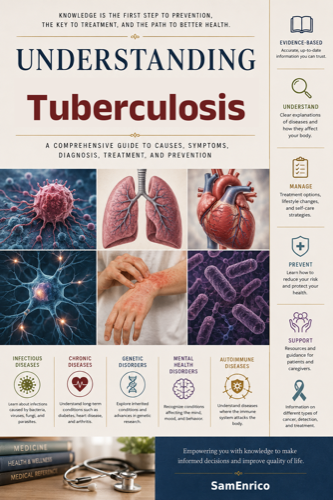 Understanding TuberculosisHolman Gus$17.99
 CRM Setup and Automation with HubSpotHolman Gus$11.99
You may also like
 Hong Kong Handover 1997Dunn Johnnie$11.99
 Zumba For Postnatal Recovery CourseNeal Christian$11.99
 Zumba for BeginnersLadner Nikia$11.99
 YouTube Comment Mining GuideHumes Pandora$12.99
 Worry Box MeditationCarlin Rudy$11.99
 Workplace Stress MeditationNguyen Lynn$11.99
 Workplace Stress and Sleep RepairHawley Ivory$11.99
 Workplace Perfectionism CureDelaney Jeffry$11.99
 Workplace Injustice Anger GuideWallen Isabelle$11.99
 Work Addiction and Burnout LinkGreenwood Ester$11.99
 Women in Yoga and WellnessBeattie Galina$11.99
 Women in Stand Up ComedyChun Evangeline$11.99