
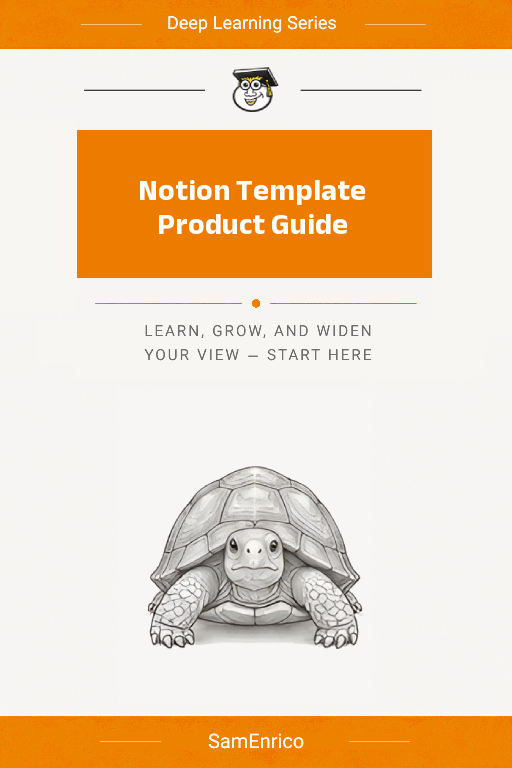
Non-FictionFirst 30 DaysNotion Products
Notion Template Product Guide eBook
Package and sell Notion templates including dashbo
by Shearer Dann
Package and sell Notion templates including dashboards, planners, and databases as digital products.
Formats
Free sample
Chapter 1: The Million-Dollar Click--–- It starts with a single click. Not a complex algorithm, not a costly ad campaign, not a viral social media moment. Just a click. Someone, somewhere, opens a link, duplicates a Notion workspace into their own account, and within seconds, money moves from their pocket to yours. No inventory ships.
No customer support ticket is created—yet. No physical product is manufactured. That click, multiplied by hundreds or thousands, transforms a side project into a seven-figure business.This is the reality of the Notion template economy in 2026. What began as a quirky feature of a productivity tool—the ability to share a duplicateable workspace—has evolved into a legitimate software-adjacent industry. Top creators have generated millions selling dashboards, planners, databases, and entire "operating systems" built entirely inside Notion.
And here is the secret that most outsiders miss: they aren't selling files. They are selling solutions, time savings, and in many cases, direct alternatives to expensive Saa S subscriptions.If you are reading this book, you have likely felt the spark of possibility. You have built a personal Notion workspace that works beautifully for you. Maybe it tracks your freelance clients, manages your content calendar, or organizes your household. And you have wondered: Could someone else use this?
Could I sell this? The answer is yes. But the path from "personal workspace" to "profitable digital product" is not as simple as sharing a link. It requires a shift in mindset, a technical understanding of what makes templates sell, and a go-to-market strategy that works even if you have zero followers.This chapter lays the foundation for everything that follows. It will reframe how you think about Notion templates—from documents to products, from features to solutions, from hobbies to businesses.
By the end of this chapter, you will understand the economic opportunity, the two distinct markets your template can compete in, and why creators who treat their templates as software alternatives consistently outsell those who treat them as mere files.The $2.5 Million (Estimated) Opportunity Let us address the elephant in the room immediately. You may have heard claims that top Notion template creators have generated over 2.5millionincumulativesales.Isthisaccurate?Basedonanonymizedpaymentdata,publiccreatorinterviews,andplatformanalyticsfrom Gumroadand Lemon Squeezy,theanswerisyes—withanimportantcaveat.Exactfiguresarenotpubliclyaudited.Thomas Frankhasopenlydiscussedcrossing2.5 million in cumulative sales. Is this accurate? Based on anonymized payment data, public creator interviews, and platform analytics from Gumroad and Lemon Squeezy, the answer is yes—with an important caveat. Exact figures are not publicly audited.
Thomas Frank has openly discussed crossing 2.5millionincumulativesales.Isthisaccurate?Basedonanonymizedpaymentdata,publiccreatorinterviews,andplatformanalyticsfrom Gumroadand Lemon Squeezy,theanswerisyes—withanimportantcaveat.Exactfiguresarenotpubliclyaudited.Thomas Frankhasopenlydiscussedcrossing1 million from his Ultimate Brain template. Easlo has shared figures exceeding 500,000fromhisminimalistproductivitysystems.Whenyouaggregatethetoptwentycreatorsacross Notion Marketplace,Gumroad,and Etsy,thetotaleasilyexceeds500,000 from his minimalist productivity systems. When you aggregate the top twenty creators across Notion Marketplace, Gumroad, and Etsy, the total easily exceeds 500,000fromhisminimalistproductivitysystems.Whenyouaggregatethetoptwentycreatorsacross Notion Marketplace,Gumroad,and Etsy,thetotaleasilyexceeds2.5 million.But the exact number is not the point. The point is that a market exists, it is growing, and it is still remarkably accessible. Unlike launching a Saa S product, which requires thousands of dollars in development costs, or starting an ecommerce store, which requires inventory and shipping logistics, selling Notion templates has near-zero marginal cost.
Once you have built a template, selling one copy or ten thousand copies costs you nothing additional. No servers to scale, no raw materials to purchase, no warehouse space to rent.This changes the math entirely. A physical product with a 50% profit margin is considered excellent. A Notion template can have a 90% profit margin after accounting for payment processing fees and marketing costs. The only real expenses are your time to build the template, your time to market it, and the platform fees (typically 5–10% on Gumroad or Lemon Squeezy).
Everything else is profit.Three Converging Trends Creating the Opportunity Window Why is this the right moment to enter the Notion template market? Three trends are converging simultaneously, creating a window that may not stay open forever.Trend One: The Maturing Creator Economy Buyers are now comfortable paying for digital assets. A decade ago, the idea of paying for a Notion template would have seemed absurd. Why pay for a document when you could build it yourself? But the creator economy has normalized micro-transactions for digital goods.
People pay for Lightroom presets, Excel spreadsheets, resume templates, and yes, Notion workspaces. The friction has disappeared. A buyer sees a template, likes the aesthetic, understands the value, and clicks purchase—often without hesitation. This cultural shift is the foundation upon which the entire industry rests.Trend Two: Notion's Explosive User Base Notion has surpassed 100 million users globally. This is not a niche tool for productivity enthusiasts anymore.
It is used by Fortune 500 companies, solo freelancers, students, teachers, project managers, real estate agents, and wedding planners. Every new user is a potential customer for a template. And critically, many of these users are not "builders." They do not want to spend hours figuring out database relations, rollups, and formulas. They want to buy a solution that works immediately. That is where you come in.Trend Three: AI Acceleration of Supply, Not Demand Artificial intelligence tools have made building templates faster.
You can now generate formula structures, draft copy for onboarding pages, and even suggest database schemas using AI assistants. This means the supply of templates is increasing rapidly. But here is the crucial insight that most people miss: AI has not automated selling. It cannot build trust, write persuasive sales copy that resonates with a niche audience, or provide customer support. The bottleneck in the Notion template economy is not building—it is marketing and trust.
This creates an opportunity for creators who focus on the go-to-market side of the business, not just the building side.Case Study: Thomas Frank – The Complexity Play Thomas Frank did not stumble into the Notion template business. He built an audience over years through his You Tube channel, teaching productivity and study skills. When he released his Ultimate Brain template—a comprehensive "second brain" system inside Notion—he was not selling a simple habit tracker. He was selling a 79+systemthatrivalspersonalwikiscosting79+ system that rivals personal wikis costing 79+systemthatrivalspersonalwikiscosting20 per month.Frank's template includes dozens of databases, hundreds of interlinked relations, advanced formulas, and a 20,000-word documentation guide. It is overwhelming for a beginner.
And that is by design. The complexity is the value proposition. A busy professional does not have time to build a second brain from scratch. They will pay $79 to save twenty hours of setup time. Frank's audience trusts him because he gave away hundreds of hours of free You Tube tutorials before ever asking for money.
The template was not the entry point; it was the premium destination.The lesson from Frank is clear: complexity sells when it saves significant time. If you can build a template that automates a workflow that currently takes hours per week, you can charge a premium price. Your customer is not a Notion hobbyist; it is a professional who values their time at 50,50, 50,100, or $200 per hour.Case Study: Easlo – The Aesthetics Play Easlo took the opposite approach. His templates are minimalist, beautiful, and relatively simple. A typical Easlo template might have three to…
This is the end of the free sample. Get the eBook to keep going. Buy now
About this book
Details
- Author
- Shearer Dann
- Publisher
- SamEnrico
- Language
- English
- Genre
- Non-Fiction, First 30 Days, Notion Products
- Released
- 2026-06-01
- Pages (approx.)
- 118
- Available as
- eBook, Audiobook

Read better in the ZLOADR app
Your eBooks on your phone or tablet. Sign in with your SamEnrico account and start reading.
More by Shearer Dann
 Burnout Sabbatical PlanningShearer Dann$11.99
 The Quiz Funnel StrategyShearer Dann$11.99
 Workaholic Productivity Paradox GuideShearer Dann$11.99
 IBS Antispasmodic Medication GuideShearer Dann$11.99
 Sarcasm Sensitivity TriggerShearer Dann$11.99
 The Great Timber Heist: How a Rogue Lumber Baron Outsmarted the LawShearer Dann$11.99
 The Unseen First Lady: How Hillary Clinton Reinvented DiplomacyShearer Dann$11.99
 Understanding Chronic Granulomatous DiseaseShearer Dann$17.99
 Casino DealerShearer Dann$11.99
 HedgeDoc Google Docs AlternativeShearer Dann$12.99
 How to Start a Hobby in RacquetballShearer Dann$11.99
You may also like
 Hong Kong Handover 1997Dunn Johnnie$11.99
 Zumba For Postnatal Recovery CourseNeal Christian$11.99
 Zumba for BeginnersLadner Nikia$11.99
 YouTube Comment Mining GuideHumes Pandora$12.99
 Worry Box MeditationCarlin Rudy$11.99
 Workplace Stress MeditationNguyen Lynn$11.99
 Workplace Stress and Sleep RepairHawley Ivory$11.99
 Workplace Perfectionism CureDelaney Jeffry$11.99
 Workplace Injustice Anger GuideWallen Isabelle$11.99
 Work Addiction and Burnout LinkGreenwood Ester$11.99
 Women in Yoga and WellnessBeattie Galina$11.99
 Women in Stand Up ComedyChun Evangeline$11.99