

Non-FictionStudent's ShortcutNorway
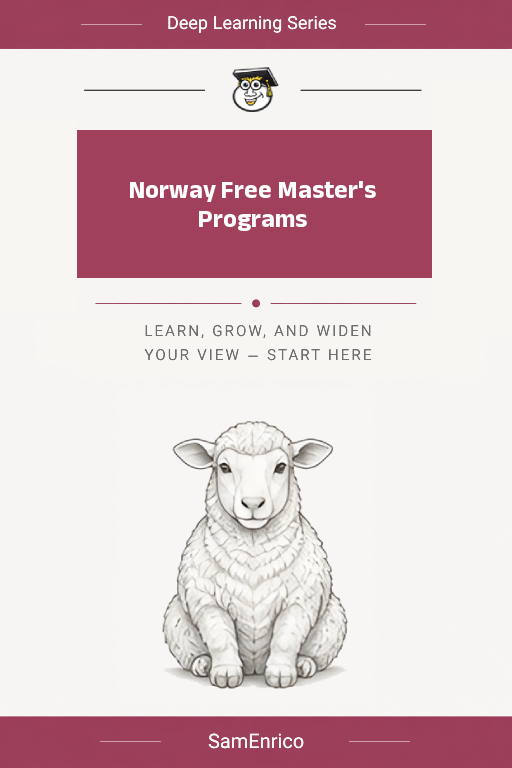
Norway Free Master's Programs eBook
Attend Norwegian public universities with no tuiti
by Severson Mi
Attend Norwegian public universities with no tuition for all students, regardless of nationality.
Formats
Free sample
Chapter 1: Beyond the Myth...--–- The first thing you need to understand about free master's degrees in Norway is that the phrase itself has become a kind of urban legend. Ask almost anyone in international student forums, social media groups, or even university admissions offices outside Scandinavia, and you will hear some version of the same answer: "Norway offers free tuition to everyone, regardless of where you come from." This statement was once true. It is no longer. And yet, like a ghost that refuses to leave the room, the myth persists, misleading thousands of prospective students every single year.Let me be brutally honest with you from the very first page of this book. I am not writing to sell you a dream.
I am writing to give you a roadmap through a complex, recently changed, and often misunderstood landscape. If you picked up this book because you heard a rumor that you can pack your bags, fly to Oslo, and study for free with no strings attached, you need to put that expectation aside right now. That Norway no longer exists. But do not close this book yet. What replaced that old Norway is something more complicated, more nuanced, and for the strategic and well-prepared student, still deeply valuable.The truth is that Norwegian public universities remain among the finest in the world.
They are well-funded, research-intensive, and remarkably accessible compared to counterparts in the United States, the United Kingdom, or Australia. The teaching quality is high, the student welfare system is generous, and the post-graduation work pathways are clear and attainable. What has changed is not the quality of education but the funding model for international students from outside the European Union and European Economic Area.To understand where you stand today, you need to understand where Norway stood just a few years ago. Before 2023, Norwegian public universities charged no tuition to any student, regardless of nationality. That meant a student from India, Brazil, Nigeria, the United States, or China could study alongside a student from Germany, France, or Norway itself without paying a single krone in tuition.
The only costs were the semester fee, which typically ranged from 600 to 700 Norwegian kroner, and living expenses. This policy was unique in Europe. While Germany had reintroduced tuition for non-EU students in some states, and Sweden and Denmark had done the same years earlier, Norway remained a beacon of tuition-free international education.The policy had deep roots in the Norwegian social welfare model. Education was viewed as a public good, not a commodity. The logic was simple: an educated population benefits everyone, and restricting education based on ability to pay contradicts the egalitarian principles that underpin Norwegian society.
For decades, this applied to international students as a natural extension of the same philosophy. Norway wanted the world's best students, regardless of their financial circumstances, and was willing to subsidize their education as an investment in global knowledge and cultural exchange.Then came 2023, and everything changed.The Norwegian Parliament, known as the Storting, voted to end universal tuition-free education for students from outside the EU and EEA. The decision was not sudden, nor was it without extensive debate. For years, politicians and university administrators had raised concerns about the sustainability of the free-for-all model. International student enrollment had grown rapidly, placing strain on university resources, student housing, and support services.
At the same time, other Nordic countries had successfully introduced tuition for non-EU students while maintaining high enrollment levels through targeted scholarship programs.The government's stated rationale included several key arguments. First, they argued that Norwegian taxpayers should not be expected to subsidize the education of students who had no intention of remaining in Norway after graduation. Data showed that a significant percentage of international students left the country within a few years of completing their degrees, meaning the public return on investment was limited. Second, they argued that tuition fees would allow universities to generate additional revenue that could be used to improve the quality of education for all students. Third, they pointed to the success of Sweden and Denmark, both of which had introduced tuition for non-EU students while simultaneously expanding scholarship programs to ensure that the most talented students from developing countries were not excluded.The resulting legislation created what I call the three-tier system.
Tier one applies to students from EU and EEA countries, as well as Switzerland. These students continue to enjoy tuition-free education at Norwegian public universities. This is not a matter of charity or generosity. It is a matter of legal obligation under the EEA agreement, which guarantees free movement and equal treatment for citizens of member states. Norwegian universities cannot charge tuition to EU students even if they wanted to.Tier two applies to students from outside the EU and EEA, which includes most of the readers of this book.
These students are now subject to tuition fees, which vary by institution and program. As we will explore in detail in Chapter 5, these fees typically range from approximately 198,000 to 295,000 Norwegian kroner per year at the University of Oslo, with similar ranges at other major institutions. That is roughly 18,000 to 27,000 US dollars or 17,000 to 25,000 euros per year. This places Norwegian tuition at roughly the same level as many German public universities that charge fees for non-EU students and significantly lower than most US or UK institutions.Tier three applies to specific categories of non-EU students who remain eligible for tuition-free education under the new system. These exemptions are not arbitrary.
They are designed to cover individuals who have established genuine ties to Norway. A complete, verified list of exemptions appears in Chapter 3, but the major categories include individuals with permanent residence permits, asylum or protection residence permits, family members of EU citizens, individuals married to or cohabiting with Norwegian citizens, those who have worked full-time in Norway for 24 months or more, those who have completed 36 months or more of education in Norway, and UK citizens who moved to Norway before December 31, 2020.If you fall into any of these categories, congratulations. You are among the lucky few for whom the old Norway still applies. But if you do not, you need to understand that the era of automatic, no-questions-asked free tuition for non-EU students is over. This is not speculation.
This is not rumor. This is the law, and it is being enforced by every public university in Norway.So why am I writing this book, and why should you read it?Because the end of universal free tuition does not mean the end of affordable, accessible, high-quality master's education in Norway. It means the rules have changed, and you need to understand the new rules to succeed.Let me give you some context. In 2022, before the reform took effect, approximately 8,000 non-EU students were enrolled in Norwegian master's programs. By 2025, that number had dropped by roughly 40 percent, according to preliminary data from the Norwegian Directorate for Higher Education and Skills.
The decline was sharpest among students from South Asia, Africa, and the Middle East, where the new tuition fees represent a significant financial barrier. At the same time, enrollment from North America and wealthier Asian countries remained relatively stable, suggesting that the new…
This is the end of the free sample. Get the eBook to keep going. Buy now
About this book
Details
- Author
- Severson Mi
- Publisher
- SamEnrico
- Language
- English
- Genre
- Non-Fiction, Student's Shortcut, Norway
- Released
- 2026-06-02
- Pages (approx.)
- 158
- Available as
- eBook, Audiobook

Read better in the ZLOADR app
Your eBooks on your phone or tablet. Sign in with your SamEnrico account and start reading.
More by Severson Mi
 Greenhouse Winter VisualizationSeverson Mi$11.99
 Task Based Grief ModelSeverson Mi$11.99
 Never Run Out of Small TalkSeverson Mi$11.99
 GAD And Escalator AnxietySeverson Mi$11.99
 Conversation Starters for Startup FoundersSeverson Mi$11.99
 Workaholic Anxiety LinkSeverson Mi$11.99
 Substance Use Intervention GuideSeverson Mi$11.99
 Health Anxiety GuideSeverson Mi$11.99
 Racing the Sun: The Untold Rivalry of Australia’s F1 MavericksSeverson Mi$11.99
 The Silk and Gold Empire: The Rise of the Yoruba Merchants of OyoSeverson Mi$11.99
 A Collector's Handbook to the Fiat-abarth Ot1000 CoupeSeverson Mi$11.99
 How to Produce TablewareSeverson Mi$11.99
You may also like
 Hong Kong Handover 1997Dunn Johnnie$11.99
 Zumba For Postnatal Recovery CourseNeal Christian$11.99
 Zumba for BeginnersLadner Nikia$11.99
 YouTube Comment Mining GuideHumes Pandora$12.99
 Worry Box MeditationCarlin Rudy$11.99
 Workplace Stress MeditationNguyen Lynn$11.99
 Workplace Stress and Sleep RepairHawley Ivory$11.99
 Workplace Perfectionism CureDelaney Jeffry$11.99
 Workplace Injustice Anger GuideWallen Isabelle$11.99
 Work Addiction and Burnout LinkGreenwood Ester$11.99
 Women in Yoga and WellnessBeattie Galina$11.99
 Women in Stand Up ComedyChun Evangeline$11.99