
Non-FictionSelf-HelpNonviolentNVC
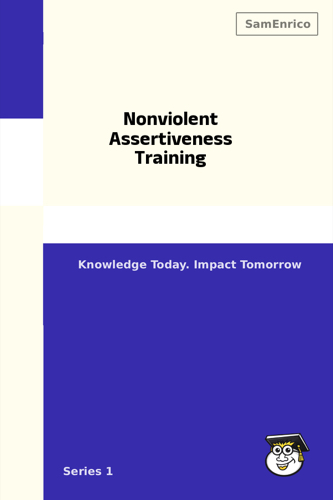
Nonviolent Assertiveness Training eBook
Combine compassion with firmness using Rosenberg's
Combine compassion with firmness using Rosenberg's communication framework.
Formats
Free sample
Chapter 1: The Nice Disease--–- Every morning, Sarah would wake up exhausted. Not from insomnia or illness, but from the sheer weight of all the “yeses” she had said the day before. Yes to staying late at work. Yes to hosting her sister-in-law’s baby shower. Yes to lending money she didn’t have.
Yes to pretending she wasn’t furious when her husband forgot their anniversary. By the time her head hit the pillow, her jaw ached from smiling through conversations she wanted to escape. Her chest felt tight from swallowing words she desperately wanted to say. And somewhere beneath the fatigue, a small, venomous voice whispered: It’s your fault. You’re too weak to say no.
You deserve this.Sarah is not real. But you know her. You may be her.Sarah suffers from what this book calls The Nice Disease – a condition that affects millions of people who mistake self-sacrifice for virtue, silence for kindness, and resentment for normalcy. The Nice Disease convinces you that your needs are less important than everyone else’s comfort. It tells you that setting a boundary is selfish, that saying “no” makes you a bad person, and that if you just try harder to be “nice,” eventually everyone will appreciate you and you will finally feel at peace.But here is the truth that Sarah discovered after a minor medical emergency (stress-induced shingles at age thirty-four): Nice is not kind.
Nice is scared.This chapter will diagnose the Nice Disease in full. We will examine its symptoms, trace its origins, and – most importantly – reveal why the false choice between “nice” and “aggressive” has been destroying your relationships and your health. By the end of this chapter, you will understand the core framework of this book: the Steel Flower, a third path that combines radical compassion with unshakeable boundaries. And you will take the first step toward recovery.The Great Betrayal: How “Nice” Became a Weapon Let us begin with a distinction that will save you years of therapy: Nice is not kindness. Kindness is a choice.
Niceness is a survival strategy.Kindness flows from abundance. When you are genuinely kind, you give because you want to give. The giving itself is the reward. You feel expansive, connected, and free. You can say “no” without guilt because you know that your capacity to give tomorrow depends on your willingness to protect yourself today.Niceness, by contrast, flows from fear.
You are “nice” because you are terrified of conflict, rejection, or being perceived as difficult. You say “yes” when you mean “no.” You smile when you want to scream. You offer help you cannot afford to give. And then – because you are human – you resent the very people you tried so hard to please.This is the Great Betrayal of the Nice Disease. You sacrifice yourself to make others happy, but the sacrifice does not make them happy.
It makes you resentful. And resentment leaks. It leaks into sarcastic comments. It leaks into passive-aggressive silences. It leaks into the way you slam cabinet doors or sigh heavily when someone asks for “just one more favor.” Eventually, the person you tried so hard to please feels your resentment – and now they are confused, hurt, and angry.
They never asked you to sacrifice yourself. They did not know you were keeping score. And now the relationship you tried to save by being “nice” is worse than if you had simply said “no” in the first place.This is the pattern that plays out in millions of homes, offices, and friendships every single day. And it is the reason this book exists.The Three Symptoms of the Nice Disease The Nice Disease has three cardinal symptoms. If you recognize any of these in yourself, do not panic.
Awareness is the first step toward recovery.Symptom One: The Secret "No"The first symptom is the most common: you say “yes” out loud, but you scream “no” inside your own head. Your mouth forms the word “sure,” “of course,” or “no problem,” while your internal monologue rages: I cannot believe they are asking me this. Why do I always have to be the responsible one? When will someone ever help me?The Secret “No” is a form of emotional debt. You are borrowing against your own future peace to pay for someone else’s present comfort.
And like all debt, it comes with interest. The interest is resentment, and resentment compounds daily.Symptom Two: The Fantasy Explosion The second symptom is a particular kind of daydream. When you are lying in bed at night, driving alone in your car, or staring out an office window, you play out imaginary arguments. You imagine finally telling your boss what you really think. You rehearse the perfect speech that will make your mother-in-law understand how much she has hurt you.
You fantasize about walking out of a room mid-conversation, or hanging up the phone, or – in darker moments – saying something so cutting that the other person finally, finally understands your pain.These fantasies are not evidence that you are a bad person. They are evidence that you are a suppressed person. Your anger is trying to find an exit. Since you will not let it out in real time, it escapes in your imagination. The danger is not the fantasy itself.
The danger is that fantasies are addictive. They give you a dopamine hit of imagined power without the risk of real conflict. And the more you rely on them, the less capable you become of real assertiveness.Symptom Three: The Unexplained Body Ache The third symptom is physical. The Nice Disease lives in your body long before it appears in your behavior. Chronic tension headaches.
Tight shoulders that will not release. Jaw clenching. Teeth grinding at night. Digestive issues that come and go without medical explanation. Fatigue that sleep does not cure.
A persistent sense of being heavy, weighed down, or “stuck.”These are not “stress symptoms” in the vague, pop-psychology sense. They are the physical manifestation of unexpressed boundaries. Every time you swallow a “no,” your body records it. Every time you suppress anger, your nervous system pays a price. Over months and years, the cost becomes visible.
Sarah’s shingles were not a random misfortune. They were her body’s desperate attempt to get her attention. Your body is trying to get your attention too. The question is whether you will listen before something breaks.The False Choice: Nice or Aggressive?Why do so many people suffer from the Nice Disease? Because most of us have been taught that we have only two options when faced with conflict or a request we do not want to grant.Option One: Be Nice.
Swallow your true feelings. Say “yes” when you mean “no.” Prioritize their comfort over your own needs. This option feels safe in the moment – no conflict, no awkwardness, no risk of being disliked – but it leads to the slow death of resentment, burnout, and eventually, explosive anger.Option Two: Be Aggressive. Push back hard. Say “no” with hostility.
Match their demand with your own demand. Prioritize your needs so aggressively that there is no room for theirs. This…
This is the end of the free sample. Get the eBook to keep going. Buy now
About this book
Details
- Author
- Salmon Meaghan
- Publisher
- SamEnrico
- Language
- English
- Genre
- Non-Fiction, Self-Help, Nonviolent, NVC
- Released
- 2026-06-07
- Pages (approx.)
- 141
- Available as
- eBook, Audiobook

Read better in the ZLOADR app
Your eBooks on your phone or tablet. Sign in with your SamEnrico account and start reading.
More by Salmon Meaghan
 PNE for Chronic FatigueSalmon Meaghan$11.99
 The Britney Spears ConservatorshipSalmon Meaghan$11.99The Britney Spears ConservatorshipSalmon Meaghan$11.99
 Bill Gates Clippy BacklashSalmon Meaghan$11.99
 Relationship Burnout Prevention WorkbookSalmon Meaghan$11.99
 The Damascus Poisonings: A Trial of Madness or Malice? (1957)Salmon Meaghan$11.99
 How to Become a Last Remodeler-repairerSalmon Meaghan$11.99
 Environmental Monitoring TechnicianSalmon Meaghan$11.99
 Generational Spending Gap ReportSalmon Meaghan$12.99
 Payment Future Trends For ExportersSalmon Meaghan$12.99
You may also like
 Hong Kong Handover 1997Dunn Johnnie$11.99
 Zumba For Postnatal Recovery CourseNeal Christian$11.99
 Zumba for BeginnersLadner Nikia$11.99
 YouTube Comment Mining GuideHumes Pandora$12.99
 Worry Box MeditationCarlin Rudy$11.99
 Workplace Stress MeditationNguyen Lynn$11.99
 Workplace Stress and Sleep RepairHawley Ivory$11.99
 Workplace Perfectionism CureDelaney Jeffry$11.99
 Workplace Injustice Anger GuideWallen Isabelle$11.99
 Work Addiction and Burnout LinkGreenwood Ester$11.99
 Women in Yoga and WellnessBeattie Galina$11.99
 Women in Stand Up ComedyChun Evangeline$11.99