
Non-FictionHealth & WellnessPhysiology
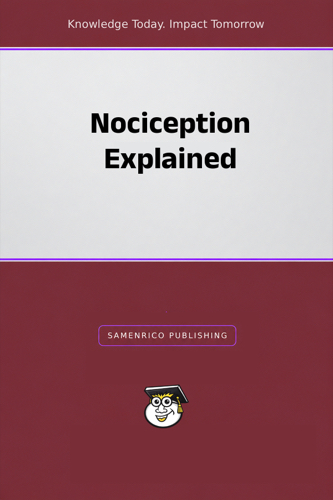
Nociception Explained Audiobook
Teaches difference between danger signals and pain
by Moore Beulah
Teaches difference between danger signals and pain perception.
Formats
Free sample
Chapter 1: The Silent Sentinels--–- Imagine for a moment that you are sitting in a quiet room, reading this book. Your skin is pressed against the fabric of a chair. The temperature of the room is comfortable. A faint breeze from a nearby window brushes your forearm. You feel none of this as threatening.
You feel, perhaps, a mild sense of ease. Now imagine that same breeze, same temperature, same chair—but someone tells you that the air contains a microscopic acid that etches the skin. Suddenly, that breeze feels different, doesn’t it? Slightly ominous. Perhaps you shift in your seat.
Your brain has recategorized a neutral sensation into something closer to danger. But here is the deeper question: What actually changed in your body? Did your nerve endings detect a new threat? No. The physical stimulus—the breeze, the temperature, the pressure of the chair—remained identical.
What changed was your brain’s interpretation of that sensory data. And that gap—between what your body’s danger detectors actually measure and what your brain decides you feel—is the single most important distinction you will ever learn about pain.This distinction is the entire foundation of this book. It is the difference between nociception (pronounced no-sih-SEP-shun) and pain. Nociception is the biological process by which specialized nerve endings detect potential or actual tissue damage. Pain is the conscious, emotional, unpleasant experience that your brain constructs based on that data—plus a thousand other factors including your memories, your expectations, your context, and even your mood.
Most people, including many healthcare professionals, use these two words interchangeably. That is a mistake as fundamental as confusing the sound of a smoke alarm with the fire itself. The alarm is not the fire. Nociception is not pain. And until you separate them in your mind, you will remain trapped in outdated models of suffering that have failed millions of chronic pain patients.This chapter introduces you to the nociceptor—the silent sentinel that stands guard over every tissue in your body.
You will learn what it is, where it lives, what it detects, and—most importantly—what it does not detect. By the end of this chapter, you will never again say that a stubbed toe "sends pain to the brain." You will understand that the toe sends data. The brain creates the pain. That shift in understanding is not semantic pedantry. It…
This is the end of the free sample. Get the Audiobook to keep going. Buy now
About this book
Details
- Author
- Moore Beulah
- Publisher
- SamEnrico
- Language
- English
- Genre
- Non-Fiction, Health & Wellness, Physiology
- Released
- 2026-06-06
- Pages (approx.)
- 160
- Available as
- eBook, Audiobook

Listen in the VoxFlicks app
Audiobooks and audio dramas wherever you go. Sign in with your SamEnrico account and press play.
More by Moore Beulah
 Stress and Neuropathy GuideMoore Beulah$11.99
 Heart Disease Risk PreventionMoore Beulah$11.99
 Affirmation Science GuideMoore Beulah$11.99
 Abandoned Cart Recovery FlowMoore Beulah$11.99
 Empty Nest Relationship ResetMoore Beulah$11.99
 Jupiter Storm WatchingMoore Beulah$11.99
 ABCDE for Fitness CoachesMoore Beulah$11.99
 The Silent Assassins: Swimming's Secret War for GoldMoore Beulah$11.99
 Ramses II: The Lion of Egypt - Battle of Kadesh and the Age of EmpireMoore Beulah$11.99
 How to Produce a Disc HarrowMoore Beulah$11.99
 How to Start a Hobby in CosplayingMoore Beulah$11.99
 A Collector's Handbook to the Wolseley WaspMoore Beulah$11.99
You may also like
 Hong Kong Handover 1997Dunn Johnnie$11.99
 Zumba For Postnatal Recovery CourseNeal Christian$11.99
 Zumba for BeginnersLadner Nikia$11.99
 YouTube Comment Mining GuideHumes Pandora$12.99
 Worry Box MeditationCarlin Rudy$11.99
 Workplace Stress MeditationNguyen Lynn$11.99
 Workplace Stress and Sleep RepairHawley Ivory$11.99
 Workplace Perfectionism CureDelaney Jeffry$11.99
 Workplace Injustice Anger GuideWallen Isabelle$11.99
 Work Addiction and Burnout LinkGreenwood Ester$11.99
 Women in Yoga and WellnessBeattie Galina$11.99
 Women in Stand Up ComedyChun Evangeline$11.99