
No Code Product Builder Guide eBook
Create digital products using Canva, Notion, Gumro
Create digital products using Canva, Notion, Gumroad, and Carrd without writing a single line of code.
Formats
Free sample
Chapter 1: The Permissionless Era--In 2015, I sat in a coffee shop across from a software developer who had just quoted me $18,000 to build what I thought was a simple web application. I wanted a tool that would let freelance writers submit invoices, track their payments, and generate basic reports. Nothing fancy. No artificial intelligence. No real-time collaboration.
Just forms, databases, and a payment button.The developer explained, with genuine kindness and no trace of condescension, why my project would actually cost closer to $24,000 once we accounted for user authentication, database hosting, payment gateway integration, email notifications, and the inevitable scope creep. He was right about the technical complexity. He was wrong about the necessity of it.I did not have $24,000. I did not know how to write a single line of code. I had a problem that needed solving and a belief that the world had already built the pieces I needed—I just had to find them and connect them.That weekend, I built the entire application myself using tools that were freely available or cost less than a monthly coffee subscription.
The forms came from Google Forms. The database was a Google Sheet with some clever formulas. The payment button was Stripe's no-code checkout. The email notifications were Zapier connecting everything together. Total cost: zero dollars for the first fifty users, then about twenty dollars per month after that.That application eventually processed over $400,000 in freelance payments before I sold it three years later.
I never wrote a line of code. I never hired a developer. I never learned Java Script, Python, or SQL. I simply learned to see the world differently—not as a collection of problems requiring custom software, but as a collection of connectors waiting to be snapped together.This book exists because that coffee shop conversation is happening right now, in thousands of cafes and video calls around the world. Someone is being told they need $20,000 or a computer science degree to build their idea.
Someone is being told they are not technical enough. Someone is being told that the gatekeepers—developers, agencies, venture capitalists—must approve their project before it can exist.Those gatekeepers are gone. They just have not told you yet.The Great Unlocking The last ten years have produced an unprecedented transformation in how software is built. To understand why you can build a profitable digital product today without writing code, you need to understand what changed and why it happened so quickly.In 2010, building a web application required mastery of at least four distinct technical domains: frontend development (what users see), backend development (how data moves and is stored), database administration (where information lives), and server management (where the application runs). Each domain required months or years of dedicated study.
Each domain had its own programming languages, frameworks, and best practices. A single beginner mistake in any domain could break the entire application.By 2015, the first wave of no-code tools began abstracting these domains away. Stripe Checkout meant you no longer needed to build payment processing from scratch. Typeform and Google Forms meant you no longer needed to build form submission and data collection. Word Press and Squarespace meant you no longer needed to build content management systems from the ground up.By 2020, the abstraction was nearly complete.
Zapier and Make.com connected everything to everything else. Airtable and Notion provided database functionality that exceeded what most developers could build in a reasonable timeframe. Carrd and Webflow offered visual design tools that output production-ready websites. Bubble and Adalo allowed complete web and mobile applications to be built entirely through drag-and-drop interfaces.Today, in 2026, the transformation is finished for a significant category of digital products. If your product can be built using forms, databases, payment processing, document generation, email delivery, and basic automation—and the vast majority of information products, templates, tools, and micro-applications fit this description—you do not need a developer.
You need a system.The Stack of Four Throughout this book, you will build your digital products using exactly four tools. Not twenty. Not two. Four. This is not an arbitrary limitation.
These four tools were selected because they cover every phase of the digital product lifecycle while remaining simple enough for a complete beginner to master in days, not months.Canva creates your product assets. This is where you will design workbooks, checklists, templates, prompt libraries, presentation decks, and any other visual or document-based product. Canva replaced Adobe Photoshop, In Design, and Illustrator for the vast majority of non-professional design work. It is free for the basic plan and ninety-nine dollars per year for Canva Pro, which you will eventually want for the background removal tool, brand kit storage, and content planner. But you can launch your first product entirely on the free plan.Notion serves as your private operating system.
This is where you will plan your product, track your progress, store your customer information, manage your content inventory, and document your processes. Notion replaced dozens of separate tools—spreadsheets for tracking, word processors for documentation, project management apps for timelines, and wikis for knowledge storage. It is free for personal use with some limitations and approximately ninety-six dollars per year for the Plus plan, which adds unlimited file uploads and version history. You can launch on the free plan.Carrd builds your public storefront. This is where customers will discover your product, watch your demo, read your testimonials, and click the buy button.
Carrd replaced the need for custom-coded landing pages, Word Press installations, or expensive website builders. A fully functional, professional-grade, mobile-responsive Carrd site costs nine dollars per year for a custom domain. Not per month. Per year.Gumroad handles everything involving money. This is where you will set your price, process credit card and Pay Pal payments, collect VAT and sales tax automatically, deliver digital files to customers, send post-purchase emails, manage refunds, and run an affiliate program.
Gumroad takes a flat ten percent of each transaction plus thirty cents. For that fee, they handle all payment processing, tax compliance in over forty countries, file hosting and delivery, email infrastructure, and customer support for payment issues.These four tools form a complete ecosystem. None of them require code. None of them require technical support. None of them require a monthly commitment beyond what you can cancel instantly.
And together, they give you everything you need to discover, design, build, launch, and scale a profitable digital product.The Front End and The Back End To understand how these tools work together, you need to understand a distinction that professional developers have used for decades: the difference between the front end and the back end. Do not let the terminology intimidate you. These concepts are simple, and they will help you think systematically about any product you build.The front end is everything your customer sees and interacts with directly. On a website, the front end includes the layout, colors, buttons, forms, images, and text. When someone visits your Carrd page, they are interacting with your front end.
When they download a PDF you designed in Canva, they are consuming a front end asset. When they click "Buy Now" and see a payment form, they…
This is the end of the free sample. Get the eBook to keep going. Buy now
About this book
Details
- Author
- Sanchez Irvin
- Publisher
- SamEnrico
- Language
- English
- Genre
- Non-Fiction, First 30 Days, No Code
- Released
- 2026-06-01
- Pages (approx.)
- 158
- Available as
- eBook, Audiobook

Read better in the ZLOADR app
Your eBooks on your phone or tablet. Sign in with your SamEnrico account and start reading.
More by Sanchez Irvin
 Polish Kedyw Execution SquadsSanchez Irvin$11.99
 Utilities Dividend InvestingSanchez Irvin$11.99
 Hypnosis Playback ScheduleSanchez Irvin$11.99
 Grief and Finances After Child LossSanchez Irvin$11.99
 Distraction Proof Deep Work SpaceSanchez Irvin$11.99
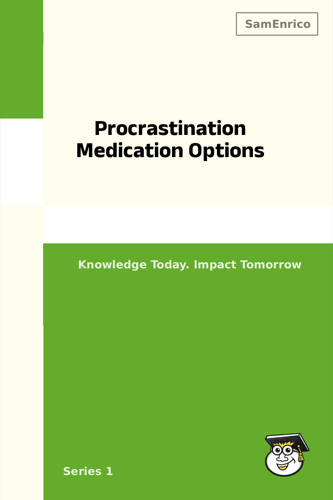 Procrastination Medication OptionsSanchez Irvin$11.99
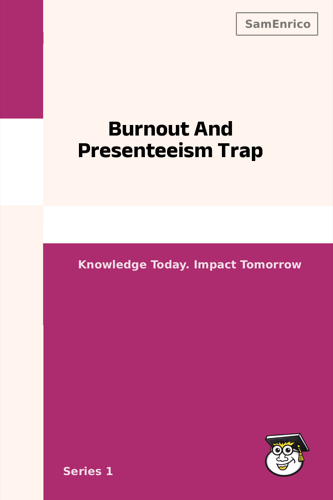 Burnout And Presenteeism TrapSanchez Irvin$11.99
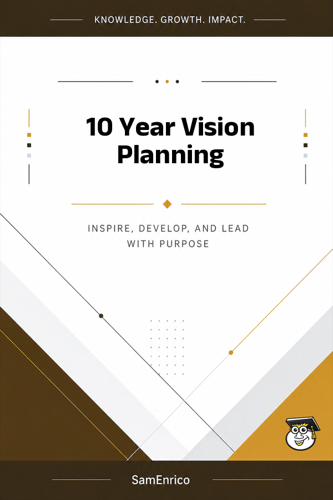 10 Year Vision PlanningSanchez Irvin$11.99
 The Golden Handshake: How a Billion-Dollar Bribe Almost Bought a PresidencySanchez Irvin$11.99
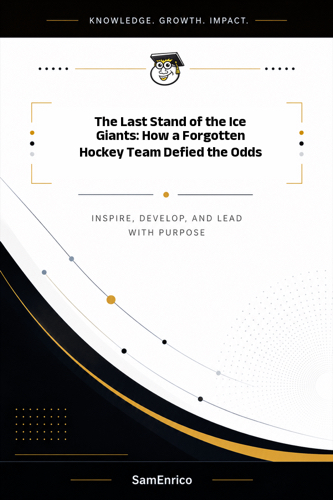 The Last Stand of the Ice Giants: How a Forgotten Hockey Team Defied the OddsSanchez Irvin$11.99
 A Collector's Handbook to the Ogle Sx250Sanchez Irvin$11.99
 How to Produce Wire Caps and NutsSanchez Irvin$11.99