
Non-FictionSelf-HelpSuicidal Thoughts
Nightmare Rescripting For Suicidal Ideation eBook
Process death related dreams with safety planning.
Process death related dreams with safety planning.
Formats
Free sample
Chapter 1: The 3 AM Spiral...--–- The first time Sarah realized her nightmares were trying to kill her, she was sitting on the edge of her bathtub at 3:47 AM, holding a bottle of pills she had stolen from her grandmother’s medicine cabinet six months earlier. She had not slept in three days. Not because she wasn’t tired—she was exhausted in the way that only trauma survivors understand, a bone-deep weariness that makes gravity feel heavier—but because every time she closed her eyes, the dream came back. The same dream. The one where she was trapped in a house that kept growing new rooms, each one darker than the last, and no matter how many doors she opened, she could not find the exit.
In the dream, she eventually stopped trying. She sat down in a room with no windows and waited for the walls to crush her. And then she woke up, gasping, convinced that death was the only door she had not tried yet.Sarah is not real. Her name is a composite, and her story is an amalgamation of hundreds of clinical case reports, anonymous hotline transcripts, and research participant narratives collected over the past twenty years. But the experience she represents is terrifyingly real.
Every night, millions of people wake up from nightmares that do not just frighten them—they convince them, in the dark silence of early morning, that suicide is a reasonable solution. If you picked up this book, there is a significant chance you are one of them. Or you love someone who is. Or you are a clinician who has sat across from a patient who said, “I’m not afraid of my nightmares anymore. I’m afraid I’ll act on what they tell me.”This chapter exists to do three things.
First, to convince you that the link between nightmares and suicidal thoughts is not a coincidence, not a side effect of depression, and not something you should dismiss as “just bad dreams.” Second, to help you distinguish between ordinary nightmares, trauma-replay dreams, and the specific type of suicidal dream imagery that predicts imminent risk. And third, to offer the first hard evidence that nightmares can be changed—not managed, not coped with, not medicated into submission, but fundamentally rewritten. By the end of this chapter, you will understand why 3 AM is the most dangerous hour of the day, what your nightmares are actually trying to tell you, and why the rest of this book exists.The Epidemiology No One Talks About Let us start with a number that should be shouted from every psychiatric training program, every primary care clinic, and every emergency department in the country: people who experience frequent nightmares are three to five times more likely to report suicidal ideation than people who do not, and this relationship holds even after controlling for depression, PTSD, anxiety disorders, and substance use. That is not a correlation of convenience. That is a signal.A 2018 meta-analysis examining over 15,000 participants across fourteen studies found that nightmare frequency and nightmare distress independently predicted suicidal ideation, suicide attempts, and even death by suicide.
The relationship was dose-dependent: more nightmares meant higher risk. And critically, the effect remained significant when researchers statistically removed the influence of depression—meaning that nightmares are not merely a symptom of feeling sad or hopeless. They are their own distinct risk factor.Why does this matter for you, reading this book right now? Because if you have been told that your nightmares will go away once your depression is treated, or that you just need to “manage your stress,” or that everyone has bad dreams sometimes, you have been given incomplete information. Nightmares are not a side effect of your mental health condition.
They are a primary driver of your suicide risk, and they require their own specific treatment.Consider the following findings, presented here without clinical jargon:Nightmare frequency is a stronger predictor of suicide attempts than the severity of PTSD symptoms. You can have relatively low PTSD symptoms but frequent nightmares and still be at elevated risk.Nightmare distress—how much your nightmares upset you—predicts suicidal ideation even in people who have never been diagnosed with a mental health disorder. This is not only a “mentally ill” phenomenon.Among psychiatric inpatients, the presence of any nightmare in the past week predicted a fourfold increase in the odds of being suicidal. Fourfold. That is not subtle.When nightmares stop, suicide risk drops—often before depression scores improve.
This suggests that nightmares may be a causal factor in suicidal thinking, not just a correlated symptom.The clinical implications are clear, and they have been clear for years, yet most suicide prevention programs still do not ask about nightmares. Most safety plans do not include a “what to do if you wake up from a nightmare at 3 AM” section. Most therapists receive minimal training in dream work. This book is an attempt to close that gap—not by adding another layer of complexity to clinical practice, but by giving you, the reader, a set of tools that you can use tonight, without a therapist, to begin rewriting the dreams that are keeping you trapped.Three Types of Bad Dreams (And Only One Is Dangerous)Not every bad dream is a warning sign. If you have occasional nightmares that leave you feeling unsettled but not suicidal, you may not need the full protocol in this book.
But to know where you fall on that spectrum, you need to understand the difference between three distinct types of sleep-related threat experiences.Type 1: Idiopathic Nightmares These are the “ordinary” nightmares that most people experience occasionally. They often involve generic threats: being chased by a monster, falling from a great height, showing up to an exam unprepared, being publicly humiliated. Idiopathic nightmares are more common during periods of stress, illness, or medication changes, but they typically resolve on their own without intervention. Critically, they do not contain suicide-specific imagery, and they do not leave the dreamer with a lasting conviction that death is the answer. If this describes your experience, you may still benefit from the rescripting techniques in this book—they work for all nightmares—but your risk profile is lower.Type 2: Trauma-Replay Nightmares These are the hallmark of post-traumatic stress disorder.
A trauma-replay nightmare is essentially a flashback that occurs during sleep. The dreamer re-experiences the traumatic event with disturbing accuracy: the same sensory details, the same sequence of events, the same helplessness. If you were assaulted in a parking garage, you dream of that specific parking garage. If you survived a car accident, you dream of the crash from the exact angle you experienced it. These nightmares are exhausting and demoralizing, but they do not necessarily contain suicidal content.
The danger with trauma-replay nightmares is not that they directly suggest suicide—it is that they erode the dreamer’s sense of safety so completely that suicide begins to feel like the only reliable escape from the reliving.Type 3: Suicide-Specific Nightmares This is the category that demands immediate attention. Suicide-specific nightmares contain explicit themes of death, dying, self-harm, or entrapment that the dreamer interprets during or after the dream as…
This is the end of the free sample. Get the eBook to keep going. Buy now
About this book
Details
- Author
- Grice Saundra
- Publisher
- SamEnrico
- Language
- English
- Genre
- Non-Fiction, Self-Help, Suicidal Thoughts
- Released
- 2026-06-07
- Pages (approx.)
- 160
- Available as
- eBook, Audiobook

Read better in the ZLOADR app
Your eBooks on your phone or tablet. Sign in with your SamEnrico account and start reading.
More by Grice Saundra
 Anniversary Loss RitualsGrice Saundra$11.99
 Racism Childhood Self EsteemGrice Saundra$11.99
 Paleo Bone Broth ProtocolGrice Saundra$11.99
 Smart Home Memory SupportGrice Saundra$11.99
 Study Abroad Preparation GuideGrice Saundra$11.99
 Hangry Triggers GuideGrice Saundra$11.99
 Eyewitness Reform LegislationGrice Saundra$11.99
 The Black Powder Letters: Siege of Constantinople's Walls (1453)Grice Saundra$11.99
 Riding the Storm: The Untold Story of Africa's Big Wave PioneersGrice Saundra$11.99
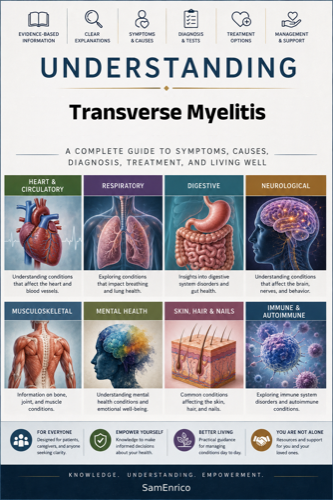 Understanding Transverse MyelitisGrice Saundra$11.99
 Eu Domain Corporate Trustee GuideGrice Saundra$12.99
 Succession Tax for Tech StartupsGrice Saundra$12.99
You may also like
 Hong Kong Handover 1997Dunn Johnnie$11.99
 Zumba For Postnatal Recovery CourseNeal Christian$11.99
 Zumba for BeginnersLadner Nikia$11.99
 YouTube Comment Mining GuideHumes Pandora$12.99
 Worry Box MeditationCarlin Rudy$11.99
 Workplace Stress MeditationNguyen Lynn$11.99
 Workplace Stress and Sleep RepairHawley Ivory$11.99
 Workplace Perfectionism CureDelaney Jeffry$11.99
 Workplace Injustice Anger GuideWallen Isabelle$11.99
 Work Addiction and Burnout LinkGreenwood Ester$11.99
 Women in Yoga and WellnessBeattie Galina$11.99
 Women in Stand Up ComedyChun Evangeline$11.99