
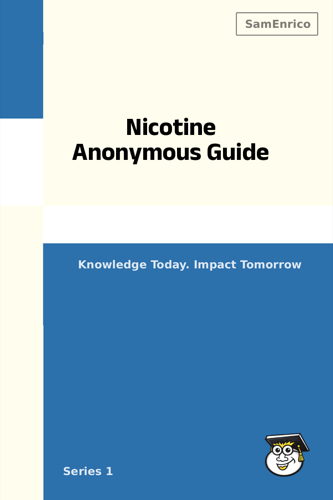
Nicotine Anonymous Guide eBook
Quits tobacco using twelve-step framework.
Quits tobacco using twelve-step framework.
Formats
Free sample
Chapter 1: The Emergency Toolkit--–- You are reading this because you have already failed to quit. Not once. Probably not twice. If you are like most people who will hold this book, you have tried to stop using nicotine between three and eleven times. You have thrown away half-empty packs, sworn off vapes on New Year's Eve, hidden your last cigarette in a drawer “just in case,” and convinced yourself that this time would be different because you really meant it.
And yet, here you are. Still using. Still promising. Still lying to the people who love you, and worse, still lying to yourself.This is not a moral failure. You are not weak.
You are not lazy. You are not lacking in character. What you are lacking is a fundamental understanding of what you are actually fighting. You have been trying to break a habit. But you do not have a habit.
You have an addiction. And addiction cannot be out-willed, out-smarted, or out-shamed. It can only be out-maneuvered by a completely different set of tools than the ones you have been using.This chapter has one job: to give you those tools immediately. Not in Chapter 8. Not after you have already relapsed three more times.
Right now, before you finish reading this sentence, your addiction is already looking for the exit. It is scanning these words for an excuse. It is hoping for complexity, for ambiguity, for a reason to say “this won't work for me.” We are not going to give it that chance.By the end of this chapter, you will have a completely new framework for understanding what happens inside your brain when you crave nicotine. You will have two practical, science-backed emergency protocols that you can use the next time a craving hits. And you will complete an inventory that will show you, in black and white, that your life has become unmanageable—not because you are a bad person, but because you are a person who has been fighting the wrong battle.Let us begin.The Difference Between a Habit and an Addiction Most people who try to quit nicotine fail because they are using habit-breaking strategies on an addiction.
These two things are not the same. They do not behave the same way. They do not respond to the same treatments. And confusing them has cost you years of your life.A habit is a learned behavior that you repeat because it has become automatic. Brushing your teeth before bed is a habit.
Checking your phone when you wake up is a habit. Taking the same route to work every day is a habit. Habits can be changed by replacing them with other habits, usually over a period of about sixty-six days. When you break a habit, you might feel uncomfortable or bored. You do not feel like your skin is on fire.An addiction is different.
Addiction rewires the brain's reward system. It hijacks the circuitry that is supposed to keep you alive—the part that makes you hungry when you need food, thirsty when you need water, and attracted to warmth when you are cold. Nicotine fits itself into this system like a counterfeit key. It tricks your brain into believing that nicotine is as essential to your survival as oxygen.This is not a metaphor. This is neurobiology.When you inhale nicotine, it reaches your brain in approximately seven seconds.
That is faster than intravenous injection. Once there, it binds to nicotinic acetylcholine receptors, which triggers the release of dopamine—the neurotransmitter associated with pleasure, reward, and motivation. Normally, dopamine is released in response to genuine survival needs: eating, sex, social bonding. Nicotine steals this system. It produces about two and a half times more dopamine than natural rewards.Your brain, being an adaptive organ, responds to this flood of dopamine by reducing the number of dopamine receptors.
It is trying to maintain balance. But now, without nicotine, you cannot achieve normal dopamine levels. You feel flat. Irritable. Depressed.
Anxious. The only thing that restores normal function is more nicotine.That is addiction. And it is not a failure of character. It is a failure of chemistry.Two Kinds of Cravings: Physical, Trigger, and Mental Obsession One of the most damaging myths in quit-lit is that cravings last only three to five minutes. This statement has caused more relapses than almost any other piece of bad advice.
It is not exactly wrong, but it is dangerously incomplete.We need to distinguish between three different phenomena that all get called “cravings.” Understanding this distinction is the single most important thing you will learn in this entire book.The Physical Craving (3-5 Minutes)When you are actively using nicotine, your body builds tolerance. Between uses, your nicotine levels drop, and your brain sends signals of distress. This is a true physical craving. It is characterized by a specific set of sensations: a hollow feeling in the chest, a slight dizziness, a sense of something missing, sometimes a mild headache or nausea.These physical cravings do last only three to five minutes. They come in waves.
They peak. They subside. If you can ride out five minutes without using, the physical sensation will fade—not because you have defeated it, but because your brain's immediate alarm system will temporarily quiet down.Here is what no one tells you: the physical craving will return. It will return in thirty minutes. Or an hour.
Or two hours. Each wave lasts three to five minutes. But the waves keep coming, especially in the first seventy-two hours after your last use.The Trigger (Weeks to Months)A trigger is not a craving. It is a learned association. Your brain has connected nicotine with specific activities, emotions, or environments.
Smoking after a meal. Vaping while driving. A cigarette with morning coffee. A vape break during work stress. A cigarette after sex.
A vape when you are bored.These triggers can last for weeks or months after your last use. They are not driven by nicotine withdrawal. They are driven by memory. Your brain has literally carved neural pathways that say “meal equals nicotine” and “stress equals nicotine.” When you encounter the trigger, your brain fires that pathway automatically, and you experience the memory of a craving—which feels exactly like a real craving.Here is the crucial difference: a trigger does not require nicotine to be present in your system. You could be six months nicotine-free, and the smell of coffee might still activate the memory of smoking.
That memory is not a physical craving. It is a ghost. It has no chemical power over you. But it feels real because your brain cannot tell the difference between a memory and an experience.The Mental Obsession (Hours or Days)This is the real enemy. This is what keeps people addicted for decades.
This is why people relapse after years of abstinence.The mental obsession is not a feeling in your body. It is a voice in your head. It says things like:“You have done so well. You deserve one.”“Just one won't hurt. You can control it this time.”“This stress is too much.
You need a break.”“You are not really an addict. You just liked the ritual.”“It has been three months. You are…
This is the end of the free sample. Get the eBook to keep going. Buy now
About this book
Details
- Author
- Mccaskill Gale
- Publisher
- SamEnrico
- Language
- English
- Genre
- Non-Fiction, Self-Help, NicA
- Released
- 2026-06-06
- Pages (approx.)
- 151
- Available as
- eBook, Audiobook

Read better in the ZLOADR app
Your eBooks on your phone or tablet. Sign in with your SamEnrico account and start reading.
More by Mccaskill Gale
 The Dragon Monastery CookMccaskill Gale$11.99
 Reformation Iconoclasm Destruction GuideMccaskill Gale$11.99
 Inadequacy Anger TriggersMccaskill Gale$11.99
 Acupuncture For DizzinessMccaskill Gale$11.99
 Software Dev Team Sprint FatigueMccaskill Gale$11.99
 Property Management ConferencesMccaskill Gale$11.99
 The Great Turtle Migration: A Coastal OdysseyMccaskill Gale$11.99
 The Blackout: When the Lights Went Out and the Night Came AliveMccaskill Gale$11.99
 The Invisible Revolution: Enlightenment Thinkers and Their Secret War of IdeasMccaskill Gale$11.99
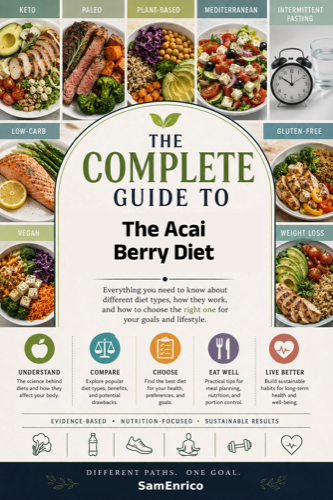 The Complete Guide to the Acai Berry DietMccaskill Gale$11.99
 Interdisciplinary Research StrengthsMccaskill Gale$12.99
 Polish Remote Work Tax GuideMccaskill Gale$12.99
You may also like
 Hong Kong Handover 1997Dunn Johnnie$11.99
 Zumba For Postnatal Recovery CourseNeal Christian$11.99
 Zumba for BeginnersLadner Nikia$11.99
 YouTube Comment Mining GuideHumes Pandora$12.99
 Worry Box MeditationCarlin Rudy$11.99
 Workplace Stress MeditationNguyen Lynn$11.99
 Workplace Stress and Sleep RepairHawley Ivory$11.99
 Workplace Perfectionism CureDelaney Jeffry$11.99
 Workplace Injustice Anger GuideWallen Isabelle$11.99
 Work Addiction and Burnout LinkGreenwood Ester$11.99
 Women in Yoga and WellnessBeattie Galina$11.99
 Women in Stand Up ComedyChun Evangeline$11.99