
Non-FictionHealth & WellnessInfant Care
Newborn Sleep Patterns Handbook eBook
Understand your baby's sleep cycles and establish
Understand your baby's sleep cycles and establish healthy habits from birth using this practical guide.
Formats
Free sample
Chapter 1: The Fourth Lie--–- The first lie you were told is that a sleeping baby is a good baby. The second lie is that you can spoil a newborn by holding them. The third lie is that if you just find the right “method,” your baby will sleep through the night by twelve weeks. But the fourth lie is the most dangerous of all: that you are failing because your baby keeps waking up.Let me say this as clearly as I can, as early as I can: your newborn is not supposed to sleep through the night. Not at six weeks.
Not at twelve weeks. Not even at sixteen weeks for most babies. Frequent night-waking is not a sign of colic, not a parenting failure, not a “sleep problem” to be fixed. It is a biological protection mechanism, honed by millions of years of evolution, designed to keep your baby alive and their brain growing at an astonishing rate.Every time your baby wakes and cries, and you respond, two things happen. First, your baby’s brain releases a cascade of neurochemicals that support rapid neural development—the kind of development that will one day allow them to speak, to read, to love.
Second, you prevent SIDS. Those frequent arousals are your baby’s built-in safety alarm system, keeping them from sinking too deeply into a sleep from which they might not wake.This chapter is going to dismantle everything you thought you knew about newborn sleep. Not to make you feel foolish—you have been fed these lies by well-meaning relatives, by the $500 bassinet that promises “clinically proven longer sleep,” and by the sleep consultant whose Instagram reel made you feel like a failure. But to set you free. Because once you understand what newborn sleep actually is, rather than what our sleep-deprived culture tells you it should be, everything changes.
The frustration dissolves. The guilt evaporates. And you become a calmer, more responsive parent—which, ironically, is the single best thing you can do to help your baby sleep better in the long run.The Myth of the “Good Baby”Let us start with the most pervasive lie. Somewhere along the way, Western parenting culture decided that a “good baby” is one who sleeps through the night, eats on a predictable schedule, and rarely cries. This is not only false; it is actively harmful.A “good baby” is not a baby who sleeps.
A “good baby” is a baby whose needs are met. That is it. That is the entire definition.When we label a baby “difficult” or “high needs” simply because they wake every two hours, we are not describing the baby. We are describing our own exhaustion and frustration, projected onto a tiny human who is doing exactly what evolution designed them to do. Every mammalian species has a normal sleep pattern for its young.
Human newborns are among the most altricial—the most helpless at birth—of any mammal. Our babies are born with only 25% of their adult brain volume. A foal can run within hours. A human baby cannot even lift its own head. That extreme helplessness extends to sleep regulation.
Your baby cannot self-soothe because the neural pathways for self-soothing do not yet exist. It is like being angry at a newborn for not being able to tie their shoes. The hardware is simply not there.The anthropologist James Mc Kenna, who spent decades studying infant sleep, put it this way: “A breastfeeding infant who sleeps through the night is an infant at risk.” Because those frequent arousals are precisely what allow the baby to rouse from deep sleep, reposition, and breathe. The babies who die from SIDS are disproportionately those who slept too deeply, too long, too quietly.So here is the truth that will reshape everything else in this book: waking up is not the problem. Waking up is the solution.The Fourth Trimester: Why Your Baby Misses the Womb You have probably heard the term “Fourth Trimester.” But most explanations miss the central insight: human beings are born approximately three months too early.Consider this.
A chimpanzee fetus, at forty weeks of gestation, has a brain volume that is 65% of its adult brain. A human fetus, at forty weeks, has a brain volume that is only 25% of its adult brain. If human babies gestated until their brains reached 65% of adult volume, the pregnancy would last eighteen to twenty-one months. That is biomechanically impossible. Our bipedal pelvis is too narrow.
So we give birth prematurely, in an evolutionary sense, and finish brain development outside the womb.What does this have to do with sleep? Everything.Your newborn does not know they are a separate person from you. They spent nine months in a dark, warm, loud, constantly moving environment. The womb is not quiet. It sounds like a vacuum cleaner—a steady 80 to 90 decibels of blood flow, digestion, and heartbeat.
It is not still. Every time you moved, your baby was gently jostled. It is not dark in the way we think; light filters through the abdominal wall, creating a reddish glow. And it is not empty. Your baby was always touching something: the uterine wall, the umbilical cord, their own limbs.Then, birth happens.
Suddenly, your baby is exposed to cold air, bright lights, silence, and the terrifying sensation of not being held. No wonder they cry. No wonder they only settle when you hold them, sway them, shush them, and keep them close.The Fourth Trimester framework tells us something profoundly liberating: your newborn is not crying to manipulate you. They are crying because they are homesick for the only home they have ever known.This reframes every sleepless night. When your baby wakes at 2 AM and will only settle on your chest, they are not “developing bad habits.” They are not “training you.” They are seeking the sensory environment that their nervous system was built for.
And you are not spoiling them. You are being a responsive parent.The research on attachment theory is unequivocal: babies who receive consistent, warm, responsive care in the first six months become more independent toddlers, not less. Secure attachment is not created by letting babies cry it out. It is created by showing up. Over and over and over again.
Until it becomes boring. Until your baby’s brain learns, at the deepest level, that when they need something, you will come. That is the foundation of emotional regulation. That is the foundation of eventual self-soothing.Cortisol, Crying, and the Biology of Stress Here is where the science gets really interesting, and where most sleep books get it dangerously wrong.When a baby cries and no one responds, their body releases cortisol—the primary stress hormone. A little bit of cortisol is normal.
But sustained, repeated episodes of unresponded-to crying flood the baby’s developing brain with cortisol. And cortisol, in high doses, is neurotoxic to the developing brain. It damages the hippocampus, the region responsible for memory and emotional regulation. It dysregulates the hypothalamic-pituitary-adrenal (HPA) axis, making the baby more reactive to stress in the future, not less.This is not speculation. This is the work of neuroscientists like Bruce Perry…
This is the end of the free sample. Get the eBook to keep going. Buy now
About this book
Details
- Author
- Hillman Maren
- Publisher
- SamEnrico
- Language
- English
- Genre
- Non-Fiction, Health & Wellness, Infant Care
- Released
- 2026-06-09
- Pages (approx.)
- 153
- Available as
- eBook, Audiobook

Read better in the ZLOADR app
Your eBooks on your phone or tablet. Sign in with your SamEnrico account and start reading.
More by Hillman Maren
 Legal Networking GuideHillman Maren$11.99
 Charitable Giving Priority GuideHillman Maren$11.99
 Self Esteem for Seniors with Hearing LossHillman Maren$11.99
 Hair Loss From ChemotherapyHillman Maren$11.99
 The Frozen Frontier: Canada's Arctic PioneersHillman Maren$11.99
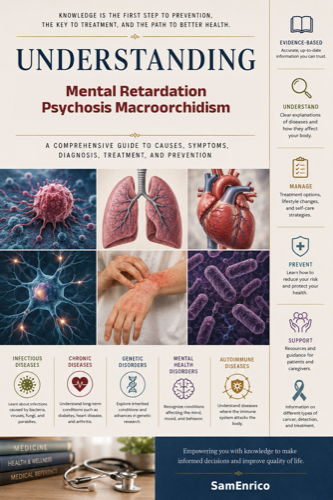 Understanding Mental Retardation Psychosis MacroorchidismHillman Maren$17.99
 UN Sustainable Development Goals CareersHillman Maren$12.99
 Promotion Business Case For EngineersHillman Maren$12.99
 How to Start a Pea Splitters Business (Beginners Guide)Hillman Maren$11.99
 Shredding Truck OperatorHillman Maren$11.99
You may also like
 Hong Kong Handover 1997Dunn Johnnie$11.99
 Zumba For Postnatal Recovery CourseNeal Christian$11.99
 Zumba for BeginnersLadner Nikia$11.99
 YouTube Comment Mining GuideHumes Pandora$12.99
 Worry Box MeditationCarlin Rudy$11.99
 Workplace Stress MeditationNguyen Lynn$11.99
 Workplace Stress and Sleep RepairHawley Ivory$11.99
 Workplace Perfectionism CureDelaney Jeffry$11.99
 Workplace Injustice Anger GuideWallen Isabelle$11.99
 Work Addiction and Burnout LinkGreenwood Ester$11.99
 Women in Yoga and WellnessBeattie Galina$11.99
 Women in Stand Up ComedyChun Evangeline$11.99