

Networking Mindset Transformation eBook
Shift from transactional dread to authentic curios
Shift from transactional dread to authentic curiosity about others' work and lives.
Formats
Free sample
Chapter 1: The Transactional Hangover--–- You’re at a conference. You’ve got a badge that says your name and your job title, which feels like wearing your net worth on a lanyard. You’re holding a lukewarm cup of coffee because it gives your hands something to do. You scan the room and silently rank people by their potential usefulness: the venture capitalist by the window (high value), the intern near the snack table (low value), the woman who looks as uncomfortable as you feel (possible ally). Someone approaches.
You smile, shake hands, and within thirty seconds you’ve mentally filed them under “maybe” or “no thanks.” Then they walk away, and you feel something that has no business being part of professional interaction: relief.Welcome to the transactional hangover. It’s that dull, sticky exhaustion that settles over you after a night of “networking.” It doesn’t come from hard work. It comes from treating human beings like business cards with legs. And it’s the single biggest reason most people would rather do almost anything than walk into a room full of strangers.This chapter is not about fixing your networking technique. It’s about diagnosing the disease that makes technique feel necessary in the first place.
Before we can transform your mindset, we have to understand why the old one is making you so tired, so cynical, and so secretly convinced that networking is a performance you’ll never be good at.The Scorekeeping Epidemic Let’s name the problem directly. Traditional networking is built on a hidden operating system: transaction logic. Every conversation becomes a potential exchange. Every handshake is a future favor waiting to be called in. Every follow-up email is a deposit in a relationship bank account that you expect to withdraw from later.This isn’t a conspiracy.
It’s been taught this way for decades. “Never eat alone,” the gurus say, because every meal is an opportunity. “Collect business cards,” they instruct, as if human connection were a trading card game. “Always be closing,” they whisper, turning every chat into a sales pitch.The result is a population of professionals who have learned to treat other people as assets. And here’s the part no one admits: it feels terrible on both sides.
The person you’re “networking” knows exactly what you’re doing. They’ve been trained in the same playbook. So you stand there, two matchers circling each other, each waiting for the other to state their value proposition so you can calculate whether the exchange is worth your time.Adam Grant, the organizational psychologist who wrote Give and Take, spent years studying how people operate in professional relationships. He identified three distinct reciprocity styles. Takers are the ones who enter every interaction with a single question: “What can you do for me?” They extract value like miners pulling ore from a mountain.
Givers are the opposite: they walk in asking, “What can I do for you?” They add value without immediate expectation of return. And then there are matchers. Matchers keep score. If you do something for them, they feel the weight of debt until they can repay it. If they do something for you, they expect repayment on a similar timeline.Here’s what Grant discovered that should terrify anyone who thinks traditional networking works.
Most people, when they enter a professional setting, default to matcher behavior. And matcher behavior, when it becomes the dominant mode of interaction, produces exhaustion, mistrust, and burnout. Why? Because you’re running a mental ledger in every conversation. You’re tracking who owes what.
You’re evaluating whether the person you’re talking to has enough “value” to justify the energy you’re expending. That’s not connection. That’s accounting.And accounting, no matter how accurate, will never make you feel alive.The Case of the Fifty-Event Lawyer Let me tell you about Sarah. (Not her real name, but her story is real.) Sarah is a corporate lawyer in a major city. She was told early in her career that success depends on who you know.
So she set out to know everyone. In one year, she attended fifty networking events. Fifty. That’s nearly one per week. She collected hundreds of business cards.
She sent follow-up emails within twenty-four hours of every event. She was, by every traditional metric, a networking machine.At the end of that year, she had received exactly zero referrals. Zero new clients. Zero job offers. Zero useful introductions.When she came to me, she was burned out and bitter.
“What am I doing wrong?” she asked. “I’m doing everything they said to do.”I asked her a simple question: “At those fifty events, how many personal details do you remember about the people you met?”She paused. She thought. She couldn’t remember a single one.Not a name of a child. Not a hobby.
Not a struggle. Not a win. She had collected cards, not stories. She had performed interest, not felt it. Her follow-up emails were templates: “Great to meet you at the conference.
Let’s stay in touch.” They contained nothing specific to the person she had supposedly connected with.Here’s the brutal truth that Sarah learned: follow-ups without curiosity feel like spam. No matter how well-timed. No matter how professional. If your follow-up doesn’t reference something real about the other person—something you learned because you were genuinely interested—it lands in their inbox with the same emotional weight as a credit card offer.Sarah’s problem wasn’t her technique. It was her operating system.
She was networking transactionally in a world that is starving for genuine attention.The Myth of the Perfect Follow-Up The self-help industry has sold us a fantasy: that networking is a series of tactical moves, and if you just learn the right script, the right timing, the right platform, you will succeed. Send a follow-up within twenty-four hours. Connect on Linked In within a week. Share an article. Ask for a fifteen-minute coffee chat.
It’s all presented as a formula.But formulas don’t work when the other person can smell your agenda from three paragraphs away.Think about the last time you received a networking email. You know the kind. “Dear [Name], I really enjoyed meeting you at [Event]. Your work in [Industry] is impressive. I’d love to grab coffee sometime and learn more about what you do.
Let me know if you’re available next week.”What did you feel when you read that? If you’re like most people, you felt a small weight settle onto your shoulders. This person is asking for something. They haven’t said what, but they’re asking. And they’re asking you to give them time—your most non-renewable resource—without telling you what they’ll do with it.That weight is the transactional hangover.
It’s the feeling of being used as a rung on someone else’s ladder.The myth says that follow-ups build relationships. The truth is that follow-ups without genuine curiosity destroy the possibility of relationship before it can even begin. Because the person receiving your message doesn’t think…
This is the end of the free sample. Get the eBook to keep going. Buy now
About this book
Details
- Author
- Aquino Domenica
- Publisher
- SamEnrico
- Language
- English
- Genre
- Non-Fiction, Self-Help, Mindset
- Released
- 2026-06-10
- Pages (approx.)
- 133
- Available as
- eBook, Audiobook

Read better in the ZLOADR app
Your eBooks on your phone or tablet. Sign in with your SamEnrico account and start reading.
More by Aquino Domenica
 Single Monitor ProductivityAquino Domenica$11.99
 Emotion Regulation Techniques CourseAquino Domenica$11.99
 Obama HopeAquino Domenica$11.99
 Loneliness Fishing Group GuideAquino Domenica$11.99
 Hypnosis Podcast GuideAquino Domenica$11.99
 Asking for a Deadline ExtensionAquino Domenica$11.99
 Thyroid Cancer JourneyAquino Domenica$11.99
 The Prevention Pause MethodAquino Domenica$11.99
 The Forgotten Warriors: How African Women Pioneered Early Football (1700s)Aquino Domenica$11.99
 The Whispering Lanterns of Obon: Japan's Floating SoulsAquino Domenica$11.99
 Neon Shadows: The Birth of Rave Culture in the 90sAquino Domenica$11.99
 Prompting for Impermanent Loss AnalysisAquino Domenica$11.99
You may also like
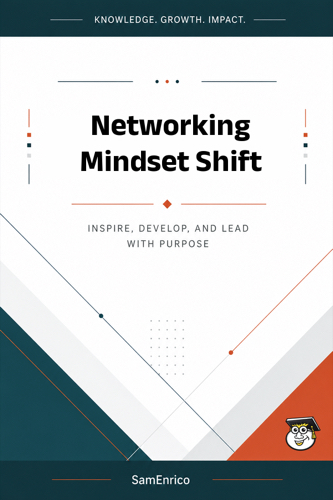 Networking Mindset ShiftBurden Dannie$11.99
 Morning Mindset Reframe GuideMeyer Candace$11.99
 Cynicism Reversal RecoveryMccorkle Elfrieda$11.99
 Growth Mindset for TeensHester Marci$11.99
 Mindset Shift for Sustainable SuccessSilverstein Maximina$11.99
 Imposter to Owner MindsetArrington Zandra$11.99
 Financial Scarcity Mindset ShiftRoman Leif$11.99
 Delegation Mindset GuideFiore Teresia$11.99
 Growth Mindset Failure GuideBonds Nakita$11.99
 Growth Mindset for ExamsJasper Aracelis$11.99
 Remote Work Clothing GuideCorbin Amira$11.99
 Artist Mindset for BusinessThornhill Wanita$11.99