
Non-FictionSelf-HelpArchitecture
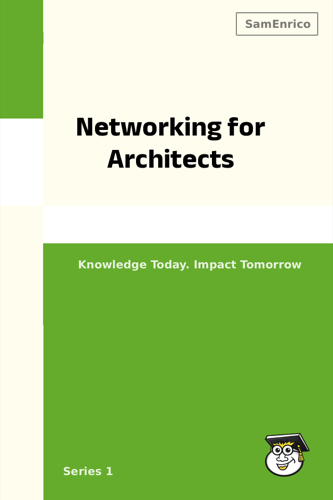
Networking for Architects eBook
Builds client and contractor relationships.
Builds client and contractor relationships.
Formats
Free sample
Chapter 1: The 90% Rule...--–- Every architect remembers the project that almost broke them. For Sarah, it was a $9 million mixed-use building in a fast-growing suburb. Her design was elegant—brick and glass, a rooftop terrace with city views, retail on the ground floor, twelve apartments above. The renderings were stunning. The client, a developer with a reputation for being "difficult," had approved every schematic.
The contractor, a family firm with three decades of experience, had shaken hands at the kickoff. Sarah had done everything right. She had followed the AIA contract to the letter. She had documented every meeting. She had saved every email.And then the project collapsed.The bids came in 34 percent over budget.
The developer accused Sarah of "designing with monopoly money." The contractor stopped answering her calls. The structural engineer and the MEP consultant filed competing claims for who was responsible for a coordination error that required cutting through a transfer beam—discovered, of course, after the steel had been fabricated. The project limped to completion eleven months late. The developer sued for delay damages. Sarah's professional liability insurance premiums tripled.
She lost her two best project architects to burnout. She spent eighteen months in litigation, settling for an amount that covered her legal fees and nothing more.Afterward, Sarah sat in her empty office, staring at the framed renderings still hanging on the wall. She had won a local AIA design award for that project. The jury had praised her "sophisticated material palette" and "sensitive handling of the streetscape." The award plaque sat on her desk, next to the lawsuit.She had done everything right—by the standards she was taught. She had drawn beautiful details.
She had followed the contract. She had documented everything. And yet, she had lost a decade of hard-won reputation and hundreds of thousands of dollars.What Sarah learned—what she told me over coffee three years later, after she had rebuilt her practice from scratch—was that the design was never the problem. The problem was that she had spent 95 percent of her energy on the 5 percent of the project that wins awards. She had spent almost no energy on the 95 percent of the project that determines success: the relationships.This chapter introduces what I call the 90% Rule.
After analyzing claims data from three professional liability insurers, interviewing over two hundred architects across seventeen firms of varying sizes, and conducting detailed post-mortems on forty-seven major project disputes, the pattern is undeniable and consistent. Approximately 90 percent of all significant project problems—budget overruns exceeding 15 percent, schedule delays beyond 20 percent, legal claims of any kind, client firings, contractor disputes that require mediation or arbitration, and team burnout leading to staff departure—originate not from design errors or technical incompetence, but from relationship failures.Not from a miscalculated beam. Not from a mis-specified HVAC system. Not from a detailing error in the curtain wall. Those happen, certainly.
They cause problems, certainly. But they are not the primary driver of catastrophic project failure. The primary driver is something much more mundane and much more avoidable: misaligned expectations, unspoken assumptions, avoided conversations, broken trust, unmanaged egos, and the slow accumulation of small resentments that eventually become immovable barriers to collaboration.Technical skills get you licensed. Relationships get you built.This is not a book about how to draw better details or write tighter specifications. There are already excellent resources for that, including the AIA's own Handbook of Professional Practice, now in its fifteenth edition, and a shelf of other technical volumes.
This is a book about a different kind of structure—the invisible, human structure that holds every project together or lets it collapse. And like any physical structure, it can be designed, analyzed, strengthened, and repaired. But first, you have to see it.The Myth That Is Killing Your Career Let me name the enemy. It has a name I have borrowed and adapted from Ayn Rand's novel The Fountainhead, a book that has done incalculable damage to the architectural profession despite—or perhaps because of—its popularity. I call it the Fountainheadache.The Fountainheadache is the persistent, seductive, and deeply damaging myth that great architecture emerges from the heroic isolation of a solitary genius.
In this myth, the architect is a brilliant, temperamental visionary who battles against ignorant clients, philistine contractors, bureaucratic permit officials, and cowardly consultants to realize a pure, uncompromised vision. The architect stands alone against the philistines. The architect does not compromise. The architect does not explain. The architect does not ask permission.
The architect designs, and everyone else's job is to get out of the way or, failing that, to be ignored.This myth is seductive because it appeals to the ego. It tells the architect that their frustration with clients is not a failure of communication or empathy but a sign of superior artistic sensitivity. It tells the architect that their disdain for contractors is not counterproductive arrogance but a principled stand for design integrity. It tells the architect that their reluctance to "network" is not social anxiety or strategic blindness but a noble refusal to engage in petty politics.And it is poison. Pure, concentrated, career-destroying poison.I have watched the Fountainheadache destroy talented architects.
I have seen a brilliant young designer lose a $50 million civic center project because she refused to return the client's phone calls for three weeks—she was "in the zone," she explained, and the client "didn't understand the creative process." I have seen a senior partner at a prestigious firm get fired by a university client after referring to the facilities director as "that spreadsheet guy" in a meeting, not realizing the "spreadsheet guy" had the dean's ear. I have seen a gifted sole practitioner alienate every general contractor in a mid-sized city by habitually submitting RFI responses that answered the legal question but ignored the builder's schedule pressure, earning a reputation as "difficult to work with" that cost his firm millions in lost bids over five years.The Fountainheadache convinces architects that relationships are beneath them. That networking is "political" in the pejorative sense. That asking a client what they actually need is somehow less noble than imposing what the architect thinks they should want. That a contractor's suggestion for a more buildable detail is an attack on design excellence rather than a gift of practical wisdom.The data tells a different story entirely.
In a 2022 survey conducted by the AIA's Risk Management Program, involving over 1,200 architecture firms across the United States, researchers asked a simple question: what distinguishes the most profitable firms from the least profitable firms, controlling for project type, firm size, and geographic region? The answer was not design awards. It was not software sophistication. It was not even billing rates. The answer was client relationship satisfaction scores.
Firms in the top quartile on client satisfaction had profit margins 22 percent higher than firms in the bottom quartile. Twenty-two percent. That is the difference between thriving and barely surviving.The same survey asked contractors a question: what is the number one factor that determines whether you will recommend an architect to a future client? The top answer, cited by 68 percent of contractor respondents, was not "beautiful…
This is the end of the free sample. Get the eBook to keep going. Buy now
About this book
Details
- Author
- Swafford Mozella
- Publisher
- SamEnrico
- Language
- English
- Genre
- Non-Fiction, Self-Help, Architecture
- Released
- 2026-06-07
- Pages (approx.)
- 139
- Available as
- eBook, Audiobook

Read better in the ZLOADR app
Your eBooks on your phone or tablet. Sign in with your SamEnrico account and start reading.
More by Swafford Mozella
 Vegan Selenium GuideSwafford Mozella$11.99
 The Dealership Visit by AgeSwafford Mozella$11.99
 Square BreathingSwafford Mozella$11.99
 SAD Prevention PlanSwafford Mozella$11.99
 Anger De escalation with AutismSwafford Mozella$11.99
 Workplace Failure RecoverySwafford Mozella$11.99
 The Last Emperor of the West: The Rise and Fall of Romulus AugustulusSwafford Mozella$11.99
 Scalable Creative FrameworksSwafford Mozella$11.99
 The Last Flight of the Miracle on the Hudson: A Captain's Impossible DecisionSwafford Mozella$11.99
 How to Produce Leather Cleaner and ConditionerSwafford Mozella$11.99
 How to Produce a Waffle IronSwafford Mozella$11.99
 How to Start a Arboricultural Consulting Business (Beginners Guide)Swafford Mozella$11.99
You may also like
 Hong Kong Handover 1997Dunn Johnnie$11.99
 Zumba For Postnatal Recovery CourseNeal Christian$11.99
 Zumba for BeginnersLadner Nikia$11.99
 YouTube Comment Mining GuideHumes Pandora$12.99
 Worry Box MeditationCarlin Rudy$11.99
 Workplace Stress MeditationNguyen Lynn$11.99
 Workplace Stress and Sleep RepairHawley Ivory$11.99
 Workplace Perfectionism CureDelaney Jeffry$11.99
 Workplace Injustice Anger GuideWallen Isabelle$11.99
 Work Addiction and Burnout LinkGreenwood Ester$11.99
 Women in Yoga and WellnessBeattie Galina$11.99
 Women in Stand Up ComedyChun Evangeline$11.99