

Non-FictionStartup GuideNo EstimationsBatch Size
Netflix No Estimations eBook
Replace story points with small batch sizes and da
Replace story points with small batch sizes and daily deployment.
Formats
Free sample
Chapter 1: The Estimation Delusion--–- On a Tuesday morning in a downtown Chicago office tower, seven software engineers sat around a table littered with coffee cups and sticky notes. A product manager named Priya had just written "Login with Google" on a yellow card. She asked the team: "How many points?" The room fell silent. A senior engineer said "5." Another said "13." A third, tired of the ritual, said "8" just to move on. They averaged the numbers—8.6, rounded to 8—and moved to the next card.
Forty-five minutes later, they had "estimated" twelve cards. None of them believed the numbers. All of them pretended otherwise. This scene repeats daily in thousands of companies, from startups to Fortune 500s. It is a ritual of collective fiction, and it is costing the software industry hundreds of billions of dollars per year.The Invisible Tax Let us calculate the true cost of estimation.
A typical software team of ten people spends approximately four hours per week in estimation-related activities: planning poker, backlog refinement, sprint planning, and the post-sprint reconciliation where they explain why velocity dropped from 42 to 37. Four hours per week times ten people equals forty person-hours per week. Over fifty working weeks per year, that is two thousand person-hours. A single team of ten people spends two thousand hours every year doing nothing productive—no code written, no bugs fixed, no value delivered. Two thousand hours is the equivalent of one person working full-time for an entire year.
For a ten-person team, estimation consumes ten percent of their total capacity. For a hundred-person organization, estimation consumes ten full-time salaries worth of time, every single year, forever.But the waste is worse than the raw hours. Estimation does not simply consume time; it corrupts behavior. When teams estimate, they learn to game the system. A story point is not a measure of complexity; it is a currency.
Managers use velocity to compare teams, so teams inflate points. Point inflation leads to "estimation theater" where the ritual continues but no one believes the numbers. The weekly poker session becomes a performance, not a planning tool. Developers learn to pad estimates because they have been punished for being optimistic. A three-day task becomes a five-point story becomes a thirteen-point epic, not because the work changed, but because the politics changed.
The estimate is no longer about the work; it is about protecting the estimator.The Historical Roots of a Broken Practice To understand why estimation is broken, we must understand where it came from. Story points originated in the early 2000s as part of Extreme Programming (XP) and Scrum. The original idea was elegant: instead of estimating in hours (which are tied to the calendar and create pressure), estimate in abstract points. Compare tasks to one another. A small task is a 1, a medium task is a 2, a large task is a 5.
Do not worry about absolute time; just measure relative complexity. Over several sprints, you calculate "velocity" (points completed per sprint), and you use that velocity to forecast when work will be done. In theory, this decouples estimation from time pressure. In practice, it created a monster.The problem is that abstract points are still numbers, and humans cannot treat numbers as abstract. Once a number is written on a card, it becomes real.
Stakeholders ask, "Why is this an 8 when last week's task was a 5?" Teams spend hours "calibrating" their points, as if there is an objective standard. There is not. A 5 at Google is a 3 at Facebook is an 8 at a bank. Points are not transferable across teams, across projects, or even across seasons. The same team, six months later, will assign different points to the same task because they have forgotten the previous calibration or because they have new members or because it is Tuesday.
The number is arbitrary, but the ritual treats it as sacred.The psychology of estimation is even worse. In their 1994 paper "Heuristics and Biases," Daniel Kahneman and Amos Tversky demonstrated the planning fallacy: humans systematically underestimate how long tasks will take because they imagine best-case scenarios while ignoring historical evidence. A developer estimating a task imagines the happy path: code flows from fingers, tests pass, deployment works. The developer does not imagine the three hours spent debugging a configuration file, the two hours in a meeting about requirements, or the four hours waiting for code review. These are invisible in the estimation, so they are invisible in the number.
The result is that estimates are optimistic by default. Then the project runs late, and management demands "more accurate estimates." The team adds padding. The padding is wrong in the opposite direction. The cycle repeats.The Netflix Counterexample Let us contrast this with an organization that does no estimation at all. Netflix engineers deploy code hundreds of times per day.
They do not hold planning poker. They do not assign story points. They do not estimate. How is this possible? The answer lies in three principles: small batch sizes, automated safety nets, and a culture of decoupling.Small batch sizes mean that Netflix engineers rarely work on anything that takes more than a few hours to complete.
A feature is not a month-long project; it is a sequence of tiny changes, each deployed independently. A bug fix is not a day of investigation; it is a hypothesis tested with a single change. When batches are small, estimates become unnecessary because the work is so short that you can just do it. Why spend ten minutes estimating a task that takes thirty minutes to complete? Just do the task and measure the actual duration.
The data is real; the estimate is fiction.Automated safety nets mean that Netflix engineers deploy without fear. The deployment pipeline runs thousands of tests automatically. If a test fails, the deploy stops. If a deploy causes errors in production, automated canary analysis detects the problem and rolls back the change within minutes. Because failure is cheap and fast, engineers do not need to estimate risk.
They just deploy. If something breaks, they fix it and move on. The estimate was never needed because the cost of being wrong is negligible.The culture of decoupling means that Netflix engineers do not need permission to deploy. Feature flags allow code to be deployed but turned off. You can ship code that is incomplete, hidden behind a flag, and turn it on when ready.
This decouples deployment from release. You do not need to estimate when the feature will be "done" because "done" is a flag flip, not a deployment. You do not need to coordinate with marketing because the flag can be flipped on their schedule. The estimate becomes irrelevant.These three principles—small batches, automated safety, decoupling—make estimation obsolete. Netflix does not have better estimators than your team.
They have eliminated the need for estimation altogether.The Seven Deadly Sins of Estimation Let us catalog the specific ways estimation damages software teams. Each of these is a pathology that emerges from the ritual of assigning numbers to future work.First, estimation creates false precision. When a team says a task is "5 points," that number implies a level of precision that does not exist. The task might…
This is the end of the free sample. Get the eBook to keep going. Buy now
About this book
Details
- Author
- Escobedo Hilton
- Publisher
- SamEnrico
- Language
- English
- Genre
- Non-Fiction, Startup Guide, No Estimations, Batch Size
- Released
- 2026-06-01
- Pages (approx.)
- 134
- Available as
- eBook, Audiobook

Read better in the ZLOADR app
Your eBooks on your phone or tablet. Sign in with your SamEnrico account and start reading.
More by Escobedo Hilton
 ATF Raid AftermathEscobedo Hilton$11.99
 Tenzing Everest Legacy FightEscobedo Hilton$11.99
 The Workaholic's Vacation DetoxEscobedo Hilton$11.99
 NVC For Sibling Rivalry GuideEscobedo Hilton$11.99
 The Fusion Energy OutlookEscobedo Hilton$11.99
 Teresa of Ávila Mystic LifeEscobedo Hilton$11.99
 Magnification Minimization GuideEscobedo Hilton$11.99
 David ben Gurion Not RabbiEscobedo Hilton$11.99
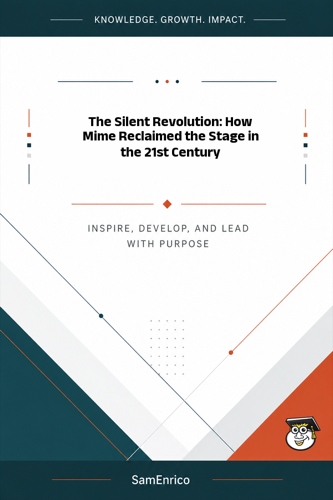 The Silent Revolution: How Mime Reclaimed the Stage in the 21st CenturyEscobedo Hilton$11.99
 The Last Great Heist: The Man Who Stole the Mona LisaEscobedo Hilton$11.99
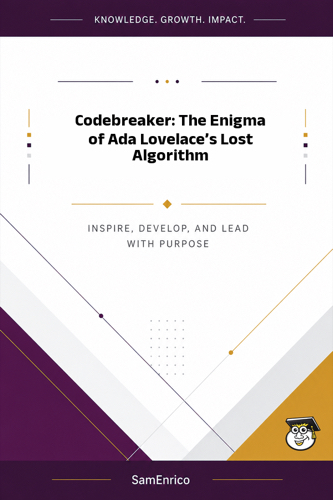 Codebreaker: The Enigma of Ada Lovelace’s Lost AlgorithmEscobedo Hilton$11.99
 Growing OphthalmophyllumEscobedo Hilton$11.99
You may also like
 Hong Kong Handover 1997Dunn Johnnie$11.99
 Zumba For Postnatal Recovery CourseNeal Christian$11.99
 Zumba for BeginnersLadner Nikia$11.99
 YouTube Comment Mining GuideHumes Pandora$12.99
 Worry Box MeditationCarlin Rudy$11.99
 Workplace Stress MeditationNguyen Lynn$11.99
 Workplace Stress and Sleep RepairHawley Ivory$11.99
 Workplace Perfectionism CureDelaney Jeffry$11.99
 Workplace Injustice Anger GuideWallen Isabelle$11.99
 Work Addiction and Burnout LinkGreenwood Ester$11.99
 Women in Yoga and WellnessBeattie Galina$11.99
 Women in Stand Up ComedyChun Evangeline$11.99