
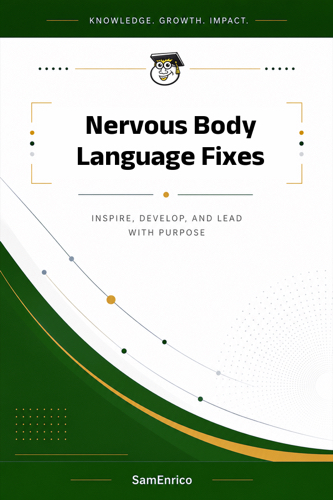
Non-FictionSelf-HelpNervous HabitsAnxiety
Nervous Body Language Fixes
Stop fidgeting, foot tapping, and hair touching th
Stop fidgeting, foot tapping, and hair touching that signal anxiety.
Formats
About this book
Free sample
Chapter 1: The Honesty of Hands--You feel calm internally. You know your material. You rehearsed the answer three times in the car. Then someone across the table asks a difficult question—the one you hoped would not come up—and without asking for permission, your hands begin to move. They twist a pen.
They pick at a cuticle. They interlace and unclasp, over and over, as if trying to wring out the anxiety hiding inside your bones.You do not notice any of this. You are focused on the question, on crafting the perfect response, on sounding intelligent and composed. But the person watching you is not listening to your words yet. They are watching your hands.
And your hands are screaming something you never said aloud.This is the first and most painful truth about nervous body language: your mouth can lie, but your hands cannot. They are the honest brokers of your emotional state, and they will betray you every single time unless you learn to speak their language first.The Seven-Second Judgment Before you utter a single word, before you make eye contact or smile, your hands have already been judged. Research in social psychology and nonverbal communication has repeatedly demonstrated that observers form lasting impressions within the first seven seconds of an interaction. Within that window, hand movements are among the most heavily weighted nonverbal cues.In one study published in the Journal of Nonverbal Behavior, participants watched short video clips of individuals answering questions. Some clips showed the speakers with still, composed hands.
Others showed the same speakers fidgeting—twisting rings, tapping fingers, clasping and unclasping. The results were stark: hand-fidgeters were rated as 33 percent less trustworthy than their still-handed peers, even when their verbal answers were identical and objectively correct. Thirty-three percent. That is the difference between getting the job and hearing "we will be in touch."Another study examined courtroom testimony. Jurors rated witnesses who fidgeted with their hands as less credible, less knowledgeable, and more likely to be hiding something—regardless of the actual evidence.
The hands became the evidence. The hands became the verdict.Why does this happen? Because human beings are wired to read…
This is the end of the free sample. Get the eBook to keep going. Buy now
Contents
- Chapter 1
- Chapter 2
- Chapter 3
- Chapter 4
- Chapter 5
- Chapter 6
- Chapter 7
- Chapter 8
- Chapter 9
- Chapter 10
- Chapter 11
- Chapter 12
Details
- Author
- Clevenger Tamie
- Publisher
- SamEnrico
- Language
- English
- Genre
- Non-Fiction, Self-Help, Nervous Habits, Anxiety
- Released
- 2026-06-09
- Pages (approx.)
- 146
- Available as
- eBook, Audiobook

Read better in the ZLOADR app
Your eBooks on your phone or tablet. Sign in with your SamEnrico account and start reading.
More by Clevenger Tamie
 Small Talk for the GrievingClevenger Tamie$11.99
 The Olympic Weightlifting GuideClevenger Tamie$11.99
 Canva Brand Pattern Design GuideClevenger Tamie$11.99
 The Pearl of Punt: A Love That Built an EmpireClevenger Tamie$11.99
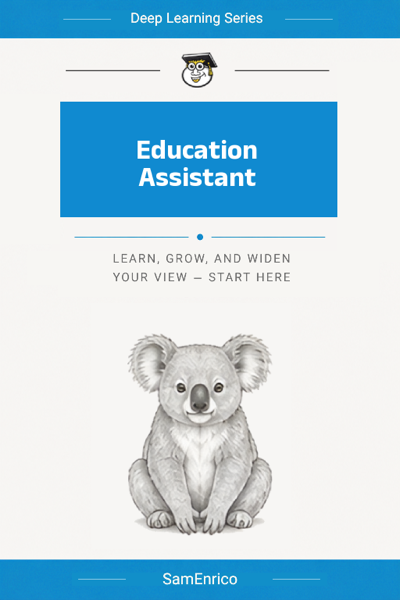 Education AssistantClevenger Tamie$11.99
 SocialBee AI CategorizationClevenger Tamie$12.99
 Learn to Play the Tenor SaxophoneClevenger Tamie$11.99
 How to Start a Carpenter N.e.c. Business (Beginners Guide)Clevenger Tamie$11.99
You may also like
 Hong Kong Handover 1997Dunn Johnnie$11.99
 Zumba For Postnatal Recovery CourseNeal Christian$11.99
 Zumba for BeginnersLadner Nikia$11.99
 YouTube Comment Mining GuideHumes Pandora$12.99
 Worry Box MeditationCarlin Rudy$11.99
 Workplace Stress MeditationNguyen Lynn$11.99
 Workplace Stress and Sleep RepairHawley Ivory$11.99
 Workplace Perfectionism CureDelaney Jeffry$11.99
 Workplace Injustice Anger GuideWallen Isabelle$11.99
 Work Addiction and Burnout LinkGreenwood Ester$11.99
 Women in Yoga and WellnessBeattie Galina$11.99
 Women in Stand Up ComedyChun Evangeline$11.99