
Non-FictionHealth & WellnessSports Medicine
Naturopathy for Athletic Performance eBook
Enhance recovery with arnica and bromelain.
Enhance recovery with arnica and bromelain.
Formats
Free sample
Chapter 1: The Inflammation Paradox--Every athlete who has ever pushed through the final hundred meters of a race, ground out the last rep of a heavy squat, or staggered off a pitch after ninety minutes of combat knows the feeling intimately. It begins as a whisper—a subtle stiffness that arrives a few hours after the final whistle. By morning, it has become a roar: muscles that feel torn, joints that creak with every movement, and a body that seems to have forgotten how to climb stairs without wincing. This is Delayed Onset Muscle Soreness, or DOMS, and for generations, athletes have been told two seemingly contradictory things about it. The first is that it is a sign of a job well done—proof that you have pushed your body hard enough to grow stronger.
The second is that it is an enemy to be suppressed, iced, medicated, and ignored so you can train again tomorrow.Both perspectives miss the deeper truth. DOMS is neither a badge of honor nor a problem to be eliminated. It is a biological conversation—a complex, highly orchestrated signal between damaged muscle fibers, immune cells, and the repair systems that rebuild you stronger than before. Understanding that conversation is the first step toward mastering recovery without pharmaceuticals. And that mastery begins with a single, counterintuitive insight: inflammation is not your enemy.
Uncontrolled inflammation is.This chapter dismantles the conventional wisdom about post-exercise soreness. It explains the physiology of exercise-induced muscle damage, distinguishes between the beneficial inflammation that drives adaptation and the dangerous systemic inflammation that destroys performance, and introduces the core philosophy that will guide every protocol in this book: modulation, not suppression. By the time you finish reading, you will never look at sore muscles the same way again.The Biology of Breakdown: Understanding EIMDTo understand why soreness occurs, you must first understand what happens inside a working muscle during intense exercise. Under normal conditions, muscle fibers are orderly structures. Within each fiber, thousands of myofibrils slide past one another in a carefully choreographed dance of contraction and relaxation.
Actin and myosin filaments attach, pull, release, and reattach thousands of times per minute. This is the machinery of movement, and it is remarkably resilient.But resilience has limits. When an athlete performs unaccustomed or high-intensity exercise—particularly movements involving eccentric contractions, where the muscle lengthens under tension—the mechanical stress on these fibers exceeds their structural capacity. Microscopic tears occur along the Z-discs, the protein structures that anchor the filaments in place. Sarcomeres become misaligned.
The cell membrane, or sarcolemma, develops small breaches. This is not injury in the clinical sense. It is not a tear that requires surgery or a rupture that ends a season. It is exercise-induced muscle damage, or EIMD, and it is a completely normal consequence of challenging training.Here is what separates EIMD from pathological injury: the damage is diffuse, bilateral, and predictable. A hamstring strain that sidelines a sprinter for six weeks is a focal tear of specific fibers, often accompanied by bleeding and inflammation that extends beyond the muscle belly.
EIMD, by contrast, affects entire muscle groups symmetrically. After a marathon, both quadriceps are damaged. After a heavy squat session, both glutes and hamstrings show similar microtears. This symmetry is the first clue that you are dealing with adaptation, not injury.The second clue is the timeline. EIMD follows a predictable curve that sports scientists have mapped with precision.
Immediately after exercise, muscle function drops by twenty to forty percent. This is immediate fatigue, not damage. Over the next twenty-four hours, function continues to decline, reaching its nadir at forty-eight to seventy-two hours post-exercise. This is the DOMS window. By day four, function begins to return.
By day seven, in the absence of further damage, the muscle is typically fully recovered and, crucially, stronger than before.This delayed peak is the signature of a repair process in motion. Unlike an acute injury, where pain is immediate and swelling peaks within hours, DOMS takes a full day to announce itself. That delay is not a malfunction. It is the interval required for the inflammatory cascade to unfold.DOMS as Repair Signal: Reframing the Narrative The term "Delayed Onset Muscle Soreness" is clinically accurate but conceptually misleading. It emphasizes the symptom—soreness—rather than the process.
A more accurate name would be "Exercise-Induced Repair Signaling," but that phrase has never caught on in locker rooms. Nevertheless, understanding DOMS as a signal rather than a symptom transforms how you respond to it.Here is what actually happens in the forty-eight hours after a hard workout. When muscle fibers sustain microtears, the damaged cells release a flood of signaling molecules. These include damage-associated molecular patterns, or DAMPs, which act as distress beacons. They also include cytokines—specifically interleukin-1, interleukin-6, and tumor necrosis factor-alpha.
These molecules do not cause pain directly. Instead, they recruit immune cells to the site of damage. Neutrophils arrive first, within hours, to clear cellular debris. Macrophages follow, entering the damaged tissue and releasing growth factors that stimulate satellite cells—the muscle stem cells responsible for repair and hypertrophy.This immune infiltration is the source of the soreness. As neutrophils and macrophages accumulate, they increase local pressure.
They release enzymes that break down damaged proteins, creating byproducts that sensitize pain nerve endings. The swelling, the tenderness to touch, the ache that worsens with movement—these are not signs that something has gone wrong. They are signs that the repair crew has arrived and is working.Here is the critical insight for athletes: without this inflammatory response, you do not adapt. Studies dating back to the 1970s have shown that completely blocking inflammation after exercise—with high-dose NSAIDs, for example—reduces satellite cell activation and blunts long-term muscle growth. The soreness is not the adaptation itself.
It is the sensory echo of the adaptation. Feeling sore does not make you stronger. But the processes that cause soreness are the same processes that rebuild stronger tissue.This reframing has profound implications for recovery protocols. If soreness is a problem to be eliminated, the logical response is to suppress inflammation by any means necessary. If soreness is a signal that repair is underway, the logical response is to support that repair while managing the discomfort only when it interferes with function.
The difference between these two philosophies is the difference between working with your biology and fighting against it.The Danger Zone: When Local Becomes Systemic For all that inflammation is necessary for adaptation, it has a dark side. The same cytokines that orchestrate repair in muscle tissue can become destructive when they escape into general circulation. This is the transition from local inflammation—confined to the damaged muscle—to systemic inflammation, where inflammatory markers rise throughout the body. It is the difference between a controlled burn and a wildfire.Under normal circumstances, the inflammatory response to exercise is self-limiting. Cytokines released from damaged muscles act locally.
They recruit immune cells to the exact site of the microtears. The blood-muscle barrier, though temporarily compromised, contains most of the inflammatory activity within the muscle belly. Within three to five days, anti-inflammatory signals—interleukin-10, interleukin-1 receptor antagonist—begin to accumulate, dampening the response and returning…
This is the end of the free sample. Get the eBook to keep going. Buy now
About this book
Details
- Author
- Florez Federico
- Publisher
- SamEnrico
- Language
- English
- Genre
- Non-Fiction, Health & Wellness, Sports Medicine
- Released
- 2026-06-10
- Pages (approx.)
- 157
- Available as
- eBook, Audiobook

Read better in the ZLOADR app
Your eBooks on your phone or tablet. Sign in with your SamEnrico account and start reading.
More by Florez Federico
 Divorce And Faith CommunityFlorez Federico$11.99
 Trinidadian Steel Pan SchoolFlorez Federico$11.99
 The Falling Dream MeaningFlorez Federico$11.99
 Pemon Tule Keeper MountainFlorez Federico$11.99
 Caesar's Gambit: The Blood That Shaped RomeFlorez Federico$11.99
 Franchise Liquor Licensing GlobalFlorez Federico$12.99
 AI Master's Recommendation LettersFlorez Federico$12.99
 How to Start a National Maritime Board Business (Beginners Guide)Florez Federico$11.99
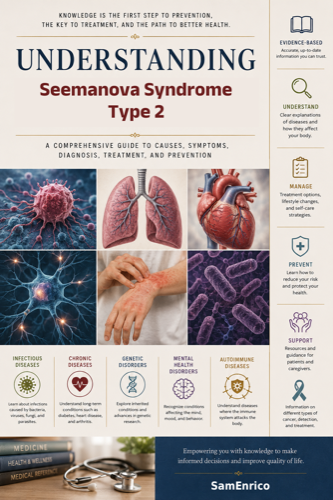 Understanding Seemanova Syndrome Type 2Florez Federico$17.99
 Registered General NursesFlorez Federico$11.99
You may also like
 Hong Kong Handover 1997Dunn Johnnie$11.99
 Zumba For Postnatal Recovery CourseNeal Christian$11.99
 Zumba for BeginnersLadner Nikia$11.99
 YouTube Comment Mining GuideHumes Pandora$12.99
 Worry Box MeditationCarlin Rudy$11.99
 Workplace Stress MeditationNguyen Lynn$11.99
 Workplace Stress and Sleep RepairHawley Ivory$11.99
 Workplace Perfectionism CureDelaney Jeffry$11.99
 Workplace Injustice Anger GuideWallen Isabelle$11.99
 Work Addiction and Burnout LinkGreenwood Ester$11.99
 Women in Yoga and WellnessBeattie Galina$11.99
 Women in Stand Up ComedyChun Evangeline$11.99