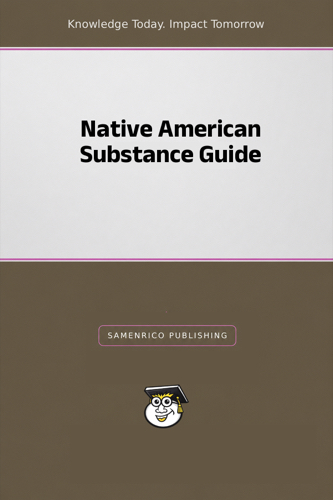
Native American Substance Guide eBook
Culturally competent treatment for indigenous comm
by Welsh Jama
Culturally competent treatment for indigenous communities.
Formats
Free sample
Chapter 1: The Silence Before Thunder--The first time I watched a man die from a substance he never chose to love, I was twenty-two years old. He was fifty-seven, a grandfather three times over, and he had been drinking steadily for forty-one of those years. His liver had surrendered three weeks before his heart did, but his spirit had left much earlier—perhaps the day he returned from boarding school at fourteen and could no longer speak his own language without shame. The nurses called it end-stage liver disease. His daughter called it the boarding school flu, because that was the family joke, the only way they could name the thing that had taken her father, her uncle, her older brother, and was now reaching for her son.
Jokes are what you make when the truth is too large to hold.This chapter exists because that grandfather was not an anomaly. He was not a statistical outlier. He was the expected outcome of a system designed, over centuries, to produce exactly that result. And if you are reading this book—whether you are a clinician, a community health representative, a family member, or someone walking the Red Road yourself—you need to understand that the addiction you are seeing right now did not begin with the person in front of you. It began long before they were born.
This chapter is about that beginning. It is about the storm that gathered before any of us drew breath.The Firewater Lie: Debunking the Myth of Genetic Predisposition Let us begin by killing a story that has killed more Indigenous people than any substance ever could. You have heard it before, likely in fragments: the idea that Native people are genetically predisposed to alcoholism, that their bodies process alcohol differently, that they lack some evolutionary shield that protects other populations. This is the "firewater myth," and it is one of the most enduring and destructive lies in the history of addiction science.The myth emerged directly from colonial violence. Early European observers noted that when Native people gained access to distilled alcohol (which did not exist in the Americas before contact), many drank to the point of incapacitation.
The observers concluded—conveniently—that this reflected an innate biological weakness, a moral failure written into Indigenous blood. What they ignored was the context. They ignored that alcohol was being introduced as a tool of the fur trade, deliberately deployed to create dependency. They ignored that the same European sailors and traders who sold the alcohol were themselves drinking at catastrophic rates, dying of cirrhosis in ports from Boston to Bristol. They ignored that the binge drinking they observed was not a genetic response but a situational one: when you have been stripped of your land, your language, your religion, your children, and your reason for waking up in the morning, of course you drink the way a burning house consumes oxygen.Modern genetics has buried this myth definitively.
No gene or set of genes has been found that predisposes Indigenous people to alcoholism at higher rates than any other population. In fact, some Indigenous populations have protective genetic variants—certain ALDH2 alleles that produce acetaldehyde buildup and cause unpleasant flushing, similar to the variants found in some East Asian populations that actually reduce alcoholism risk. The rates of substance use disorder in Indigenous communities are not driven by biology. They are driven by history.What the genetic research actually shows is this: trauma changes gene expression through epigenetic mechanisms. The stress of historical trauma—the cortisol flooding the bloodstreams of pregnant women who watched their children taken to boarding schools—alters how genes are read and expressed in the next generation.
This is not a "predisposition to alcoholism." It is a predisposition to heightened stress reactivity, to anxiety, to depression, to difficulty regulating emotion. And those conditions, in any population, increase the risk of turning to substances for relief. The problem is not Indigenous DNA. The problem is what has been done to Indigenous people, and what continues to be done, and the fact that the body keeps score across generations.If you take one thing from this section, take this: there is no firewater gene. There is no biological destiny written in Indigenous blood that makes addiction inevitable.
The rates you see are the result of trauma, policy, poverty, and grief—all of which can be healed. But you cannot heal a lie. So we name the lie first.Defining Historical Trauma: The Wound That Does Not Close The term "historical trauma" was first developed by Dr. Maria Yellow Horse Brave Heart, a Lakota social worker and scholar, to describe the cumulative emotional and psychological wounding across generations resulting from massive group trauma. In Indigenous contexts, this trauma is not a metaphor.
It is a clinical reality with measurable effects on stress hormones, immune function, and even telomere length (the caps on our chromosomes that shorten with chronic stress).Let us be specific about the events that produced this trauma. A partial list:The Indian Removal Act of 1830, which forced the relocation of an estimated 100,000 Indigenous people from their homelands east of the Mississippi, with thousands dying along the Trail of Tears. The Long Walk of the Navajo in 1864, when 8,000 people were forced to march 300 miles to internment at Bosque Redondo, where a quarter of them died of disease and starvation. The Sand Creek Massacre of 1864, where the Colorado militia murdered over 200 Cheyenne and Arapaho, mostly women, children, and the elderly, then mutilated their bodies. The Wounded Knee Massacre of 1890, where the US Army killed over 250 Lakota men, women, and children, burying them in a mass grave.
The Indian Relocation Act of 1956, which moved an estimated 160,000 Indigenous people from reservations to urban centers with no housing, no job training, and no social support, deliberately severing community ties.But the most insidious, and the one you must understand most deeply for this book, is the boarding school era.The Boarding School Era: Forced Erasure and the Birth of Boarding School Syndrome From the 1860s to the 1970s, the United States and Canadian governments operated a system of Indian boarding schools. The explicit goal, stated by Richard Henry Pratt, founder of the Carlisle Indian Industrial School, was to "kill the Indian and save the man." Children as young as four were taken from their families—sometimes by force, sometimes by coercion, sometimes by the threat of withholding rations—and sent to schools hundreds or thousands of miles from their homelands.At these schools, children were forbidden to speak their native languages. They were given English names. Their hair was cut (a profound spiritual violation in many tribes, where long hair is connected to strength and prayer). They were beaten for speaking their language or practicing any ceremony.
They were subjected to forced labor, sexual abuse, and medical experimentation. They were not allowed to go home for years; many never returned at all. An estimated 40,000 Indigenous children died at boarding schools in the United States alone—from tuberculosis, influenza, malnutrition, abuse, and suicide. Their bodies were often buried in unmarked graves on school grounds, never returned to their families.The children who survived returned to their communities…
This is the end of the free sample. Get the eBook to keep going. Buy now
About this book
Details
- Author
- Welsh Jama
- Publisher
- SamEnrico
- Language
- English
- Genre
- Non-Fiction, Self-Help, Indigenous Health
- Released
- 2026-06-12
- Pages (approx.)
- 160
- Available as
- eBook, Audiobook

Read better in the ZLOADR app
Your eBooks on your phone or tablet. Sign in with your SamEnrico account and start reading.
More by Welsh Jama
 CrossFit Nutrition CompanionWelsh Jama$11.99
 Empty Nest Purpose Rediscovery CourseWelsh Jama$11.99
 Cognitive Distortion FixWelsh Jama$11.99
 The TikTok Branded Content GuideWelsh Jama$11.99
 The Siege of Candia: Venice's Last Stand Against the OttomansWelsh Jama$11.99
 Graffiti Removal TechnicianWelsh Jama$11.99
 Understanding Uridine Monophosphate Synthetase DeficiencyWelsh Jama$17.99
 Certification Consultant SelectionWelsh Jama$12.99
 BOP Distribution Channels GuideWelsh Jama$12.99
 How to Become a Plastic-card Grader - CardroomWelsh Jama$11.99