NA Basic Text Step Guide eBook
Step study companion to Narcotics Anonymous basic
Step study companion to Narcotics Anonymous basic text with addict-specific examples.
Formats
Free sample
Chapter 1: The Empty Parking Lot--You are standing in an empty parking lot at 2:00 AM. The meeting ended an hour ago. Everyone else has gone home to their families, their apartments, their lives. You are still here. Not because you are meditating.
Not because you are praying. You are here because you are afraid to leave. Because if you leave, you know exactly where your car will take you. The dealer is still awake. The cash in your pocket is burning a hole through your jeans.
And the voice in your head—the one that sounds so reasonable, so logical, so much like you—is already writing the script. Just one more time. You deserve it. You had a hard day. You can stop tomorrow.
You always stop tomorrow.This is the moment that separates the people who die from the people who recover. Not the dramatic overdose. Not the arrest. Not the intervention. This quiet, lonely, 2:00 AM parking lot moment when you are completely alone with your own mind—and your mind is trying to kill you.If you have ever stood in that parking lot, you already know something that most human beings will never understand.
You know that addiction is not a moral failure. You know that addiction is not a lack of willpower. You know that addiction is not a choice you make every morning when you wake up. You know this because you have tried to choose differently. You have woken up hungover, dope-sick, or just deeply ashamed, and you have said the words out loud: I am never doing that again.
And then, hours or days later, you did it again. Not because you wanted to. Not because you were weak. Because something inside you—something deeper than logic, deeper than love, deeper than fear—took over and drove your body to places your mind had already decided to avoid.This chapter is about that something. In the rooms of Narcotics Anonymous, we call it the three-part disease: physical, mental, and spiritual.
You need to understand all three parts because if you only understand one or two, you will try to fix the wrong problem. You will go to meetings and stay clean for thirty days and then relapse and tell yourself you failed. You did not fail. You were trying to solve a spiritual problem with physical solutions. You were trying to think your way out of a disease that lives in your thinking.
You were fighting the wrong war.Let us start with the most important sentence you will read in this entire book. Write it down. Memorize it. Recite it when the voice in your head starts lying to you: Abstinence is not recovery. Stopping drugs is just stopping drugs.
Millions of people stop using drugs every year. They go to jail. They go to treatment. They move to a new city. They get a new girlfriend or boyfriend who does not use.
They white-knuckle through thirty days, ninety days, six months. And then they use again. Not because they are stupid. Not because they do not want to stay clean. Because they never fixed the thing that was broken before they ever picked up a drug.
They never touched the spiritual malady.The Three-Part Disease: A Framework for Understanding What Is Wrong with You The NA Basic Text describes addiction as a three-part disease. Think of it like a three-legged stool. If any leg is missing, the stool falls over. Most addicts spend their entire recovery trying to sit on a two-legged stool and wondering why they keep falling.The physical part is what happens after you put a drug in your body. The craving.
The phenomenon where one drink, one hit, one pill triggers an overwhelming, seemingly uncontrollable demand for more. You tell yourself you will have just one. Your body laughs at you. Your body has its own agenda, and its agenda is more. This is not a character defect.
This is a biological fact about how your brain processes certain chemicals. Once the drug hits your system, the physical craving takes over, and you are along for the ride.The mental part is what happens before you put the drug in your body. The obsession. The repetitive, intrusive thoughts about using that feel like a song stuck on repeat. The mental math of planning a run.
The relapse dream. The terrifying phenomenon of picking up your phone to call your dealer—or finding yourself driving to the using spot—before you have even consciously decided to use. This is the part of the disease that tells you you can handle it this time even though you have never handled it any time in your entire life. The mental part is your own mind turning against you.The spiritual part is the deepest layer. The void.
The emptiness. The total self-centeredness that makes you believe you are the center of the universe and also completely worthless. The spiritual part is why you feel restless, irritable, and discontent when you are not using. It is the reason you cannot stand being alone with your own thoughts. It is the reason you need external things—drugs, money, sex, control, approval—to feel okay.
The spiritual part is the original problem. The drugs were just your solution to it. And when you take the drugs away without fixing the spiritual part, you are left with the original problem plus the craving and the obsession. No wonder you feel worse after you get clean.Let us pause here because this is important. Most newcomers expect to feel better when they stop using.
They expect the shame to lift, the fog to clear, the energy to return. And for a few days, sometimes it does. The body heals quickly. But then, around day thirty, something strange happens. You feel worse.
More anxious. More irritable. More depressed. The cravings get louder, not quieter. You start thinking about using more than you did when you were in withdrawal.
This is not a sign that you are failing. This is a sign that the spiritual malady—the thing the drugs were numbing—is waking up and demanding attention. You are not getting sicker. You are finally feeling what you have been running from your entire life.The difference between being "dry" and being "in recovery" is the difference between removing the anesthetic and healing the wound. A dry addict has stopped using but has not addressed the spiritual malady.
They are sitting in a room with a broken leg, and they have stopped taking painkillers, but they have not set the bone. They are miserable, and they should be miserable. Their misery is telling them something important: You need to do more than just stop.The Resentment Warning: Why You Will Relapse If You Do Not Read This Section Carefully Before we go any further, you need to know the single biggest reason addicts relapse. It is not withdrawal. It is not cravings.
It is not seeing old friends. It is not bad days or anniversaries or triggers. The number one relapse trigger—the thing that kills more recovering addicts than anything else—is resentment.Resentment is anger that you…
This is the end of the free sample. Get the eBook to keep going. Buy now
About this book
Details
- Author
- Orourke Corrinne
- Publisher
- SamEnrico
- Language
- English
- Genre
- Non-Fiction, Self-Help, Narcotics
- Released
- 2026-06-09
- Pages (approx.)
- 128
- Available as
- eBook, Audiobook

Read better in the ZLOADR app
Your eBooks on your phone or tablet. Sign in with your SamEnrico account and start reading.
More by Orourke Corrinne
 Concentrating Mind With BreathOrourke Corrinne$11.99
 Franchise Builder's Brand AmbassadorOrourke Corrinne$11.99
 Neck and Shoulder Tension ReliefOrourke Corrinne$11.99
 The Last Stand of the Alamo’s Forgotten Defenders: A Tale of Loyalty and SacrificeOrourke Corrinne$11.99
 Trollskogen: The Hollow Mountain’s SecretOrourke Corrinne$11.99
 How to Start a Casting of Light Metals Business (Beginners Guide)Orourke Corrinne$11.99
 Finance Operations AnalystOrourke Corrinne$11.99
 CRISPR Gene Editing OutlookOrourke Corrinne$12.99
 Amazon Mechanical Turk WorkbookOrourke Corrinne$12.99
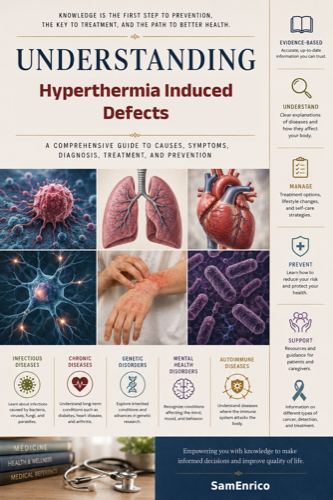 Understanding Hyperthermia Induced DefectsOrourke Corrinne$17.99