
Non-FictionInformativeEducational
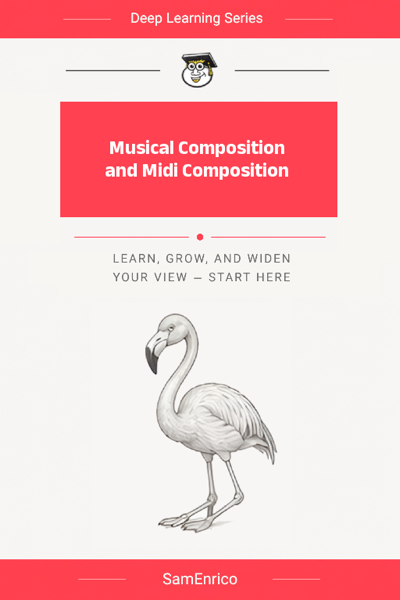
Musical Composition and Midi Composition
A Coursebook on Musical Composition and Midi Compo
A Coursebook on Musical Composition and Midi Composition
Formats
About this book
Free sample
Chapter 1: The Unified Lie--–- Every beginner composer hears the same false choice: either you learn “serious” composition on paper, or you press buttons in a computer. Pick a side, they say. The implication is clear. Pen-and-paper composers are artists. DAW users are technicians.
One group understands music. The other just clicks things until something sounds good.This is a lie. And it is the most dangerous lie in music education.The lie survives because it serves two groups. Academic institutions need you to believe that their centuries-old methods cannot be translated to screens. Software companies need you to believe that their products replace thinking.
Neither wants to admit the truth: composition is composition. Whether you write a C major triad on staff paper or click it into a piano roll, you have made the same musical decision. The tool does not determine the artistry.This chapter dismantles the false divide between “real” composing and “digital” producing. You will learn why the DAW is not a crutch but an instrument—one with unique capabilities that no pencil can match. You will build your first project file, which will grow into a complete portfolio piece by the final chapter.
And you will begin thinking of yourself not as a “composer” or a “producer” but as something more accurate: a digital composer.The Myth of the Pure Page The history of Western composition is a history of technology adoption. Bach used the newest music paper available—a technology that allowed him to write faster than his predecessors. Mozart toured with a fortepiano, the synthesizer of its day, which shocked audiences with its dynamic range. Beethoven wrote for increasingly powerful pianos as they evolved beneath his fingers. Stravinsky embraced the phonograph, recording his own works to study them.
Every generation’s cutting edge becomes the next generation’s tradition.The pen-and-paper purist argument contains a hidden contradiction. If writing by hand is the only “authentic” way to compose, then why did Bach not complain that paper corrupted the oral tradition? Why did Mozart not insist on composing entirely in his head like the medieval troubadours? The…
This is the end of the free sample. Get the eBook to keep going. Buy now
Contents
- Chapter 1
- Chapter 2
- Chapter 3
- Chapter 4
- Chapter 5
- Chapter 6
- Chapter 7
- Chapter 8
- Chapter 9
- Chapter 10
- Chapter 11
- Chapter 12
Details
- Author
- Horner Kenton
- Publisher
- SamEnrico
- Language
- English
- Genre
- Non-Fiction, Informative, Educational
- Released
- 2026-06-02
- Pages (approx.)
- 148
- Available as
- eBook, Audiobook

Read better in the ZLOADR app
Your eBooks on your phone or tablet. Sign in with your SamEnrico account and start reading.
More by Horner Kenton
 WFH Ninety Minute CyclesHorner Kenton$11.99WFH Ninety Minute CyclesHorner Kenton$11.99
 Elastic vs Inelastic DemandHorner Kenton$11.99
 Flow State for MusiciansHorner Kenton$11.99
 Gambling Addiction and Theft RecoveryHorner Kenton$11.99
 The Druids of Anglesey: Keepers of Celtic WisdomHorner Kenton$11.99
 Learn to Play the Piccolo Cello/violoncello PiccoloHorner Kenton$11.99
 Nigeria DPR Compliance GuideHorner Kenton$12.99
 How to Start a Bows Business (Beginners Guide)Horner Kenton$11.99
You may also like
 Hong Kong Handover 1997Dunn Johnnie$11.99
 Zumba For Postnatal Recovery CourseNeal Christian$11.99
 Zumba for BeginnersLadner Nikia$11.99
 YouTube Comment Mining GuideHumes Pandora$12.99
 Worry Box MeditationCarlin Rudy$11.99
 Workplace Stress MeditationNguyen Lynn$11.99
 Workplace Stress and Sleep RepairHawley Ivory$11.99
 Workplace Perfectionism CureDelaney Jeffry$11.99
 Workplace Injustice Anger GuideWallen Isabelle$11.99
 Work Addiction and Burnout LinkGreenwood Ester$11.99
 Women in Yoga and WellnessBeattie Galina$11.99
 Women in Stand Up ComedyChun Evangeline$11.99