
Multiple Pet Grief Guide eBook
Losing several animals in a short time.
by Hussey Man
Losing several animals in a short time.
Formats
Free sample
Chapter 1: The Overwhelm is Real...--–- The first time it happened, you grieved like anyone would. You cried, you buried or cremated, you told stories, you rearranged the house, and eventually, you began to breathe again. The second time, something broke differently. Not louder, necessarily, but deeper. And the third time?
You may have found yourself standing in the middle of a room, unable to remember which pet you just came from the vet for, holding a leash that belongs to a ghost, staring at a food bowl you filled by muscle memory. This is not weakness. This is not a failure to cope. This is the neurological and emotional reality of compound loss, and it has a name: bereavement overload.Bereavement overload is a term that emerged from thanatology—the study of death and dying—to describe what happens when multiple losses occur in such rapid succession that the grieving process for one loss is violently interrupted by the crisis of another. Unlike singular grief, which follows a relatively predictable arc of shock, mourning, and gradual reintegration, compound loss creates a stacked effect.
Imagine trying to heal a wound while someone is still cutting you. That is what losing multiple pets in a short time does to your psyche. The first cut begins to scab, then the second cut lands directly on top of it, then a third before the bleeding has even slowed. You are not grieving badly. You are grieving under conditions that no grief model was designed to handle.This chapter exists to do one thing: validate what you are experiencing right now, in this moment, without asking you to fix it, understand it, or find the silver lining.
We will name the mechanisms—neurological, emotional, and logistical—that make compound loss uniquely devastating. We will give you permission to stop performing grief for an audience that does not understand. And we will provide you with a single, simple survival tool for the next hour. Not for the next week, not for the rest of your life. Just for the next hour.The Neurological Reset Button Here is what happens in your brain when you lose a pet you love.
The initial shock triggers a cascade of stress hormones: cortisol, adrenaline, norepinephrine. Your amygdala—the brain’s alarm system—goes into overdrive. Your hippocampus, which consolidates memory, begins laying down the details of the loss so that you can process it over time. Your prefrontal cortex, responsible for rational decision-making, temporarily downregulates. This is why people in acute grief make poor decisions, forget appointments, and feel cognitively “foggy.” It is not a flaw.
It is a protective mechanism. Your brain is saying, “Priority one: survive this emotional wound. Everything else can wait.”Under normal circumstances, after a single loss, those stress hormones gradually decrease over weeks to months. The amygdala calms down. The hippocampus finishes its memory work.
The prefrontal cortex comes back online. You begin to function again. This is healing.Now imagine losing a second pet before that process has completed. Your brain’s stress hormones are still elevated from the first loss—perhaps at sixty or seventy percent of peak. The second loss hits, and instead of starting from baseline, your brain spikes from that already-elevated state.
Cortisol levels that should have taken six weeks to return to normal are now higher than they were after the first loss. The amygdala, which had just begun to settle, goes into full alarm mode again. The hippocampus, still organizing the memories of Pet A’s final days, is now flooded with new trauma data from Pet B. The prefrontal cortex, already compromised, is further suppressed.This is the neurological “reset button.” And it does not just reset once. It resets with every subsequent loss.
Readers who have lost three pets in six months report feeling as though they are in a permanent state of acute grief, with no respite. They cannot remember which symptoms belonged to which pet. They mix up euthanasia dates. They find themselves crying for reasons they cannot articulate. This is not dementia.
This is not a personal failing. This is the brain’s memory consolidation system being asked to process multiple traumas on an overlapping timeline for which it did not evolve.A 2018 study in the journal Death Studies found that bereaved individuals who experienced two or more significant losses within a twelve-month period had cortisol levels that remained elevated for an average of four months longer than those who experienced a single loss. In pet loss specifically, veterinary social workers have documented what they call the “cluster grief” phenomenon: pet owners who lose multiple animals in rapid succession—often due to age-related decline in a multi-pet household, or an outbreak of illness, or a tragic accident—report clinically significant symptoms of post-traumatic stress at nearly twice the rate of those who lose a single pet.This is not in your head. Well, technically it is in your head. But it is not imaginary.
It is a measurable, documentable neurological response to an overwhelming series of events. And naming it is the first step toward surviving it.The Exhaustion Factor: When Caregiving Becomes a Second Full-Time Job Let us talk about what your life actually looked like in the weeks or months leading up to your losses. Because grief does not begin at death. For many readers of this book, grief began the day you received a terminal diagnosis for Pet A, continued through months of subcutaneous fluids, syringe-feeding, middle-of-the-night accidents, and medication schedules, and then—instead of ending—collided with a sudden decline in Pet B, who had been “fine” until two days ago.This is the exhaustion factor. And it is distinct from the exhaustion that follows a single, unexpected loss.
When you lose one pet suddenly—a car accident, a undiagnosed condition—you are devastated, but you have not been depleted by months of caregiving. Your body has energy reserves to grieve. When you lose multiple pets after a prolonged period of hospice care, you are starting from negative energy reserves. You have already given everything you had to give. And then death asks for more.Caregiver exhaustion in the context of pet loss manifests in specific, often misdiagnosed ways.
Physical symptoms include chronic sleep disruption (not just from grief, but from the conditioned hypervigilance of listening for a sick pet in the night), appetite suppression that becomes weight loss, muscle fatigue from lifting or carrying ill animals, and a weakened immune system that leaves you catching every cold that passes through your household. Emotional symptoms include anhedonia—the inability to feel pleasure—not because you are depressed in the clinical sense, but because your emotional reserves have been drained dry. You may find yourself staring at a beautiful sunset and feeling nothing. You may hear a joke and not smile. This is not depression.
This is depletion. And depletion, unlike depression, responds to rest, not medication.Cognitive symptoms of caregiver exhaustion include what researchers call “decision fatigue.” You have made so many high-stakes medical decisions—euthanasia or palliative care? Chemotherapy or quality of life? Surgery or watchful waiting?—that your ability to decide what to eat for dinner or…
This is the end of the free sample. Get the eBook to keep going. Buy now
About this book
Details
- Author
- Hussey Man
- Publisher
- SamEnrico
- Language
- English
- Genre
- Non-Fiction, Self-Help, Complicated Grief
- Released
- 2026-06-08
- Pages (approx.)
- 135
- Available as
- eBook, Audiobook

Read better in the ZLOADR app
Your eBooks on your phone or tablet. Sign in with your SamEnrico account and start reading.
More by Hussey Man
 Recovery After Long COVID Burnout CourseHussey Man$11.99
 Saint Teresa of AvilaHussey Man$11.99
 Reading Micro Expressions GuideHussey Man$11.99
 Body Image and Occupational Stress GuideHussey Man$11.99
 When the Sky Fell: The Cherokee Earth-Diver’s GambitHussey Man$11.99
 SaaS Observability GuideHussey Man$12.99
 Chart Abstraction Automation PrimerHussey Man$12.99
 Area Vp Sales Southern EuropeHussey Man$11.99
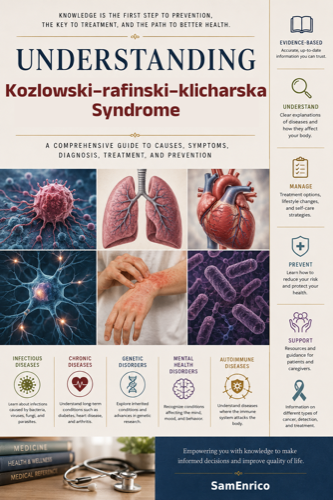 Understanding Kozlowski–rafinski–klicharska SyndromeHussey Man$17.99
 How to Start a Hobby in Snorkeling (Snorkelling)Hussey Man$11.99
You may also like
 Pet Loss and Complicated GriefMcnabb Tobie$11.99
 Complicated Grief Spouse LossPinckney Leigha$11.99
 Nightmare Processing For Death Grief GuidePost Joi$11.99
 Bereavement After Long IllnessBaird Mitsue$11.99
 Stuck Grief Self Help GuideGoldsmith Herma$11.99
 Complicated Grief Parent LossCurrie Rey$11.99
 Complicated Anticipatory Grief GuideAllan Twila$11.99
 Complicated Grief TherapyCasey Milton$11.99
 Nightmare Processing For BereavedWorkman Gala$11.99
 Dreams Of The Deceased In TraumaVega Wilbert$11.99
 Prolonged Grief Disorder HelpSneed Nadene$11.99
 Father Death Complicated Grief GuideFonseca Sherrill$11.99