
Multi Platform Gig Arbitrage eBook
Shows how to run multiple apps simultaneously to m
Shows how to run multiple apps simultaneously to maximize hourly earnings.
Formats
Free sample
Chapter 1: The Basket Fallacy--The first time I watched a driver cry in a parking lot, I was sitting in my own car, two phones mounted on my dashboard, a cold Mc Donald’s french fry on my lap, and absolutely no idea what I was doing wrong.Her name was Denise. She was fifty-two years old. She had been driving for Uber for eleven months, and she had just finished a fourteen-hour shift. She showed me her earnings screen: one hundred and thirty-seven dollars. That was before gas.
Before the oil change she couldn’t afford. Before the check engine light that had been blinking for three weeks. She had driven one hundred and ninety-four miles. I did the math in my head: seventy cents per mile. After expenses, she had paid for the privilege of driving strangers around Detroit.Denise was not lazy.
Denise was not stupid. Denise was trapped.She ran only one app. Uber. Because that was what she knew. Because when she signed up, the recruiter told her she could make “up to twenty-five dollars an hour.” Because every time she thought about trying Lyft or Door Dash, she felt overwhelmed.
Because she had built her entire gig economy life around a single blue icon on her phone screen.I made the mistake of telling her the truth.I said, “Denise, you’re in the basket.”She looked at me like I had just insulted her mother.The basket is the most dangerous place a gig worker can be. It is not a physical location. It is a financial trap. It is the state of relying on a single platform for your income while believing that you are an independent contractor. The basket feels safe because it is familiar.
The basket feels easy because you only have to learn one app. The basket feels honest because you show up, you do the work, and you go home.The basket is also where platforms want you.Every gig economy platform—Uber, Lyft, Door Dash, Grubhub, Instacart, all of them—has built its business model on a simple, brutal premise: if they can convince you to stay inside their basket, they win. Because when you are inside the basket, you are not a partner. You are not a contractor. You are not an entrepreneur.
You are captive labor. And captive labor is cheap.The Basket Fallacy: Why One App Is a Trap The basket fallacy is the belief that loyalty to a single platform will be rewarded. It will not. Platforms do not reward loyalty. Algorithms do not have feelings.
The computer code that decides whether to send you a twenty-dollar surge ride or a four-dollar Mc Donald’s run does not care that you have a 4.97 star rating. It does not care that you have never cancelled a trip. It does not care that you drove twelve hours yesterday.What the algorithm cares about is supply and demand in real time, measured in milliseconds.Here is how the basket works. You log into Uber at 5 PM on a Friday. There are forty-seven other drivers within a two-mile radius.
The algorithm has a surplus of labor. It does not need you. So it sends you the lowest-value trips first—the short rides, the slow restaurants, the passengers who have one-star ratings from other drivers. You reject three trips in a row. Your acceptance rate drops.
The algorithm flags you as “inactive.” You sit for twelve minutes without a single ping. You start to panic. You accept the next trip, no matter what it pays. It pays six dollars for twenty-three minutes of your time. You take it.
The algorithm learns that you will work for less. Tomorrow, it will offer you even less.This is not a conspiracy. This is mathematics.Platforms have one goal: maximize the number of completed trips per hour across their entire driver network. They do not care which driver completes the trip. They care only that someone does.
If you are expensive—if you decline trips, if you wait for surges, if you value your time—the algorithm will deprioritize you in favor of a driver who is desperate or unaware. The algorithm does not hate you. It just does not see you.When you run only one app, you have no leverage. The platform sets the price. The platform sets the rules.
The platform can deactivate you at any moment for any reason. You are a price-taker. And price-takers in the gig economy make, on average, forty percent less than multi-app drivers.The Forty to Sixty Percent Rule: Why Multi-Apping Is No Longer Optional Between 2021 and 2024, researchers at the University of California, Berkeley, and the Massachusetts Institute of Technology independently studied the earnings of gig workers across twelve major American cities. Their findings were consistent: the highest-earning twenty percent of drivers—those making thirty dollars per hour or more after expenses—ran an average of 2.7 apps simultaneously. Only four percent of top earners ran a single app.The numbers are even starker at the bottom.
Among drivers making less than fifteen dollars per hour before expenses, sixty-three percent ran only one app.Correlation is not causation. It is possible that high earners are simply more ambitious, more organized, or more experienced, and that those traits lead them to multi-app. But the research also found that drivers who switched from one app to two apps saw their hourly earnings increase by an average of thirty-one percent within thirty days, holding all other variables constant.In other words: multi-apping does not just select for successful drivers. It creates them.The reason is simple. When you run two or more apps simultaneously, you transform waiting time—which is unpaid labor—into bidding time, which is a market.
Every minute you are logged into two apps, you are receiving competing offers for your time. You can reject the low offer and wait for the high offer. You can take the high offer and pause the other app. You can play one platform against another in real time.This is the difference between being a price-taker and being a price-maker. Price-takers accept what the market gives them.
Price-makers create leverage by introducing competition into the market. When you run one app, you are a price-taker. When you run four apps, you are an auction house with one seat at the table: you.The Two Freedoms: What Independent Contractor Status Actually Means The term “independent contractor” is one of the most misunderstood phrases in the modern economy. Platforms use it to avoid paying benefits, overtime, and unemployment insurance. Drivers often use it as a badge of pride: “I’m my own boss.”Both perspectives miss the point.Independent contractor status gives you two freedoms.
The first freedom is freedom from an employer’s schedule, dress code, and direct supervision. This is the freedom platforms talk about in their recruiting ads. It is real, but it is not the most important one.The second freedom is freedom to play platforms against each other. This is the freedom platforms never mention. Because if you fully exercised this freedom—if you logged into every app simultaneously and accepted only the highest-paying trip available at…
This is the end of the free sample. Get the eBook to keep going. Buy now
About this book
Details
- Author
- Sylvester Rudy
- Publisher
- SamEnrico
- Language
- English
- Genre
- Non-Fiction, Business Brief, Multi App
- Released
- 2026-06-08
- Pages (approx.)
- 137
- Available as
- eBook, Audiobook

Read better in the ZLOADR app
Your eBooks on your phone or tablet. Sign in with your SamEnrico account and start reading.
More by Sylvester Rudy
 Anticipatory Grief and GuiltSylvester Rudy$11.99
 The Farmer Overdose SurvivorSylvester Rudy$11.99
 The Feet Under ChairSylvester Rudy$11.99
 Psychological Relapse Prevention for Cannabis Use DisorderSylvester Rudy$11.99
 Managing Remote MisunderstandingsSylvester Rudy$11.99
 From M'Bera Camp To ViennaSylvester Rudy$11.99
 Stadium Concession SurvivalSylvester Rudy$11.99
 Running Stride Lengthening RoutinesSylvester Rudy$11.99
 The Kingmaker's Gambit: How a Mobster Built a Vegas EmpireSylvester Rudy$11.99
 The Algorithm That Changed Everything: The Untold Story of Andrew Ng and AI’s BreakthroughSylvester Rudy$11.99
 The Codebreakers' Gambit: Alan Turing's Hidden WarSylvester Rudy$11.99
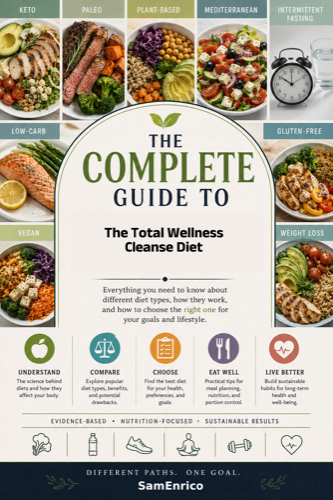 The Complete Guide to the Total Wellness Cleanse DietSylvester Rudy$11.99