
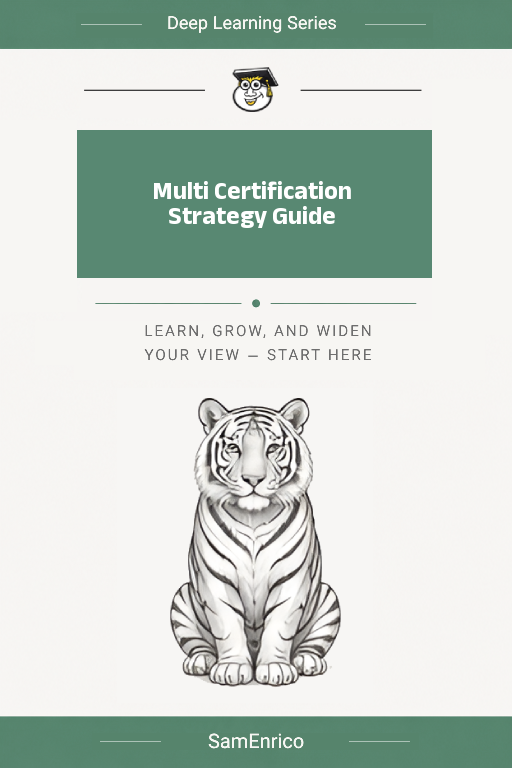
Multi Certification Strategy Guide eBook
Combine multiple certifications efficiently to mee
by Fusco Marth
Combine multiple certifications efficiently to meet different market and buyer requirements.
Formats
Free sample
Chapter 1: The Single Badge Lie--–- The procurement director at a €200 million aerospace firm leaned across the table and said something that still haunts me. “Your ISO 9001 certificate is beautiful,” she told the supplier, “but it’s also irrelevant. We need quality, environmental, information security, and a sector-specific scheme. Call us when you have all four.” That supplier lost the contract. Not because their product was defective.
Not because their price was too high. Because they believed the single badge lie.–- The single badge lie is the quietly devastating assumption that one certification—any one certification—is enough to signal competence, win tenders, and satisfy modern global buyers. It is a lie propagated by inertia, by well-meaning but outdated consultants, and by the comfortable illusion that the certification you already hold should be sufficient. In reality, Global Value Chains have become hyperspecialized. Buyers no longer ask “Are you certified?” They ask “Which certifications do you hold, and how do they stack together?”–- This chapter dismantles the single badge lie.
It explains why one certification is no longer sufficient for serious participation in global trade. It draws on economic signaling theory to show how large buyers use stacks of mandatory certifications as their first, most unforgiving filter in supplier risk management. It presents statistical evidence that suppliers holding three or more complementary certifications consistently outperform competitors with only one, commanding premium pricing and winning tenders at higher rates. And it closes with a detailed case study of a mid-sized manufacturer that won a €50 million aerospace contract not despite its multi-certification strategy but precisely because of it.–- By the end of this chapter, you will understand that certifications are not quality badges. They are market access currencies.
And like any currency, holding only one denomination leaves you impoverished when buyers demand a portfolio.The Collapse of the Single-Trust Model–- Twenty years ago, a single ISO 9001 certification opened most B2B doors. Buyers operated on a simpler trust model: if a supplier had documented quality management systems, that was sufficient evidence of capability. The supply chain was linear, relationships were long-term, and risk was localized. A defective batch could be traced to a single factory, and that factory’s quality certificate was the primary assurance.–- That world no longer exists. Global Value Chains have fragmented.
A single product might be designed in Germany, have components sourced from China and Mexico, be assembled in Vietnam, and be sold through a distributor in the United States. Each node in that chain introduces distinct risks: quality failures in manufacturing, environmental violations in raw material extraction, labor rights abuses in assembly, data breaches in logistics, and customs holds due to non-compliant geographic certifications.–- Consider the complexity facing a typical buyer today. Walmart, as one example, requires its suppliers to navigate a stack of certifications depending on product category: ISO 9001 for quality, ISO 14001 for environmental management, FSSC 22000 or BRCGS for food safety, SMETA or SA8000 for social compliance, and increasingly ISO 27001 for data protection. Amazon’s supplier requirements similarly layer quality, safety, and security certs. Airbus, in aerospace, demands AS9100 (aerospace quality), ISO 14001, and often NADCAP for special processes.–- No single certification covers all these domains.
ISO 9001 does not address environmental impact. ISO 14001 does not guarantee cybersecurity. FSSC 22000 does not verify labor practices. The single badge lie collapses under the weight of buyer expectation. What buyers have learned, through painful supplier failures, is that a supplier holding only one certification is usually a supplier that has not thought systematically about risk.
They are, in economic terms, a “Low-Type” supplier—and buyers have developed efficient methods to filter them out early.Signaling Theory and the Two-Tier Market–- To understand why multiple certifications have become a buyer’s first filter, we must turn to economic signaling theory, developed by Nobel laureate Michael Spence. In Spence’s model, markets suffer from information asymmetry: sellers know more about their own quality than buyers do. High-quality sellers want to signal their quality credibly; low-quality sellers want to mimic that signal. The signal only works if it is costly enough that low-quality sellers cannot fake it.–- Certifications function exactly as Spence described. A certification is a signal that a third party has audited your systems and found them adequate.
But a single certification—especially a common one like ISO 9001—has become a weak signal. The market is flooded with ISO 9001 certificates. Some belong to genuinely excellent organizations. Many belong to organizations that passed the audit but maintain minimal systems. Buyers cannot easily distinguish between them based on the certificate alone.–- This is why buyers have moved to stacked certifications.
The cost—in time, money, and organizational discipline—of maintaining three or four complementary certifications is substantially higher than maintaining one. That higher cost acts as a credible signal. A supplier willing to invest in ISO 9001, ISO 14001, and ISO 45001 simultaneously is almost certainly more operationally mature than a supplier that stopped after ISO 9001. The signal is credible because it is expensive to produce and difficult to fake.–- The market has bifurcated into two tiers. In the upper tier, “High-Type” suppliers hold portfolios of three, four, or more certifications that span quality, environmental, safety, security, and sector-specific schemes.
They command premium pricing, win complex tenders, and face reduced customer audit burden because their certification stack pre-qualifies them. In the lower tier, “Low-Type” suppliers hold one or two basic certifications. They compete primarily on price, face exhaustive customer audits, and are frequently filtered out before the technical evaluation even begins.–- The statistical evidence supports this bifurcation. A multi-year analysis of tender outcomes across European manufacturing sectors found that suppliers with three or more certifications won 42% more contracts than suppliers with a single certification, and at an average contract value 18% higher. Another study of food suppliers found that those holding GFSI-benchmarked certifications (FSSC 22000, BRCGS, SQF) alongside ISO 14001 and ISO 45001 experienced 60% fewer customer audits and 40% faster approval times.
The signal works precisely because it is costly to assemble.–- Importantly, the shift to stacked certifications is not arbitrary. Each additional certification addresses a distinct category of buyer risk. Quality certs address product and process risk. Environmental certs address regulatory and reputational risk. Safety certs address worker and liability risk.
Security certs address data and intellectual property risk. Geographic certs address customs and market access risk. Buyers are not collecting certifications like stamps; they are systematically hedging against the multiple failure modes that can disrupt their supply chains.The Multiplier Effect of Complementary Certifications–- Not all certification combinations are equally valuable. The real strategic leverage comes from complementary certifications—standards that share underlying management system architecture, allowing them to be integrated efficiently, while covering distinct risk domains. The most powerful complementarities exist among ISO standards that follow the Annex SL High-Level Structure: ISO 9001 (quality), ISO 14001 (environmental), ISO 45001 (safety), and ISO 27001 (information security).–- These four standards share identical clause structures for core management system components: Context of the Organization, Leadership, Planning, Support, Operation, Performance Evaluation, and Improvement.
This common architecture means that once you build a system for one, the others require only delta implementation—adding specific controls without rebuilding the entire management system. The integration cost for…
This is the end of the free sample. Get the eBook to keep going. Buy now
About this book
Details
- Author
- Fusco Marth
- Publisher
- SamEnrico
- Language
- English
- Genre
- Non-Fiction, Business Brief, Multi Cert
- Released
- 2026-06-01
- Pages (approx.)
- 157
- Available as
- eBook, Audiobook

Read better in the ZLOADR app
Your eBooks on your phone or tablet. Sign in with your SamEnrico account and start reading.
More by Fusco Marth
 Self Esteem for Late Bloomers LoveFusco Marth$11.99
 Emotional Role Models StudyFusco Marth$11.99
 Rental Lease Agreement GuideFusco Marth$11.99
 Sobriety Journal MethodFusco Marth$11.99
 Belgium Diamond HeistFusco Marth$11.99
 Chinese Family SeparationFusco Marth$11.99
 Sadhguru Jaggi VasudevFusco Marth$11.99
 Advisory Board Payments GuideFusco Marth$11.99
 The Unstoppable Lions: Cameroon's 1990 World Cup MiracleFusco Marth$11.99
 The Alchemists of Timbuktu: Unveiling the Lost Sciences of the SahelFusco Marth$11.99
 How to Produce Hair ColorFusco Marth$11.99
 Mastering The Art of IrelandFusco Marth$11.99