
Non-FictionBiographyContemporary Science
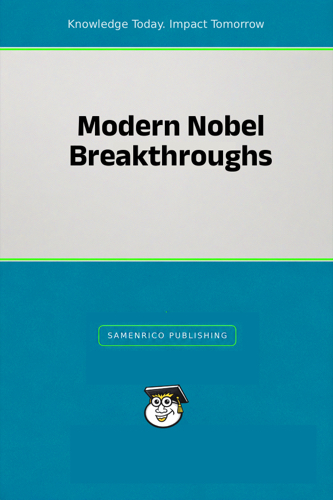
Modern Nobel Breakthroughs
Revolutionary science from 1950 to today as told b
Revolutionary science from 1950 to today as told by living laureates.
Formats
About this book
Free sample
Chapter 1: The Unseen Revolution...--–- In December of 1951, a twenty-three-year-old American biologist named James Watson stood before a small audience at the Cavendish Laboratory in Cambridge, England, and presented a model of deoxyribonucleic acid. It was wrong. Completely, spectacularly wrong. He had placed the sugar-phosphate backbone on the inside of the molecule and the nitrogenous bases on the outside, a configuration that violated the most basic laws of chemistry. A visiting chemist from Caltech named Jerry Donohue looked at the model, shook his head, and told Watson he had made a fundamental error.
Watson was humiliated. His collaborator, the voluble and brilliant physicist Francis Crick, was furious. They had wasted months chasing a phantom.Three years later, Watson and Crick would share a Nobel Prize for solving the structure of DNA. But in that cold December of 1951, they had nothing. They had ambition, intelligence, and a desperate fear that Linus Pauling—the legendary chemist at Caltech who had already won a Nobel Prize for his work on chemical bonds—would beat them to the greatest prize in biology.
They had competition, rivalry, and the kind of obsessive focus that destroys marriages and friendships. What they did not have was the answer.The story of the double helix is not a story of genius emerging fully formed from the brow of Zeus. It is a story of failure, luck, theft, redemption, and tragedy. It is the story of how four people—Watson, Crick, Maurice Wilkins, and Rosalind Franklin—unlocked the secret of life, and how only three of them stood on the stage in Stockholm. It is the story that launched the age of genetics, and it carries within it every ethical tension, every question of credit and justice, every warning about the relationship between science and power that would define the next seventy years of Nobel Prize-winning research.For the living laureates who inherited the world the double helix made, this discovery is both a foundation and a cautionary tale.
Sir Paul Nurse, who won his own Nobel Prize in 2001 for discoveries about how cells divide, remembers seeing the…
This is the end of the free sample. Get the eBook to keep going. Buy now
Contents
- Chapter 1
- Chapter 2
- Chapter 3
- Chapter 4
- Chapter 5
- Chapter 6
- Chapter 7
- Chapter 8
- Chapter 9
- Chapter 10
- Chapter 11
- Chapter 12
Details
- Author
- Dailey Michael
- Publisher
- SamEnrico
- Language
- English
- Genre
- Non-Fiction, Biography, Contemporary Science
- Released
- 2026-06-07
- Pages (approx.)
- 124
- Available as
- eBook, Audiobook

Read better in the ZLOADR app
Your eBooks on your phone or tablet. Sign in with your SamEnrico account and start reading.
More by Dailey Michael
 Video Call Small TalkDailey Michael$11.99
 The Salary Negotiation AngerDailey Michael$11.99
 Relapse Prevention Gambling GuideDailey Michael$11.99
 Conan O Brien Harvard HumorDailey Michael$11.99
 The Bayonet and the Flintlock: How the 17th Hussars Changed Warfare ForeverDailey Michael$11.99
 How to Start a Chicken Food Business (Beginners Guide)Dailey Michael$11.99
 Understanding Puretic SyndromeDailey Michael$17.99
 Instacart GuideDailey Michael$12.99
 CNY Receiving African ExportersDailey Michael$12.99CNY Receiving African ExportersDailey Michael$12.99
 Food Service AssociateDailey Michael$11.99
You may also like
 Hong Kong Handover 1997Dunn Johnnie$11.99
 Zumba For Postnatal Recovery CourseNeal Christian$11.99
 Zumba for BeginnersLadner Nikia$11.99
 YouTube Comment Mining GuideHumes Pandora$12.99
 Worry Box MeditationCarlin Rudy$11.99
 Workplace Stress MeditationNguyen Lynn$11.99
 Workplace Stress and Sleep RepairHawley Ivory$11.99
 Workplace Perfectionism CureDelaney Jeffry$11.99
 Workplace Injustice Anger GuideWallen Isabelle$11.99
 Work Addiction and Burnout LinkGreenwood Ester$11.99
 Women in Yoga and WellnessBeattie Galina$11.99
 Women in Stand Up ComedyChun Evangeline$11.99