
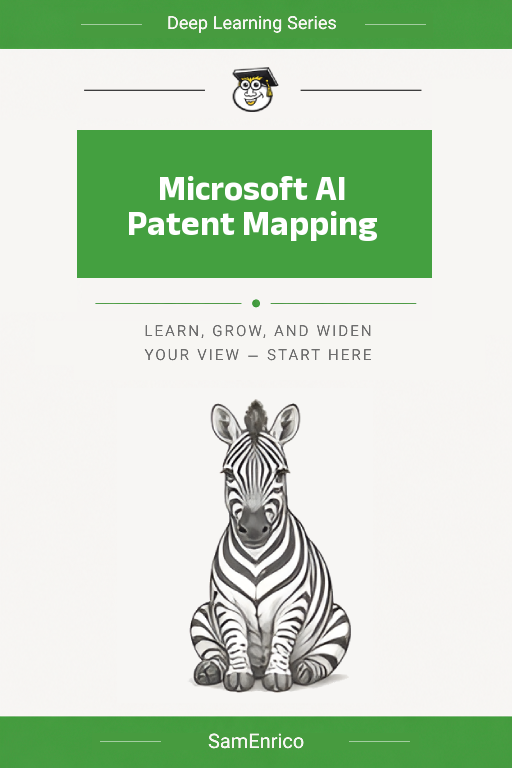
Non-FictionStrategic AtlasAI Patents
Microsoft AI Patent Mapping eBook
Analyze Redmond's Copilot ecosystem, Azure AI infr
Analyze Redmond's Copilot ecosystem, Azure AI infrastructure, and GitHub Copilot patent filings and R&D spend.
Formats
Free sample
Chapter 1: The Royalty-Free Heist...--On an unremarkable Tuesday in July 2019, a team of Microsoft's most senior intellectual property attorneys gathered in a windowless conference room on the company's Redmond campus. The blinds were drawn. Phones were left at the door. The coffee was terrible, as is tradition in such gatherings. For the next eleven hours, these lawyers would do something that would reshape the technology industry for a decade: they would negotiate the most lopsided intellectual property agreement since the dawn of commercial computing.The counterparty was a small, ambitious artificial intelligence research lab operating out of a former luggage factory in San Francisco's Mission District.
The lab had a provocative name—Open AI—and an even more provocative origin story. It had been founded as a non-profit with a charter promising to develop artificial general intelligence "in the way that is most likely to benefit humanity as a whole, unconstrained by a need to generate financial return." The lab had produced interesting research but nothing resembling a commercial product. Its most notable achievement was a language model called GPT-2, which generated coherent paragraphs but required so much computing power that running it at scale was laughably impractical.By every conventional measure, Microsoft was taking a risk. A very large risk. The term sheet being discussed that July morning committed Microsoft to invest $1 billion in Open AI, with options for substantially more in subsequent years.
The investment would be made in a combination of cash and Azure compute credits—essentially, Microsoft would pay Open AI to use Microsoft's own cloud services.What Microsoft received in return was the focus of the legal marathon. The attorneys debated every clause, every contingency, every possible interpretation of every word. They debated the definition of "exclusive." They debated the meaning of "commercial use." They debated what would happen if Open AI achieved artificial general intelligence—a concept so poorly defined that even the world's leading researchers could not agree on its boundaries.The final document that emerged from that room contained a provision so advantageous to Microsoft that it would take the rest of the industry years to fully understand its implications. The provision was short, technical, and buried on page forty-seven. It stated, in the dense language of intellectual property licensing, that Microsoft would receive a perpetual, royalty-free, irrevocable license to all of Open AI's intellectual property, including all future inventions, discoveries, and models, for use within Microsoft's existing product ecosystem.Seven years later, that single paragraph has become the most consequential patent licensing agreement in the history of artificial intelligence.
It has allowed Microsoft to build a $30 billion AI business while paying nothing in licensing fees to the company that invented the technology. It has given Microsoft the legal ammunition to file hundreds of patents covering the integration of large language models into enterprise software—patents that competitors cannot challenge because Microsoft holds the rights to the underlying technology. And it has created a strategic moat that analysts are still struggling to fully understand.This chapter tells the story of that agreement: how it was negotiated, how Microsoft has exploited it, and how the company's patent attorneys transformed a simple licensing deal into the foundation of an AI empire. The chapter also addresses the surprising denouement of this story—the 2026 renegotiation that appeared to weaken Microsoft's position but actually strengthened its patent fortress. By the time you finish reading, you will understand why Microsoft's patent portfolio may be the most valuable asset in the AI economy, more valuable even than the models themselves.The Anatomy of a Heist: Understanding the Original IP Clause The 2019 agreement between Microsoft and Open AI was structured as a standard technology partnership, at least on the surface.
Microsoft would provide computing infrastructure and capital. Open AI would provide research and models. The two companies would share in the commercial success of any products that emerged from their collaboration.But the IP clause was anything but standard.In typical technology partnerships, intellectual property is jointly owned or carefully partitioned. Each party retains rights to its pre-existing IP. New IP created during the partnership is either owned jointly, with complex cross-licensing arrangements, or assigned to the party that created it.
This is standard practice because it protects both parties from being locked out of their own innovations.The Microsoft-Open AI agreement took a radically different approach. The clause granted Microsoft a license to all of Open AI's intellectual property—including pre-existing IP, current IP, and all future IP created during the term of the agreement. The license was perpetual, meaning it would never expire. It was royalty-free, meaning Microsoft would never pay Open AI another dollar for the right to use any Open AI technology. And it was irrevocable, meaning Open AI could never take it back.There was, however, a critical limitation.
The license applied only to "use within Microsoft's existing product ecosystem." The precise definition of "existing product ecosystem" was negotiated with painstaking detail. It included Windows, Office, Azure, Git Hub, Linked In, Bing, and approximately two hundred other products enumerated in an appendix. It did not include the right to resell Open AI's models as standalone products—that right remained with Open AI, which would launch its Chat GPT service several years later.The effect of this limitation was subtle but crucial. Microsoft could embed Open AI's technology into every product it already sold. It could build Copilot for Windows, Copilot for Office, Copilot for Git Hub, Copilot for Security.
It could not, however, launch a generic chatbot to compete directly with Chat GPT. Open AI retained the exclusive right to sell access to its models as a standalone service.This division of labor seemed fair at the time. Microsoft was an enterprise software company. Open AI was a research lab with ambitions to become a consumer AI company. The two did not compete.
They complemented each other.What Microsoft's attorneys understood, and what Open AI's negotiators apparently did not, was that the "existing product ecosystem" was vast enough to encompass virtually every meaningful commercial application of large language models. Enterprise productivity, software development, cybersecurity, data analytics, business intelligence—all of these markets were already served by Microsoft products. By securing royalty-free access to Open AI's technology for these products, Microsoft effectively locked Open AI out of the most profitable AI markets in existence.The $13 Billion Misunderstanding The financial terms of the 2019 agreement have been widely reported but rarely understood. Microsoft committed to invest 1billioninitially,followedbyadditionaltranchesthatwouldeventuallytotal1 billion initially, followed by additional tranches that would eventually total 1billioninitially,followedbyadditionaltranchesthatwouldeventuallytotal13 billion. In exchange, Microsoft received two things: the IP license described above, and a minority equity stake in Open AI.The equity stake has received most of the attention.
Following Open AI's restructuring in 2025, Microsoft emerged with approximately 27 percent of the company, valued at around 135billion.Thisisaremarkablereturnona135 billion. This is a remarkable return on a 135billion.Thisisaremarkablereturnona13 billion investment, representing a tenfold increase in value over six years.But the equity stake is not the most valuable part of the deal. It is not even the second most valuable part.Consider the economics of Microsoft's AI business. In fiscal year 2025, Microsoft generated approximately $30 billion in revenue from AI-related…
This is the end of the free sample. Get the eBook to keep going. Buy now
About this book
Details
- Author
- Mattos Catheryn
- Publisher
- SamEnrico
- Language
- English
- Genre
- Non-Fiction, Strategic Atlas, AI Patents
- Released
- 2026-05-29
- Pages (approx.)
- 156
- Available as
- eBook, Audiobook

Read better in the ZLOADR app
Your eBooks on your phone or tablet. Sign in with your SamEnrico account and start reading.
More by Mattos Catheryn
 Morning Walking MindfulnessMattos Catheryn$11.99
 Tactile Communication HandbookMattos Catheryn$11.99
 PCOS Clomiphene Fertility GuideMattos Catheryn$11.99
 Living Will and Advance DirectiveMattos Catheryn$11.99
 Laci Peterson Bay Recovery ExpeditionMattos Catheryn$11.99
 Sir Alex Ferguson: The Architect of Modern FootballMattos Catheryn$11.99
 DNSSEC for Geo Domains GuideMattos Catheryn$12.99
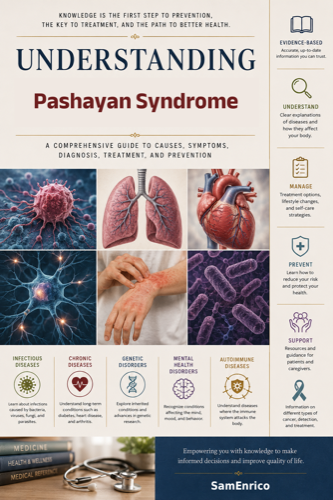 Understanding Pashayan SyndromeMattos Catheryn$17.99
 How to Start a Paging Service Business (Beginners Guide)Mattos Catheryn$11.99
 Lawn Aeration SpecialistMattos Catheryn$11.99
You may also like
 Hong Kong Handover 1997Dunn Johnnie$11.99
 Zumba For Postnatal Recovery CourseNeal Christian$11.99
 Zumba for BeginnersLadner Nikia$11.99
 YouTube Comment Mining GuideHumes Pandora$12.99
 Worry Box MeditationCarlin Rudy$11.99
 Workplace Stress MeditationNguyen Lynn$11.99
 Workplace Stress and Sleep RepairHawley Ivory$11.99
 Workplace Perfectionism CureDelaney Jeffry$11.99
 Workplace Injustice Anger GuideWallen Isabelle$11.99
 Work Addiction and Burnout LinkGreenwood Ester$11.99
 Women in Yoga and WellnessBeattie Galina$11.99
 Women in Stand Up ComedyChun Evangeline$11.99