
Non-FictionHealth & WellnessHerb-Drug Interactions
Micronutrient Herb Interactions eBook
Warns how herbs like St. John's Wort or ginkgo aff
by Royal Kellee
Warns how herbs like St. John's Wort or ginkgo affect vitamin and mineral status and absorption.
Formats
Free sample
Chapter 1: The Veil of Natural Safety--–- The herbal supplement arrived in a glass jar with a crisp white label. Across the front, in elegant serif font, it promised: "Gentle. Traditional. Plant-based. Clinically studied." The back panel listed a single warning: "Keep out of reach of children." Nothing about drug interactions.
Nothing about nutrient depletion. Nothing about the woman who would take this herb for three months, feel her depression lift, and then collapse from anemia so severe that her doctor would order a colonoscopy before anyone thought to ask, "Are you taking any herbs?"This is not a hypothetical scenario. This is a case file from a major teaching hospital, documented in the Journal of Clinical Psychopharmacology, and it represents a silent epidemic. Over 40% of adults taking prescription medications also use herbal products. Fewer than 15% disclose this to their physicians.
And virtually none of those patients understand that the "natural" capsule they swallow each morning may be actively stealing the very vitamins and minerals their body needs to function. The veil of natural safety—the assumption that because something comes from a plant, it must be harmless—has created a blind spot in modern medicine, and that blind spot is costing patients their health.This book exists to tear that veil away.The Statistics That Should Keep You Awake Let us begin with numbers, because numbers do not lie and they do not have a marketing budget. According to the National Center for Complementary and Integrative Health, approximately 25% of American adults report using herbal supplements regularly. Among patients with chronic diseases—cardiovascular disease, diabetes, depression, arthritis—that number rises to nearly 50%. The global herbal supplement market exceeded $83 billion in 2023 and is projected to reach $130 billion by 2030.
Every dollar of that growth represents someone swallowing a capsule of concentrated plant compounds, usually without any professional oversight.The dark underbelly of these numbers is the concurrent use rate. A 2021 study in JAMA Internal Medicine surveyed 3,500 adults and found that among those taking prescription medications, 42% were also taking at least one herbal supplement. Of those, 68% were taking herbs that have known pharmacological interactions with their prescription drugs. And here is the most disturbing statistic: when asked why they did not inform their doctor about their herb use, the most common answer was, "I didn't think it mattered because it's natural."The assumption that "natural" equals "safe" is not merely incorrect. It is dangerously incorrect.
Morphine is natural. Arsenic is natural. Hemlock is natural. Nature is a chemist of extraordinary power, and the compounds she produces are designed to kill, heal, or alter physiology in dramatic ways. The only difference between a pharmaceutical drug and a herbal extract is that the drug has been standardized, purified, and tested in human trials for safety and efficacy—not that the drug is more "chemical." Everything is chemical.
Water is a chemical. The difference is predictability and oversight.Historical Use vs. Modern Pharmacology: The Dose Makes the Poison A common defense of herbal safety is the appeal to tradition: "People have used this herb for thousands of years." This argument sounds reasonable until you examine what "traditional use" actually meant. A medieval peasant brewing St. John's Wort tea would have used fresh or dried flowers, steeped them in hot water, and consumed a liquid containing perhaps 0.1% hyperforin by weight.
The concentration of active compounds in that tea was low, the bioavailability was poor, and the dose was inconsistent. That same peasant drank the tea for a few weeks during the winter, not year-round. The herb was used as a mild tonic, not a pharmaceutical-grade intervention.Now contrast that with a modern standardized extract of St. John's Wort. A single 300-milligram capsule contains hyperforin concentrated to 5%.
That is 50 times more concentrated than the tea. That capsule is designed for sustained release, ensuring that the hyperforin reaches the liver at peak levels for hours. That capsule is taken daily, year-round, for months or years. The difference between traditional use and modern supplementation is not a difference of kind but a difference of magnitude so vast that it becomes a difference of kind. To put it in perspective: drinking a cup of chamomile tea is traditional use.
Drinking 50 cups of chamomile tea concentrate in a single swallow is modern supplementation.The same principle applies to every herb discussed in this book. Garlic used in cooking—a clove or two in a stir-fry—is traditional. Garlic extract standardized to 5,000 micrograms of allicin per capsule is not traditional. Milk thistle tea is traditional. Milk thistle extract standardized to 80% silymarin is not traditional.
Green tea drunk as a beverage is traditional. Green tea extract concentrated to 500 milligrams of catechins is not traditional. The dose makes the poison, and the dose has increased exponentially.The Halo Effect: How Marketing Obscures Biochemical Reality Walk into any health food store or browse any supplement website, and you will encounter a carefully constructed vocabulary designed to reassure you. Herbs are described as "gentle," "traditional," "plant-based," "whole-food derived," "earth-grown," and "naturally sourced." The labels feature images of flowers, leaves, and forests. The language evokes a pre-industrial pastoral ideal, as if these capsules were hand-picked by wise women in flowing robes rather than manufactured in industrial facilities by machines that also produce pharmaceutical drugs.This is the Halo Effect: the cognitive bias in which a positive impression in one area (natural origin) influences judgment in another area (safety).
Marketers know this. They exploit it ruthlessly. The same company that manufactures a pharmaceutical blood pressure medication will use sterile white packaging, clinical fonts, and warnings about side effects. That same company, when selling an herbal supplement, will use green packaging, soft language, and minimal warnings—even when the supplement has more pharmacological activity than the prescription drug.Consider this real-world example: In 2019, the FDA issued a warning letter to a major supplement manufacturer about their St. John's Wort product.
The product label claimed the herb was "safe for long-term use" and "free from side effects." The FDA's own database contains over 2,000 reported adverse events associated with St. John's Wort, including serotonin syndrome (when combined with antidepressants), breakthrough bleeding (when combined with oral contraceptives), and transplant rejection (when combined with immunosuppressants). The manufacturer changed the label, but only under regulatory pressure. The halo effect persists.This book will not use that vocabulary. The language here is clinical because the subject demands clinical precision.
Herbs are not "gentle." They are pharmacologically active. They are not "traditional" in the doses you are taking. They are concentrated extracts. They are not "plant-based" in a way that implies safety. They are plant-based in the same way that digitalis (from foxglove) is plant-based—effective, dangerous, and requiring respect.Pharmacokinetics and Pharmacodynamics: The Two Questions Every Consumer Must Ask To understand how herbs can deplete your nutrients, you need a basic framework for thinking about what happens to any substance—food, drug, or herb—after you swallow it.
That framework has two parts: pharmacokinetics and pharmacodynamics. These words sound intimidating, but they are simply asking two questions.Pharmacokinetics asks: "What does the body do to the substance?" This includes four processes: absorption (how much enters the bloodstream), distribution (where it goes), metabolism (how it is broken down)…
This is the end of the free sample. Get the eBook to keep going. Buy now
About this book
Details
- Author
- Royal Kellee
- Publisher
- SamEnrico
- Language
- English
- Genre
- Non-Fiction, Health & Wellness, Herb-Drug Interactions
- Released
- 2026-06-07
- Pages (approx.)
- 160
- Available as
- eBook, Audiobook

Read better in the ZLOADR app
Your eBooks on your phone or tablet. Sign in with your SamEnrico account and start reading.
More by Royal Kellee
 Shift Work Permanent Night ShiftRoyal Kellee$11.99
 Self Esteem for Autism Adults HandbookRoyal Kellee$11.99
 The Vendor Relationship GuideRoyal Kellee$11.99
 Self Esteem Age Gap RelationshipRoyal Kellee$11.99
 The Church of Eternal Silence: The Strange Case of the Silent RetreatRoyal Kellee$11.99
 The Last Breath of the Mammoth: Echoes of Ice Age ExtinctionRoyal Kellee$11.99
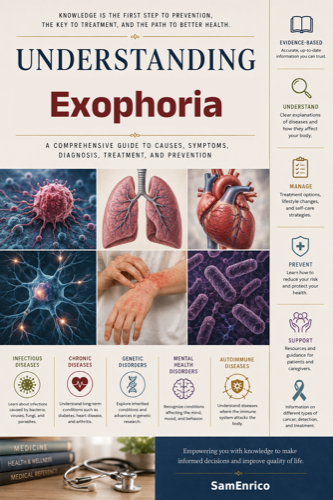 Understanding ExophoriaRoyal Kellee$17.99
 Executive Summary Playbook for StartupsRoyal Kellee$12.99
 Strategic Sourcing GuideRoyal Kellee$12.99
 Nyerereite MiningRoyal Kellee$11.99
 How to Become a MolderRoyal Kellee$11.99
You may also like
 Hong Kong Handover 1997Dunn Johnnie$11.99
 Zumba For Postnatal Recovery CourseNeal Christian$11.99
 Zumba for BeginnersLadner Nikia$11.99
 YouTube Comment Mining GuideHumes Pandora$12.99
 Worry Box MeditationCarlin Rudy$11.99
 Workplace Stress MeditationNguyen Lynn$11.99
 Workplace Stress and Sleep RepairHawley Ivory$11.99
 Workplace Perfectionism CureDelaney Jeffry$11.99
 Workplace Injustice Anger GuideWallen Isabelle$11.99
 Work Addiction and Burnout LinkGreenwood Ester$11.99
 Women in Yoga and WellnessBeattie Galina$11.99
 Women in Stand Up ComedyChun Evangeline$11.99